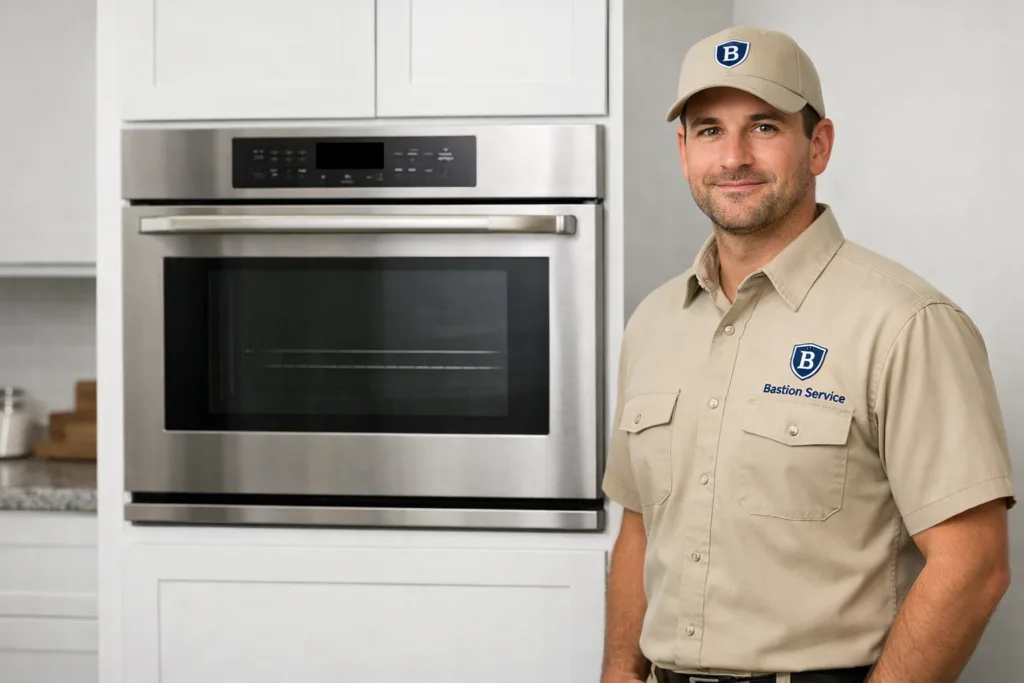
Wall ovens tend to show trouble in small ways before they fail completely. You may notice longer preheat times, baking that suddenly becomes inconsistent, or a display that starts acting strangely from one use to the next. With a KitchenAid unit, those symptoms can point to heating components, sensor drift, control problems, door-latch faults, or electrical issues, and the right fix depends on matching the repair to the exact behavior of the oven.
Common KitchenAid wall oven symptoms and what they may mean
Many problems look similar at first, but they do not always come from the same failed part. Paying attention to how the oven behaves can help narrow down the likely cause and determine whether repair is practical.
Oven not heating
If the oven turns on but does not produce heat, the issue may involve the bake element, broil element, thermal cutoff, sensor circuit, wiring, or electronic control. In some cases, the oven will appear to start normally but never build enough heat to cook food safely or consistently.
This symptom is especially important to check promptly because repeated attempts to run the oven can add stress to controls and relays if the underlying fault is electrical.
Slow preheat
A slow preheat cycle often signals that one heating circuit is weak or not activating properly. The oven may eventually get hot, but only after taking much longer than normal. That can happen when an element is partially failing, the temperature sensor is reading inaccurately, or the control is not cycling heat the way it should.
Homeowners sometimes adjust by adding more cooking time, but that usually leads to uneven results and can hide a worsening problem.
Uneven baking or roasting
When one side of a dish browns too fast, the center stays underdone, or two racks cook very differently, the problem may be tied to temperature regulation rather than food placement alone. Sensor issues, convection fan problems, calibration drift, and weak heating performance can all cause this pattern.
If your recipes suddenly stop turning out the way they used to, the oven may still be operating, but not within a dependable temperature range.
Temperature swings
Some cycling is normal, but large swings are not. If the oven seems too hot one day and too cool the next, or if it burns food after appearing to preheat normally, there may be a sensor fault, control problem, or relay issue affecting how heat is maintained.
This is one of the most frustrating problems because the oven can seem usable while still producing unreliable results meal after meal.
Error codes, beeping, or a blank display
Electronic faults may show up as persistent beeping, an unresponsive keypad, random shutdowns, or a display that goes dark during operation. On a built-in wall oven, these symptoms can come from the control board, user interface, power supply, wiring connections, or communication failures between components.
Intermittent electronic issues should not be ignored, especially if the oven loses power while in use or will not respond consistently to commands.
Door latch or self-clean problems
If the door will not lock, will not unlock, or the oven begins acting up after a self-clean cycle, the latch assembly, switch, control, or heat-stressed wiring may be involved. Self-clean cycles put heavy thermal load on components, so failures sometimes appear immediately afterward.
Forcing the door or repeatedly resetting the oven can make the repair more complicated.
Signs the problem may be getting worse
Some symptoms suggest the oven should be checked sooner rather than later. A minor performance issue can turn into a bigger repair if the unit keeps running under strain.
- Preheat time keeps getting longer
- Food quality changes from one use to the next
- Error codes return after being cleared
- The oven shuts off in the middle of baking
- The clock, lights, or display flicker unexpectedly
- The door does not close or latch properly
These patterns usually mean the issue is not a one-time glitch. They point to a part or circuit that is deteriorating and becoming less reliable with continued use.
When to stop using the oven
Some conditions are more than an inconvenience and should be treated as a safety concern. If your KitchenAid wall oven shows any of the following, it is best to stop using it until it has been assessed:
- Burning smell that does not quickly go away
- Visible sparking or smoke
- Repeated breaker trips
- Overheating or scorching beyond the set temperature
- Power cutting in and out during operation
- A stuck door after a clean cycle
Built-in cooking appliances concentrate heat and electrical components in a tight space, so ignoring these warning signs can risk further damage to the oven and surrounding components.
Why symptom-based diagnosis matters
Two ovens can show the same complaint and need completely different repairs. An oven that will not heat may need a new element, but it could also have a failed sensor circuit, damaged wiring, or a control issue preventing power from reaching the heater. The same goes for uneven cooking, which can be caused by anything from poor temperature feedback to a convection-related problem.
That is why KitchenAid wall oven repair in Mid-Wilshire is most useful when it starts with symptom verification, model-specific testing, and a straightforward explanation of what failed. That approach helps avoid replacing parts by guesswork and gives homeowners a better sense of whether the repair makes sense for the appliance they already have.
Repair or replace?
In many homes, repair is worthwhile when the problem is isolated to a serviceable part and the rest of the oven is in good condition. Temperature sensors, heating elements, some latch components, and certain control-related failures are often reasonable repairs when the unit otherwise fits the kitchen and has been dependable.
Replacement may be the better path if the oven has several major issues at once, has a pattern of repeat electronic failures, or would require a large parts investment relative to its age and condition. Built-in replacement can also involve cabinet fit and installation considerations, so the decision is not always as simple as comparing one part price.
What Mid-Wilshire homeowners should expect from wall oven service
For a built-in KitchenAid oven in Mid-Wilshire, the service process should focus on the real cooking complaint rather than a broad checklist. That means confirming whether the temperature is accurate, checking whether heat is being produced correctly, reviewing any stored or active error behavior, and determining whether continued use could cause added damage.
It should also leave you with a usable answer: what is failing, how that failure affects performance, whether the issue is safety-related, and whether repair is a sensible next step based on the oven’s overall condition. That kind of practical repair guidance is often what helps a household move forward without guessing.
Helpful preparation before a service visit
If you are arranging service, a few details can make the appointment more productive. Try to note whether the problem happens during preheat, during baking, after self-clean, or only once the oven has been running for a while. If an error code appears, write it down exactly as shown. It also helps to know whether the issue affects one cavity or both, if you have a double wall oven.
Even simple observations such as “it gets warm but never fully hot” or “the display dies after twenty minutes” can help identify whether the fault is tied to heat generation, temperature regulation, or electronic control behavior.