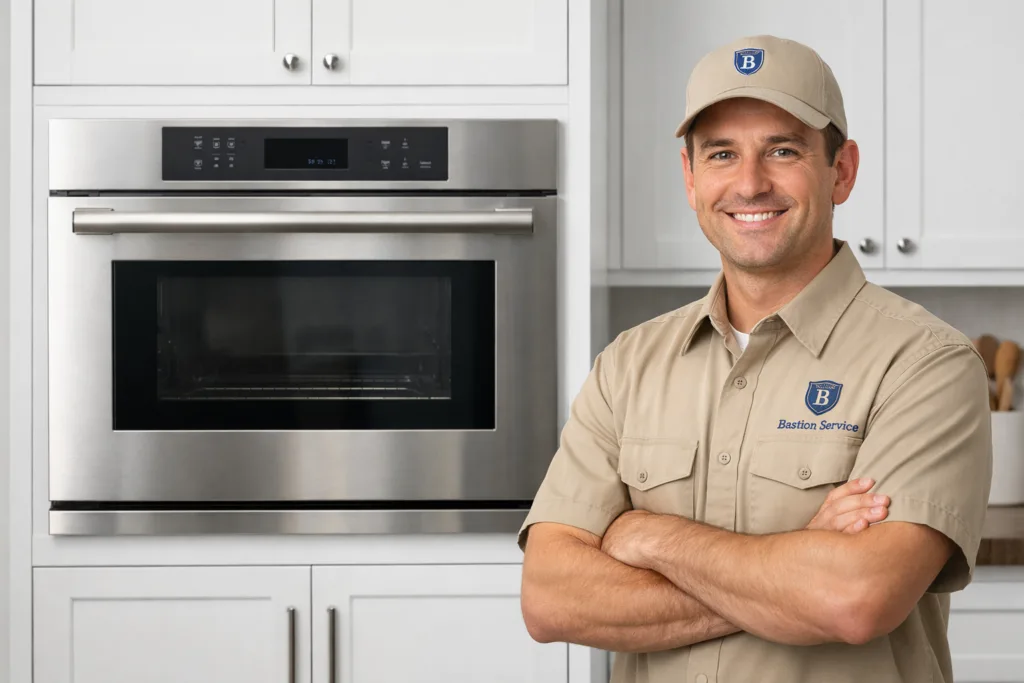
Common Monogram wall oven problems in Hawthorne homes

Wall oven problems usually fall into a few recognizable patterns. The challenge is that the same cooking complaint can come from different failed components, which is why symptom details matter. A Monogram wall oven that looks normal on the display may still be heating incorrectly, cycling at the wrong time, or shutting down under load.
Not heating at all
If the oven powers on but never gets warm, the issue may involve a failed bake circuit, broil circuit, temperature sensor, control relay, thermal protection component, or wiring problem. In some cases, only one heating function fails, so the oven may appear to be working while still cooking poorly. This can show up as very long cook times, pale baked goods, or food that never finishes in the center.
Uneven baking or unreliable temperature
When one side browns faster than the other, the bottom burns before the middle is done, or results change from one use to the next, the problem is often temperature regulation rather than recipe error. A drifting sensor, weak heating output, door seal leak, or convection-related fault can all affect how the cavity holds heat. These issues are especially frustrating because the oven may seem usable while still producing inconsistent meals.
Slow preheat
Slow preheat is a common complaint with built-in ovens. Sometimes the oven eventually reaches the set temperature but takes much longer than before. That can happen when one heating element is no longer contributing properly, when the sensor is misreading cavity temperature, or when the control is not energizing the correct circuit consistently. If preheat time has changed noticeably, it is worth checking before the strain causes other parts to fail.
Error codes and control problems
Monogram wall ovens rely on electronic controls, sensor feedback, and safety logic. If the display flashes an error, the keypad stops responding, settings change unexpectedly, or the unit resets during cooking, the source may be the interface, main control, wiring, or another component triggering a lockout. A control symptom does not always mean the control board itself is the failed part.
Door, latch, and heat retention issues
A door that does not close tightly can affect both performance and safety. Heat escaping around the door may lead to uneven baking, long preheat cycles, and excess heat on surrounding surfaces. If the gasket is worn, the hinges are off, or the latch is not operating correctly, the oven may struggle to maintain stable temperatures, especially during longer cooking cycles.
Why symptom-based diagnosis matters
Built-in wall ovens are poor candidates for guesswork. More than one part can create the same complaint, and some failures only show up once the appliance has been running long enough to get hot. For example, an oven that cannot hold temperature may have a bad sensor, a relay issue, an intermittent wiring problem, or a weak heating circuit. Replacing parts based only on the most obvious symptom can add cost without solving the problem.
Good testing helps narrow down whether the repair is limited to a single component or whether the issue is broader. That matters not only for the immediate fix, but also for deciding whether the oven is likely to remain reliable after service.
Signs the oven should be checked sooner rather than later
Some wall oven issues are inconvenient. Others are warning signs that normal use should stop until the appliance is inspected. It makes sense to schedule service if you notice any of the following:
- The oven takes much longer than usual to preheat
- Food comes out undercooked, overbrowned, or inconsistent from rack to rack
- The display shows recurring fault codes
- The oven shuts off during baking or roasting
- The controls freeze, restart, or fail to respond
- The door does not close securely
- There is a burning smell, visible sparking, or unusual heat around the unit
These problems rarely correct themselves. Continued use can stress other components and make the eventual repair more involved.
Repair or replace? What homeowners usually weigh
For many Hawthorne households, the decision comes down to the exact failure, the overall condition of the oven, and whether the appliance has otherwise been dependable. A targeted repair is often sensible when the issue is isolated and the rest of the oven is in good shape. That is especially true with built-in appliances, where replacement can involve cabinet fit, finish matching, and installation planning.
Replacement becomes more likely when there are repeated electronic failures, multiple aging components breaking down at the same time, or signs of broader wear that make future reliability doubtful. A proper diagnosis helps frame that decision with real information instead of assumptions.
What to note before scheduling service
If possible, pay attention to how the symptom appears. Helpful details include whether the problem happens during preheat or mid-cycle, whether broil still works when bake does not, whether the issue is constant or intermittent, and whether any fault code appears on the display. Even small observations can help separate a heating failure from a sensor or control problem.
It is also useful to note if the oven has recently tripped power, completed a self-clean cycle, or started acting differently after a period of heavy use. Those details can point toward heat-related component failure, latch issues, or electrical stress inside the appliance.
Focused Monogram wall oven service in Hawthorne
Monogram wall ovens are built-in cooking appliances with systems that need to be evaluated as a whole, not just by the first symptom that appears. For homeowners in Hawthorne, the most effective repair path is to identify whether the problem is tied to heating performance, temperature sensing, control response, door sealing, or a combination of issues, then recommend the most sensible next step based on the oven’s actual condition.