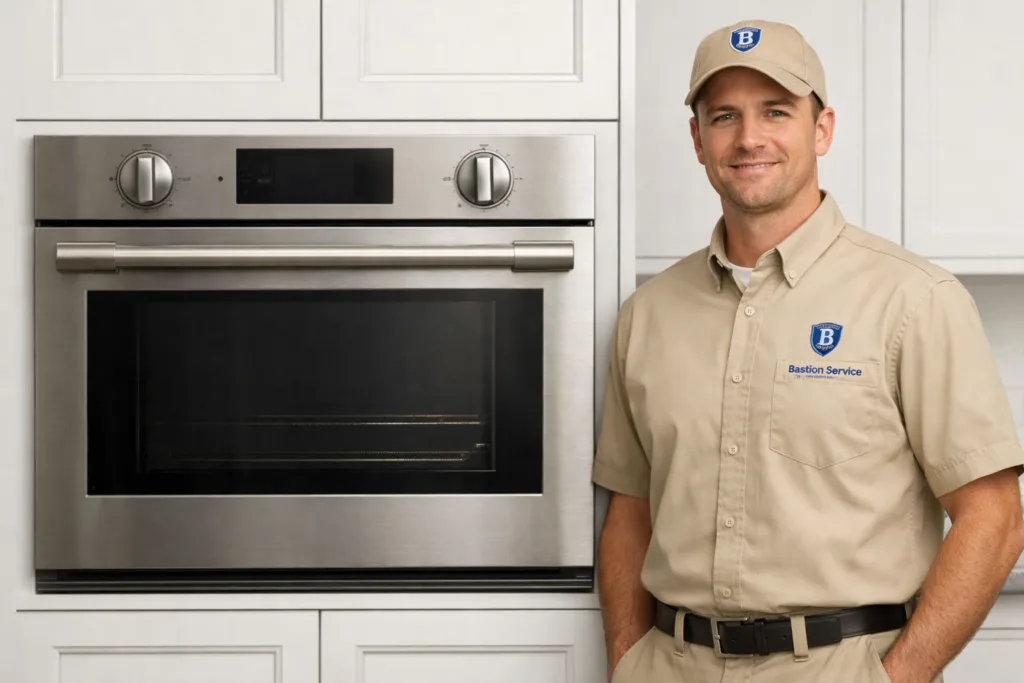
Wall ovens tend to give warning signs before they fail completely. You might notice cookies browning too fast on one side, a casserole needing extra time every week, or a preheat cycle that seems to drag on much longer than it used to. With a Wolf wall oven, those symptoms can point to very different underlying problems, so the smartest first step is identifying what the appliance is actually doing during a normal cooking cycle.
How Wolf wall oven problems usually show up at home
Some issues are obvious, such as an oven that will not heat at all. Others are easier to misread. A unit may still turn on, illuminate the display, and appear normal while struggling to reach temperature or hold it consistently. In Hawthorne homes, that often shows up as underbaked centers, overbrowned edges, delayed roasting times, or a need to keep adjusting recipes that previously worked without any changes.
Because wall ovens combine heating components, sensors, controls, door seals, and power inputs, one symptom does not always equal one failed part. That is why symptom-based troubleshooting matters. It helps separate a straightforward repair from a broader control or electrical issue.
Common symptoms and what they may indicate
Oven will not heat
If the oven powers on but never gets hot, possible causes may include a failed heating element, a temperature sensor problem, an issue with the control relay, or a power supply fault. In some cases, the display and lights still work even though the heating circuit is not operating correctly.
From a homeowner perspective, the main clue is that the oven appears active but food remains cold or barely warms after a full cycle. When that happens repeatedly, the problem is usually beyond a simple reset.
Uneven baking or roasting
Uneven cooking is one of the most common complaints with wall ovens because it affects daily use long before the unit stops working altogether. If one rack cooks faster than another, baked goods rise unevenly, or dishes need to be rotated far more often than before, the issue may involve sensor accuracy, weak heat output, convection performance, or heat loss at the door.
This is also the kind of symptom that gets blamed on cookware or recipe changes when the appliance is really at fault. If multiple meals are turning out inconsistently, the oven should be checked.
Slow preheating
A long preheat time can signal a heating element that is weakening, a sensor that is misreading temperature, or a control problem that is not driving the oven correctly. Slow preheat does not just waste time. It can also affect final cooking results because the oven may claim it has reached temperature before the cavity is truly ready.
If preheat times have steadily increased, that pattern is worth attention even if the oven still completes a cycle.
Temperature swings during cooking
When an oven gets too hot, then too cool, then overheats again, meals become unpredictable. Repeated temperature swings can point to a sensor problem, a control issue, or trouble regulating the bake and broil functions as intended. Homeowners usually notice this when familiar recipes stop behaving normally for no obvious reason.
Error codes or control problems
Fault codes, beeping that returns after a reset, buttons that stop responding, or a display that acts erratically can indicate electronic control trouble or communication faults inside the unit. These problems tend to become more frequent over time rather than disappearing for good.
If the oven only works after cycling the breaker or powering it down, that usually suggests the issue is active and should be diagnosed rather than ignored.
Door not closing properly
A misaligned door, worn gasket, hinge problem, or latch issue can let heat escape and interfere with stable cooking temperatures. Even a strong heating system will struggle to perform correctly if the oven cavity cannot retain heat the way it should.
Signs include visible gaps, heat venting more than usual, slower cooking, or a door that feels loose, uneven, or difficult to shut.
When to stop using the oven
Some performance problems are frustrating but not immediately hazardous. Others deserve prompt service before the oven is used again. It is best to stop using the appliance if it trips the breaker, overheats, shuts off during operation, displays repeated fault codes, smells strongly electrical, or behaves unpredictably enough to affect safe cooking.
Continued use in those conditions can increase the chance of additional damage to controls or other electrical components. A problem that starts as intermittent can turn into a complete loss of function with little warning.
What a diagnosis should clarify
A useful oven service visit should answer a few practical questions:
- Is the problem isolated to one component, or are multiple systems involved?
- Is the fault related to heating, sensing, controls, door fit, or power supply?
- Is the repair likely to restore normal cooking performance?
- Are there signs of broader wear that change the repair decision?
For built-in wall ovens, accurate testing matters because access, fit, and component interaction all affect the repair path. A unit that appears to have a simple temperature issue may actually have a deeper control or regulation problem.
Repair or replacement for a Wolf wall oven
Most homeowners do not start with a replacement decision. They want to know whether the issue is specific and repairable, or whether the oven is showing signs of larger decline. Repair often makes sense when the problem is limited to a defined part or system and the rest of the unit remains in solid condition.
Replacement becomes a more realistic conversation when failures are stacking up, reliability has dropped off for an extended period, or the repair path involves multiple major issues at once. The value of a proper diagnosis is that it frames that choice around the actual condition of the oven, not guesswork.
Why recurring symptoms should not be ignored
Wall oven problems rarely stay frozen in place. A little extra bake time can become significant temperature inconsistency. An occasional fault code can turn into a control panel that stops responding. A door that does not seal well can gradually affect heat retention and strain normal operation.
If your Wolf wall oven in Hawthorne has become less predictable, the most helpful next step is to have the specific symptom pattern evaluated and determine whether a targeted repair will return it to reliable household use.