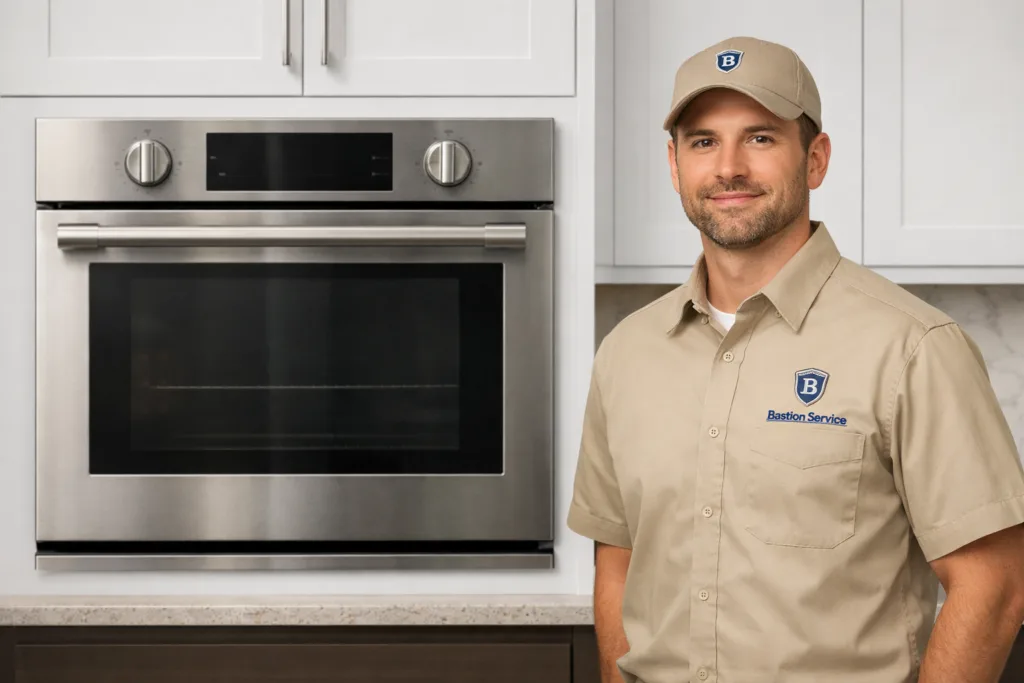
Built-in wall ovens can fail in ways that look simple on the surface but come from very different causes. A Dacor unit that bakes unevenly, preheats slowly, or stops in the middle of a cycle may have a heating, sensing, control, latch, or power-related problem, and the right repair depends on which system is actually at fault.
How Dacor wall oven problems usually show up
Most homeowners notice performance changes before a complete breakdown. Cookies start browning unevenly, casseroles need extra time, or the oven says it is preheated when the cavity is still not hot enough. In other cases, the display works normally but the oven does not heat, or the unit heats too aggressively and burns food that used to cook without trouble.
Because Dacor wall ovens rely on coordinated communication between sensors, elements, relays, controls, and door components, one failing part can create symptoms that overlap with another. That is why symptom pattern matters. Whether the issue happens every cycle, only during baking, only during broiling, or only after the oven has been running for a while can help narrow down the repair path.
Common symptoms and what they may indicate
Oven is not heating
If the display turns on but the oven stays cold, the cause may be a failed bake element, a broil circuit problem, a sensor issue, a relay fault, or a power supply problem. Some ovens still show lights and control response even when a heating circuit has failed, which can make the problem seem less serious than it is.
If the oven is completely unresponsive or repeatedly trips a breaker, the issue may involve incoming power, wiring, or an internal electrical fault. In that situation, continued use is not a good idea until the appliance has been checked.
Oven heats, but temperature is off
When food comes out undercooked despite normal cook times, or burns before the recipe time is up, the oven may be running outside the temperature shown on the display. That can happen with a drifting temperature sensor, weak heating performance, a control calibration issue, or inconsistent cycling during the bake process.
Temperature problems are often mistaken for recipe issues or cookware differences, especially when they begin gradually. If the same dishes that used to turn out well are now inconsistent, the oven itself is worth evaluating.
Uneven baking from top to bottom or side to side
Uneven cooking can point to a partially failed element, poor heat distribution, sensor trouble, or a door that is not sealing well. Homeowners may notice that one rack bakes much faster than another, or that the back of the dish browns while the front stays pale.
On a wall oven, this kind of issue can be especially frustrating because the appliance still seems usable. But repeated uneven performance usually means something in the heating cycle is no longer working as intended.
Slow preheating
A long preheat time is often one of the earliest warning signs. The oven may eventually reach temperature, but it takes far longer than it used to, or it struggles to recover heat after the door is opened. That can happen when an element is weakening, the sensor is reading incorrectly, or the control is not energizing heat properly.
In a Hawthorne household that uses the oven regularly, slow preheat quickly turns into a daily inconvenience. It can also signal a problem that may continue to worsen until normal cooking is no longer reliable.
Error codes, beeping, or display issues
Error messages do not always identify a single failed part. A code may reflect a sensor reading out of range, a communication fault, a latch problem, or an issue on the control side. Displays that flicker, reset, or stop responding can also indicate unstable electronic operation rather than a simple keypad issue.
When electronic symptoms appear along with heating problems, it is important to look at the oven as a whole system instead of assuming the display is the only failed component.
Door problems and self-clean failures
If the door does not close evenly, the latch sticks, or the self-clean cycle will not start or finish, the problem may involve hinges, switches, alignment, lock components, or the control system that monitors those parts. A poor door seal can affect temperature stability and cooking results even when the heating system itself is still working.
Symptoms that should not be ignored
Some wall oven issues are more than a cooking inconvenience. It is smart to stop using the appliance and have it checked if you notice:
- burning smells that continue beyond normal first-use or residue burnoff
- sparking, popping, or visible arcing
- repeated breaker trips
- an oven that overheats or will not shut off normally
- a door that will not latch or stay properly closed
- display behavior that is erratic during operation
These symptoms can point to electrical or safety-related faults, not just routine wear.
What a symptom-based diagnosis helps clarify
When a Dacor wall oven is acting up, the main questions are usually straightforward: what failed, can the oven still be used, and is repair practical? The answers depend on the exact behavior of the appliance, its age and overall condition, and whether the problem appears isolated or part of broader wear.
A symptom-based evaluation helps separate issues such as a single weak heating component from larger electronic problems, repeated intermittent faults, or damage affecting multiple systems. That keeps the decision focused on the real condition of the oven instead of guesswork or replacing parts based only on the most obvious symptom.
Repair versus replacement for a Dacor wall oven
Many wall oven problems are repairable when the appliance is otherwise in solid condition. Heating elements, temperature sensors, latch parts, switches, and some control-related failures can often be addressed without replacing the entire unit. Repair tends to make the most sense when the problem is isolated and the oven has been performing well aside from the current fault.
Replacement becomes a more realistic conversation when there are multiple active problems, repeated electronic failures, significant wear, or prior repairs that have not restored dependable performance. For homeowners in Hawthorne, the best decision usually comes down to the appliance condition as a whole, not just whether one part can technically be changed.
When to schedule service
It makes sense to arrange Dacor wall oven repair in Hawthorne when the oven no longer heats reliably, cooking results are inconsistent, preheat times are stretching out, or error behavior keeps returning. Intermittent issues are also worth addressing early, because they often become more frequent and harder to work around.
If the oven is still operating but giving unpredictable results, service can help before the problem escalates into a complete loss of function. That is often easier on the household than waiting until the appliance fails during regular meal preparation.
What homeowners in Hawthorne usually want to know
Most people are not looking for a technical breakdown of every oven component. They want to know whether the appliance is safe to use, whether the symptom points to a manageable repair, and whether the investment is reasonable for the condition of the unit.
For Dacor wall ovens, that usually means matching the repair plan to the actual symptom pattern: no heat, partial heat, unstable temperature, display faults, door issues, or repeated shutdowns. Once the failure is narrowed down, the next step is much easier to evaluate in practical household terms.