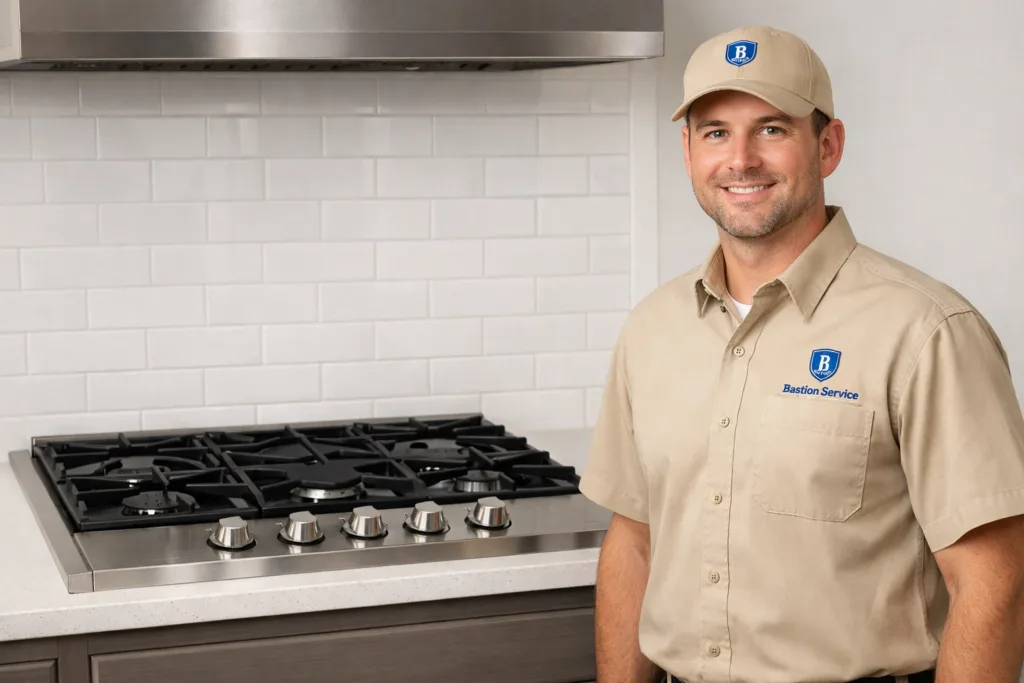
A cooktop problem can show up in ways that seem simple at first but point to very different failures underneath the surface. One burner may stop heating while the others work normally, a gas burner may click constantly without lighting, or touch controls may respond only part of the time. For homeowners in Rancho Park, the most useful approach is to match the symptom pattern to the likely failed part before deciding on repair.
How Monogram cooktop problems are usually diagnosed
Monogram cooktops can develop faults in the burner assembly, spark ignition components, switches, wiring, electronic controls, heating elements, or the incoming power supply. Because several parts can create the same symptom, diagnosis usually starts with what the cooktop is doing consistently, what happens only intermittently, and whether the problem affects one burner or the entire unit.
That distinction matters. A single weak burner often points to a localized problem such as a clogged burner head, damaged electrode, failed infinite switch, or worn element. If every burner is affected, the issue may be broader, such as a control fault, power problem, or failure in a shared ignition component.
Common Monogram cooktop symptoms and what they may mean
Burner clicks but does not ignite
On gas models, this can happen when the burner cap is out of position, the ports are blocked by residue, the igniter is damp, or the spark system is not sending a reliable spark. If the clicking continues after the area has been cleaned and dried, the problem may involve a switch harness or spark module rather than simple surface buildup.
If you smell gas and the burner does not light, stop using the appliance until the issue is checked. A repeated ignition failure is not something to ignore.
Burner lights, but the flame is weak or uneven
A flame that looks smaller than normal or spreads unevenly around the burner ring can come from blocked ports, misaligned caps, regulator-related issues, or wear in the burner assembly. In daily use, this often shows up as longer cooking times, difficulty simmering, or one side of the pan heating faster than the other.
Electric burner will not heat
For radiant or electric models, a dead heating zone may be caused by a failed element, a damaged connection below the surface, or a bad switch or control. If the indicator lights still work but the zone stays cold, that usually narrows the problem to the heating circuit rather than a total power loss.
Induction zone does not detect cookware
Induction models can appear faulty when the actual issue is inconsistent pan detection. That may be related to incompatible cookware, a sensor issue, electronic control trouble, or a fault in the induction module. If the same pan works on one zone but not another, the problem is more likely within the cooktop than with the cookware itself.
Cooktop will not power on
If the entire unit is unresponsive, possible causes include a tripped breaker, terminal connection problem, failed control board, damaged wiring, or user interface failure. Complete loss of function is usually a sign that the problem goes beyond one burner and should be checked before the cooktop is used again.
Controls work inconsistently
Delayed response, random beeping, settings changing on their own, or burners cycling incorrectly can point to failing controls, moisture intrusion, or communication problems between interface and power components. On electronic models, these issues often become more frequent over time rather than resolving on their own.
Constant clicking even when burners are off
Continuous clicking is one of the more common complaints on gas cooktops. It may follow a spill, deep cleaning, or moisture around the ignition switches. If drying the area does not stop the clicking, the ignition system likely needs service. Leaving it unchecked can put additional wear on other related parts.
Cracked glass or damaged surface
Glass damage is more than a cosmetic issue. A crack can spread with heat and weight, and surface instability can make normal cooking unsafe. In these cases, the decision is less about short-term convenience and more about whether the model is repairable and whether the replacement surface is worthwhile for the age and condition of the unit.
Signs the problem is getting worse
Many cooktop issues begin intermittently. A burner may fail once every few days, the ignition may click longer than usual before lighting, or a control may need several touches before responding. Those smaller warning signs often show that a component is wearing out rather than failing all at once.
- Ignition takes longer each week
- One burner now fails more often than it used to
- Heat levels no longer match the setting selected
- The cooktop shuts off unexpectedly during use
- Controls flicker, beep, or reset without input
- The breaker trips when a specific zone is used
When those patterns appear, continued use can sometimes turn a single-part repair into a larger electrical or control issue.
When to stop using the cooktop
Some symptoms suggest the cooktop should not stay in regular use until it has been inspected. That includes a persistent gas smell, visible sparking outside the normal ignition area, overheating that does not respond to the control setting, cracked glass, or a burner that stays on when it should cycle down.
It is also smart to stop using any individual burner that is behaving unpredictably, even if the rest of the cooktop still works. Isolating the problem early may help prevent added damage to switches, modules, or surrounding components.
Repair or replace: what usually makes sense
Many Monogram cooktop repairs are still worthwhile when the issue is limited to an igniter, spark module, switch, element, sensor, or control component. Those are targeted failures that can often be addressed without replacing the entire appliance.
Replacement becomes more likely when there is major glass damage, multiple failing systems, severe electrical damage, or parts availability problems for an older model. The right decision usually comes down to the overall condition of the cooktop, how many components are involved, and whether the repair cost is reasonable compared with the remaining life of the unit.
Helpful details to note before scheduling service
If the symptom is intermittent, a few specific observations can make troubleshooting faster and more accurate. Try to note:
- Whether the problem affects one burner or all burners
- Whether it happens every time or only occasionally
- Whether the issue started after a spill, cleaning, or power interruption
- Whether the burner clicks, heats weakly, overheats, or does nothing at all
- Any display behavior, sounds, or error patterns
Even simple notes like “front right burner clicks but will not light when the others do” or “left zone heats only on high” can help narrow the likely fault.
What Rancho Park homeowners usually want to know
Most people are not looking for a long parts breakdown. They want to know what failed, whether the cooktop is safe to use, how involved the repair is likely to be, and whether the appliance is worth fixing. A service visit is most useful when it answers those questions clearly and gives a practical repair plan based on the actual condition of the unit.
For Monogram cooktop issues in Rancho Park, that symptom-based approach is usually the fastest way to move from frustration to a workable next step.