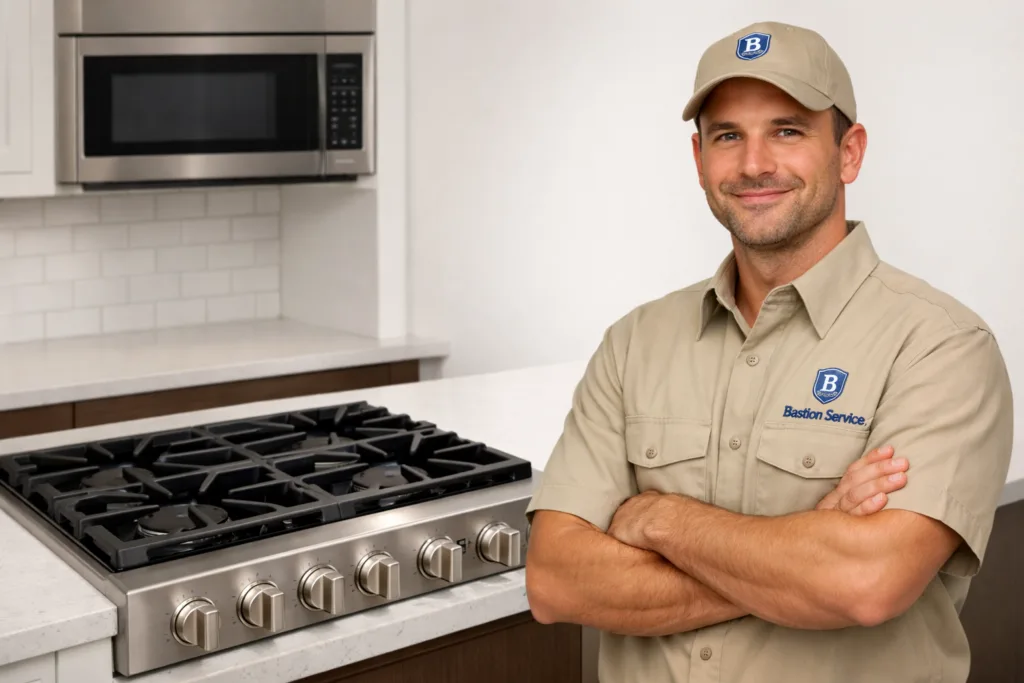
Cooktop problems rarely stay limited to inconvenience. A burner that stops igniting, a control that responds inconsistently, or a surface that heats unevenly can interrupt everyday cooking and sometimes point to a deeper electrical or gas-side fault. With Wolf units, the best results usually come from matching the repair to the exact symptom rather than guessing based on one visible issue.
How Wolf cooktop problems are usually diagnosed
Many cooktop symptoms overlap. A burner that will not light can be caused by something as simple as moisture or burner misalignment, but it can also come from a worn ignition switch, spark module problem, blocked ports, or gas flow issue. On electric and induction models, a heating problem may involve the element, sensor, control, or wiring instead of the cooking zone itself.
That is why a proper diagnosis usually starts with a few basic questions:
- Is the issue happening on one burner or several?
- Did the problem begin suddenly or get worse over time?
- Did it start after cleaning, a spill, or a power interruption?
- Is the cooktop clicking, sparking, showing an error, or staying completely unresponsive?
Those details often help separate a burner-level problem from a broader system fault.
Common Wolf cooktop symptoms and what they may mean
Burner clicks but does not ignite
This is one of the most common complaints on gas cooktops. In some cases, the burner cap is slightly out of position or the ports are partially blocked by residue. Moisture after cleaning can also interfere with ignition. If the problem keeps returning, the issue may involve the igniter, switch, spark module, or gas delivery to that burner.
If multiple burners are failing to light, the cause is less likely to be a single burner assembly and more likely to involve a shared ignition or supply component.
Constant or random clicking
Clicking that continues after the burner lights, or clicking that starts when no burner is in use, often points to moisture, contamination around the switch area, or a failing ignition switch. Sometimes the cooktop begins clicking after a spill reaches internal components. If drying and correct burner reassembly do not stop it, the unit should be inspected before regular use continues.
Weak flame or poor heat control
A flame that looks small, uneven, or unstable can affect cooking performance long before the burner stops working entirely. Common causes include blocked burner ports, burner head issues, regulator concerns, or assembly problems. Homeowners may notice longer boil times, uneven pan heating, or difficulty keeping a steady simmer.
On electric or induction Wolf cooktops, similar complaints may show up as slow heating, cycling that feels erratic, or a burner that does not respond accurately to setting changes.
Burner does not heat at all
When a heating zone stays cold, the failed part is not always the obvious one. Depending on the model, the fault may involve the element, switch, relay, wiring connection, or control board. If the burner cuts in and out, that can suggest a connection problem or a component that is failing intermittently rather than completely.
Touch controls or displays are not responding
Unresponsive controls, flashing indicators, or error codes can point to communication faults, sensor issues, or failing electronic controls. Repeatedly resetting the unit may temporarily clear the display without solving the underlying cause. If the same error returns, the cooktop usually needs direct testing.
Cracked glass or visible surface damage
On glass cooktop models, any crack should be taken seriously. Even if the unit still powers on, the damage can affect safe operation and may expose the appliance to further electrical or structural problems. Surface damage should be evaluated before the cooktop is used again.
Signs the problem may be getting worse
Some issues begin subtly. A burner may need two or three attempts to ignite before it begins failing more consistently. A control may lag occasionally before becoming fully unresponsive. A weak flame may still cook food, but not evenly or efficiently. These changes matter because they often show a component is wearing down rather than recovering on its own.
Warning signs that should not be ignored include:
- Burners that spark repeatedly without lighting
- Any arcing, popping, or breaker-tripping behavior
- Controls that activate the wrong burner or setting
- Heat levels that rise or drop unpredictably
- Visible damage to the glass, knobs, or burner area
When those symptoms are left alone, a smaller repair can become a larger one.
When to stop using the cooktop
It is usually best to stop using the appliance if there is a persistent gas odor, repeated breaker trips, visible sparking, smoke, or a cracked glass surface. These are not normal wear symptoms. If you smell gas, leave the area if needed and address the safety issue first before arranging appliance service.
For less urgent problems such as a single weak burner or intermittent ignition, it still makes sense to schedule service before the fault spreads to additional components.
Repair or replace?
Many Wolf cooktop issues are worth repairing, especially when the problem is isolated to ignition parts, burner assemblies, switches, wiring, or a specific control component. Replacement becomes a more serious discussion when the cooktop has multiple failing systems, substantial physical damage, or repair costs that no longer make sense for the overall condition of the unit.
Age is only one factor. A well-kept cooktop with a targeted failure can still be a good repair candidate, while a unit with repeated problems across several functions may be approaching the point where replacement is more practical.
What to note before service
Homeowners in Marina del Rey can make the repair process easier by paying attention to the pattern of the failure. It helps to note:
- Which burner or burners are affected
- Whether the issue is constant or intermittent
- Any recent spill, cleaning event, or power outage
- Whether the symptom involves clicking, low flame, no heat, or control errors
- Whether the problem changes after the cooktop cools down
Small details can help narrow the fault faster and reduce unnecessary part replacement.
Cooktop repair focused on the actual symptom
For households in Marina del Rey, the most useful service approach is one that follows the symptom all the way to the failed component. Whether the issue involves ignition, burner performance, electrical controls, or surface damage, the repair decision should be based on how the cooktop is actually failing and whether the fix is sensible for the condition of the appliance. That gives homeowners a clearer path back to safe, consistent cooking.