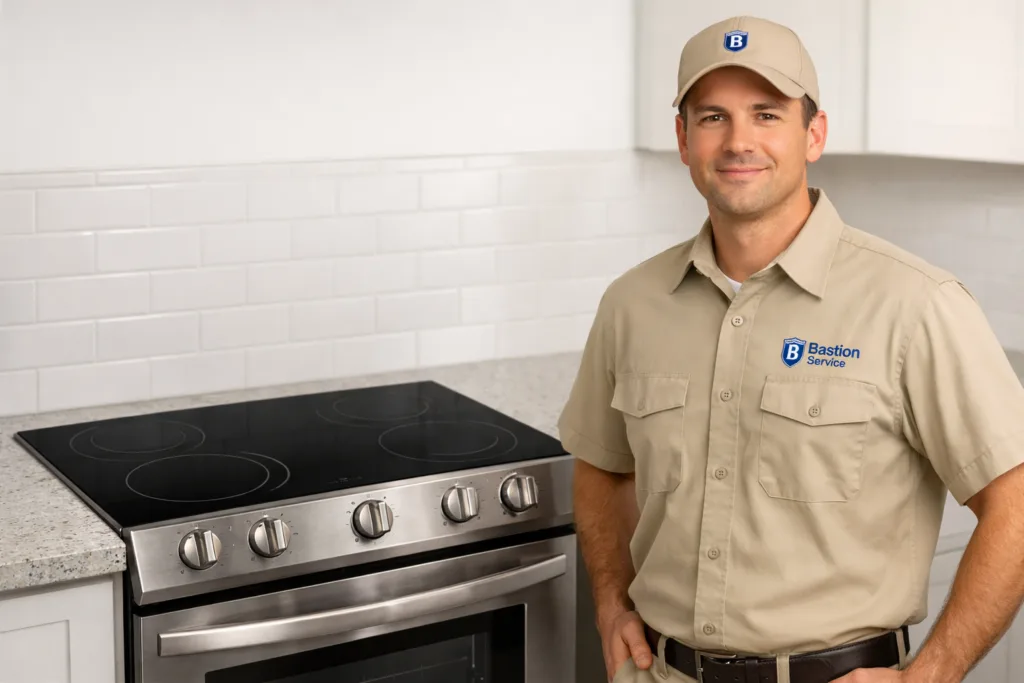
Cooktop problems are easiest to solve when the symptom is described clearly. A burner that never lights, one that lights slowly, a surface element that stays cold, or heat that surges unexpectedly each points to a different repair path. With Kenmore cooktops, the issue may involve the igniter, burner head, spark switch, element, control switch, wiring, or the cooktop surface itself.
Start with what the cooktop is doing
Before service is scheduled, it helps to notice whether the problem affects one burner or several, whether it happens all the time or only after cleaning or heavy cooking, and whether the failure involves gas ignition, electric heat, or temperature control. Those details can make the difference between a simple part replacement and a larger repair decision.
Burner will not ignite
On a gas Kenmore cooktop, a burner that will not light may be caused by blocked burner ports, a burner cap that is out of position, moisture around the igniter, a weak spark, or a failed ignition component. If clicking is present but the flame does not establish, the problem is not always the same from one cooktop to the next. In some cases, the burner assembly needs cleaning and correction. In others, an electrical ignition part has failed.
If you notice a strong gas odor that does not stop, discontinue use and address safety immediately before considering repair.
Clicking that continues after the burner is lit
Constant clicking is one of the most common complaints on gas cooktops. It often begins after a boil-over, deep cleaning, or moisture getting into the ignition area. Food residue around the burner base, a stuck switch, or a failing spark module can all create similar behavior. If the clicking keeps returning after the surface is dry and properly assembled, the cooktop usually needs further inspection.
Electric burner does not heat
For electric Kenmore models, a burner that stays cold may have a failed radiant element, a bad switch, a loose connection, or wiring damage under the top. If one burner fails while the others still work, the fault is often isolated to that circuit. When several burners stop heating at the same time, the diagnosis may shift toward shared power or control issues.
Burner overheats or will not adjust
If a burner runs too hot on every setting, the control switch may no longer be regulating output properly. If heat cycles erratically or lags far behind the selected setting, the switch, element, or related wiring may be at fault. This kind of symptom affects more than cooking results. It can also create safety concerns when pans continue heating beyond the expected level.
Cracked glass or visible physical damage
A cracked glass top, damaged control area, loose knobs, or signs of heat damage can change whether repair is worthwhile. Surface damage sometimes appears cosmetic at first, but cracks and warped sections can affect safe operation and may worsen with continued use. Physical condition matters just as much as the failed part when deciding how to proceed.
Why symptom-based diagnosis matters
Two Kenmore cooktops can show the same symptom for completely different reasons. Repeated clicking might be caused by moisture on one unit and a failed switch harness on another. A burner that will not heat may need a new element, but it could also be losing power through a damaged connection. That is why the symptom pattern matters more than guessing from the surface behavior alone.
For homeowners in Marina del Rey, a service visit is most valuable when it answers a few practical questions: what failed, whether the unit can be repaired safely, whether the issue appears isolated, and whether the expected repair makes sense for the age and condition of the cooktop.
Signs the problem should not be ignored
Some cooktop issues are inconvenient but manageable for a short time. Others should be addressed quickly because continued use can cause more damage or create unnecessary risk. Pay closer attention if you notice:
- Burners that spark but do not ignite reliably
- Clicking that continues even when the cooktop is off or dry
- Burners heating only on high
- Elements that cycle unpredictably
- Controls that feel loose, stuck, or inconsistent
- Scorching, sparking, or signs of overheated wiring
- Cracks in the glass or damage around burner mounting points
These symptoms often point to problems that do not improve on their own. In many cases, early repair helps prevent added wear to switches, modules, and wiring.
Repair or replace a Kenmore cooktop?
Repair is often the better choice when the cooktop is otherwise in good condition and the failure is limited to one component, such as an igniter, surface element, or control switch. Replacement becomes more likely when there is major surface damage, multiple burner failures, repeated electrical issues, or parts availability problems that drive the repair cost too high.
The best decision usually depends on the full condition of the appliance rather than the single symptom that finally made it unusable. A cooktop with one failed burner can be a very different case from a unit with aging controls, damaged glass, and ongoing ignition trouble.
What homeowners in Marina del Rey usually want to know
Most people are trying to answer three straightforward questions: Is the cooktop safe to keep using, what part has likely failed, and is the repair worth doing? A good service recommendation should be based on the exact symptom, the condition of the appliance, and the most sensible next step for everyday household use.
If your Kenmore cooktop is showing ignition problems, uneven heating, constant clicking, or control trouble in Marina del Rey, the clearest path forward is to have the issue evaluated based on the way the cooktop is actually failing rather than on a general guess.