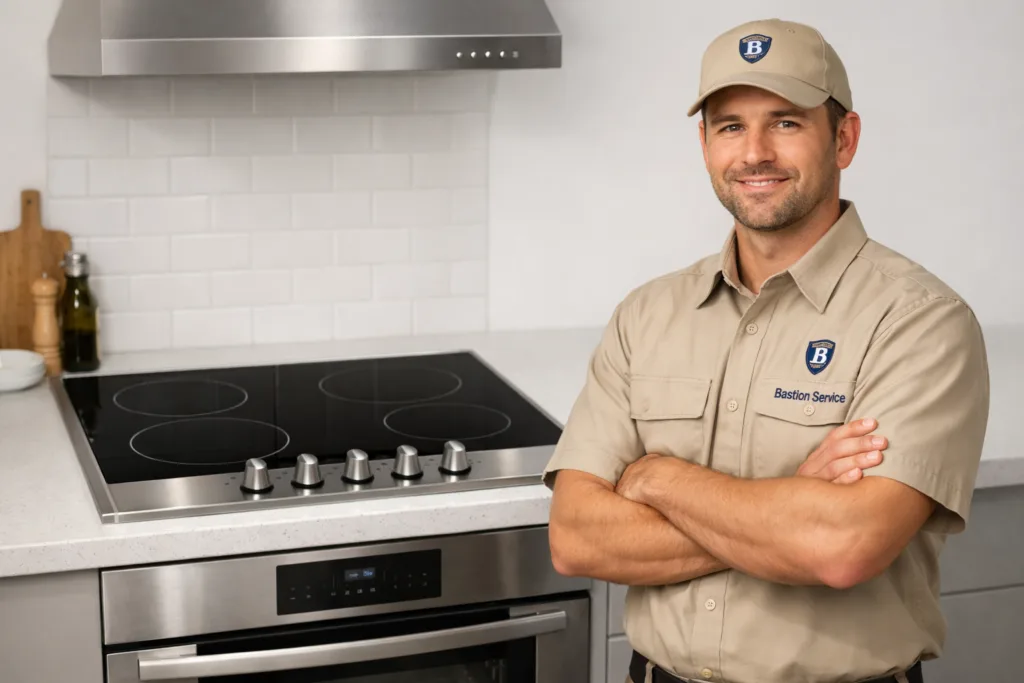
Cooktop problems rarely stay small for long. A single burner that hesitates to ignite, an element that no longer reaches full heat, or controls that respond inconsistently can quickly turn routine cooking into trial and error. With Electrolux models, the same symptom can come from more than one source, so the most useful first step is identifying whether the problem is isolated to one component or tied to a larger electrical, ignition, or control issue.
Common Electrolux cooktop problems in Marina del Rey homes
Most service calls start with a symptom the homeowner can describe clearly: clicking, weak heat, no heat, cracked glass, or controls that do not behave normally. Those details matter because how the problem appears often points toward the right repair path.
Burners that will not ignite
On gas Electrolux cooktops, a burner that does not light may be caused by a misaligned burner cap, debris in the burner ports, moisture around the igniter, a failed spark component, or a problem with the ignition switch. If one burner is affected while the others work normally, the fault is often limited to that burner assembly or its related parts.
If ignition has become slower over time, that gradual change can be as important as a complete no-light condition. A burner that lights only after repeated clicking is often showing an early warning sign rather than a one-time inconvenience.
Constant clicking or clicking after the flame is on
Persistent clicking is one of the most common complaints on gas cooktops. In some cases, cleanup moisture or food residue is the trigger. In others, the issue comes from a worn ignition switch, failing spark module, or electrical short in the switch harness. When clicking continues after ignition, the cooktop is no longer operating as it should and should be inspected before the problem spreads or worsens.
Burners not heating or heating too weakly
On electric Electrolux cooktops, weak or absent heat may point to a failed radiant element, damaged connector, faulty infinite switch, or control problem. If the burner indicator appears normal but the cooking zone stays cool, the issue may be deeper than the surface symptom suggests. If a burner cycles oddly, overheats, or never reaches the selected setting, the repair may involve the regulation side of the system rather than the element itself.
Uneven heating and inconsistent cooking results
When one area of the pan gets hotter than another or simmer settings no longer feel predictable, the cooktop may have an element problem, control regulation issue, or surface-related fault. These issues are often first noticed through cooking results rather than obvious failure. Food starts scorching in one spot, water boils unevenly, or the same setting behaves differently from one day to the next.
Touch controls or knobs not responding correctly
Some Electrolux cooktops develop control issues before they stop working entirely. You may notice delayed response, settings changing unexpectedly, controls that fail to activate a burner, or a unit that locks up intermittently. Depending on the model, the cause may involve the user interface, switch assembly, control board, or wiring connection inside the appliance.
Cracked glass or surface damage
On smooth-top models, a cracked glass surface is more than a cosmetic concern. Cracks can affect safe operation, allow moisture into internal components, and create a risk of further damage with continued heating. Even when the burners still appear to function, the condition of the surface can change whether repair is advisable and what parts may be required.
How symptom patterns help narrow the cause
The most helpful details are often simple ones a homeowner already knows. Does the problem affect one burner or several? Did it start suddenly after a spill or gradually over weeks? Does it happen every time or only once in a while? Does the cooktop trip power, lose heat mid-use, or make unusual sounds?
Those patterns can separate a localized burner issue from a shared control or power problem. For example:
- One burner failing usually points to a burner-specific part or connection.
- Several burners acting up can suggest a shared control, switch, wiring, or power issue.
- Intermittent problems often indicate a worn switch, unstable connection, or moisture-related fault.
- Sudden complete failure may involve a blown component, damaged wiring, or a larger electrical problem.
When continued use can make the repair worse
It is common to keep using the “good” burners and work around the bad one, but some cooktop issues become more expensive when they are ignored. Repeated attempts to light a failing gas burner can add wear to ignition parts. An electric burner that overheats or cycles unpredictably can damage cookware and place extra stress on controls. A cracked glass top can worsen with heat and normal kitchen use.
Service should move up in priority when you notice any of the following:
- A burner repeatedly fails to ignite or heat
- Clicking continues long after ignition
- Controls work only part of the time
- The cooktop trips a breaker or loses power unexpectedly
- Heat output is no longer stable or predictable
- The glass surface is cracked, lifting, or visibly damaged
These are not just performance issues. They often signal that a component is deteriorating and may affect other parts if the unit stays in regular use.
Repair or replace: what usually makes the difference
For many households in Marina del Rey, the decision comes down to the condition of the cooktop as a whole, not just the fact that one symptom appeared. Repair is often worthwhile when the problem is limited to a burner component, igniter, switch, element, or control-related part and the rest of the appliance remains in solid condition.
Replacement becomes more likely when multiple major functions are failing at once, the glass is severely damaged, prior repairs have not lasted, or restoring dependable operation would require several high-cost parts at the same time. Age alone does not make the decision, but age combined with spreading symptoms often changes the calculation.
What homeowners can check before scheduling service
Without disassembling the appliance, there are a few basic observations that can help explain the symptom more clearly:
- Check whether the issue affects one burner or every burner
- Note whether the problem is constant or intermittent
- For gas models, confirm burner caps are seated correctly after cleaning
- Look for signs of moisture, recent spills, or food buildup near burner components
- For electric models, note whether the burner indicator light behaves normally
- Watch for error behavior, delayed response, or breaker trips
These observations do not replace service, but they do make it easier to describe the problem accurately and avoid guessing at parts.
Why Electrolux cooktop issues should be diagnosed by symptom, not assumption
Cooktops often create misleading symptoms. A burner that seems to need a new igniter may actually have a switch problem. A heating complaint that sounds like a failed element may come from a control fault or damaged wiring connection. That is why replacing the most obvious part first does not always solve the problem.
A service visit should help clarify three things: what failed, whether continued use is safe, and whether the repair makes sense for the appliance in its current condition. That gives homeowners a practical repair plan instead of a trial-and-error parts approach.
What to expect from a focused service evaluation
When an Electrolux cooktop is inspected, the goal is to connect the symptom you experience in daily use with the component actually causing it. That may include evaluating burner operation, ignition behavior, heating consistency, control response, visible surface condition, and signs of electrical or internal wear. Intermittent faults are especially important to catch early because they often become full failures at the most inconvenient time.
For homeowners in Marina del Rey, the best next step is usually to stop working around the issue and have the cooktop evaluated while the problem is still narrow enough to address efficiently. Whether the repair involves ignition components, burner parts, controls, or a damaged surface, a symptom-based diagnosis gives you a more reliable path forward than replacing parts on guesswork alone.