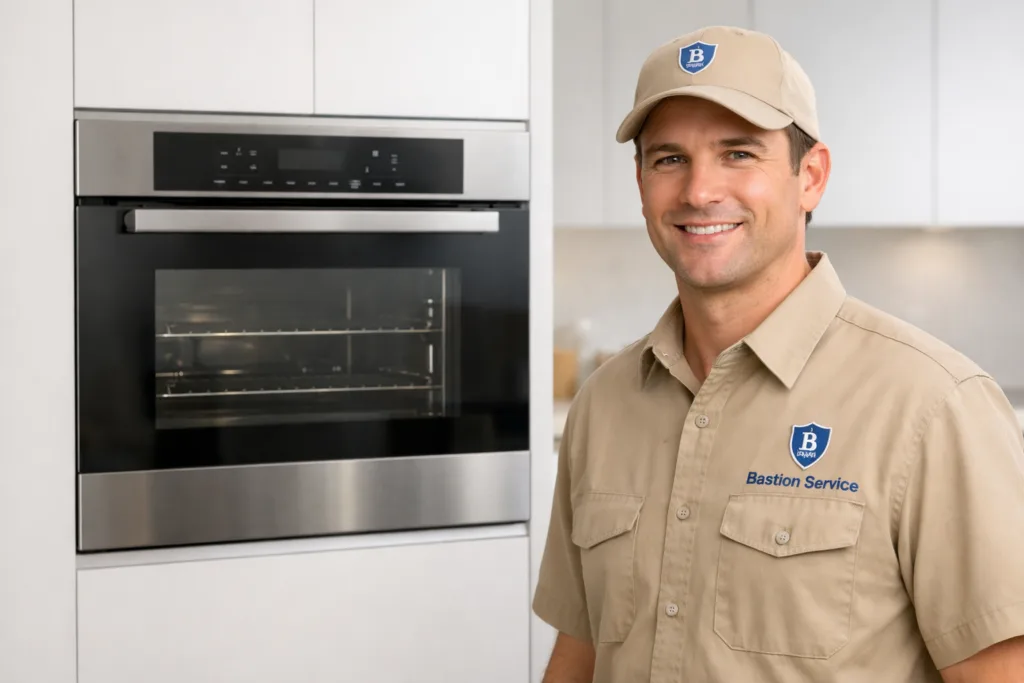
Cooking problems usually show up before a Miele oven fails completely. You may notice longer preheat times, food that bakes differently than it used to, or a control panel that works inconsistently. Those changes matter because oven issues often build gradually, and the same symptom can come from more than one component.
Start with the way the oven is behaving
The most useful repair approach is to look at the exact pattern of failure. An oven that will not heat at all is different from one that heats slowly, overshoots temperature, or stops mid-cycle. Miele ovens rely on coordinated performance from heating elements, sensors, fans, door seals, and electronic controls, so a symptom-based inspection is usually the fastest way to narrow down the real cause.
For homeowners in Del Rey, this matters because replacing parts based on assumption can waste time and money. A temperature complaint may involve the sensor, the control, the heating circuit, or airflow inside the oven cavity. Identifying which system is actually failing helps determine whether repair is straightforward or whether the problem points to broader wear.
Common Miele oven symptoms and what they may mean
Not heating or only heating partway
If the oven powers on but never gets hot enough, common causes include a failed bake element, broil element issue, faulty igniter on gas-equipped models, sensor trouble, or an electronic control fault. In some cases, the oven reaches a low temperature and stalls there, which leads to undercooked meals and unreliable preheat.
Slow preheating
When preheat starts taking much longer than normal, the oven may still appear usable, but performance is already off. Slow preheat can be related to a weakened heating component, a sensor that is not reading accurately, or a control problem that is not sending power correctly during the heating cycle. This symptom is often one of the earliest signs that service is needed.
Uneven baking or browning
Hot spots, pale areas, and inconsistent browning usually point to temperature regulation or airflow problems. A failing convection fan, inaccurate sensor feedback, weakened element, or calibration issue can all change how heat moves through the cavity. Many households first notice this when familiar recipes suddenly need extra time or come out uneven from front to back.
Temperature swings during cooking
Some cycling is normal in any oven, but wide swings are not. If dishes come out scorched on one day and underdone on the next using the same settings, the oven may not be regulating temperature properly. Sensor problems, control faults, and heating interruptions are common reasons for this kind of inconsistency.
Door not closing or sealing properly
A loose, misaligned, or poorly sealed door lets heat escape and changes how the oven cooks. Worn hinges, a damaged gasket, or latch trouble can all reduce temperature stability. Even if the oven still turns on and heats, a poor seal can lengthen cook times and put extra strain on the heating system.
Display errors or unresponsive controls
A blank display, touch controls that do not respond, random resetting, or recurring error codes usually indicates an electrical or control-related issue. These faults are not always constant, which can make them especially frustrating. Intermittent behavior often points to a failing interface, wiring issue, power supply problem, or control assembly fault.
Noise, odor, or shutdowns while in use
An unusual fan noise can signal wear or internal interference. A brief odor after heavy use may be harmless, but repeated burning smells, smoke unrelated to spills, or shutdowns during operation should be checked promptly. If the oven trips power, sparks, or overheats, it is best to stop using it until the problem is identified.
Signs the problem is getting worse
Some oven issues stay minor for a while, but others tend to spread to nearby components or place extra stress on the control system. Service is usually worth scheduling sooner rather than later when you notice any of the following:
- Preheat time is noticeably longer than before
- Food cooks unevenly despite familiar settings
- The oven does not hold a stable temperature
- The display shows recurring errors
- The door does not shut firmly or seal evenly
- The oven shuts off during baking or roasting
- There are electrical symptoms such as tripping or flickering
Even when the oven still works part of the time, continued use can make diagnosis harder if the failure becomes intermittent or starts affecting additional systems.
When to stop using the oven
It is usually safest to stop using the oven if it trips the breaker, produces repeated burning odors, shows signs of overheating, shuts off unexpectedly, or will not regulate temperature at all. The same applies if the door will not close correctly during operation. These are not symptoms to ignore, especially in a busy household where the oven may be used for longer cooking cycles.
Repair or replacement depends on the condition of the whole oven
Many Miele oven problems are repairable when the issue is limited to a heating element, igniter, sensor, fan, latch, gasket, or a specific control-related component. If the rest of the appliance is in good shape, repair is often the sensible route. That is especially true when cooking performance was otherwise consistent before the current fault appeared.
Replacement becomes more likely when the oven has multiple major failures, repeated electronic problems, visible wear affecting several systems, or a repair cost that no longer makes sense for the appliance’s age and condition. The best decision usually comes from comparing the exact fault with the overall state of the unit rather than reacting to one frustrating breakdown.
What helps before scheduling Miele oven repair in Del Rey
A few details can make the visit more efficient and help narrow down the likely cause:
- Whether the issue affects bake, broil, convection, or every mode
- If the oven heats fully, partially, or not at all
- Any error code shown on the display
- Whether the problem started suddenly or got worse over time
- If the door closes evenly and seals tightly
- Any unusual sounds, odors, or mid-cycle shutdowns
Those observations are often more useful than a general description like “it is not working right.” In many Del Rey homes, the pattern of symptoms tells the story faster than the first visible sign.
Household-focused service should lead to a realistic repair plan
An oven problem affects everyday cooking, meal timing, and kitchen routines, so the goal is not just to identify a bad part. It is to understand whether the problem is isolated, whether the oven can be returned to consistent performance, and whether the repair path makes sense for the household. When the issue is diagnosed accurately, the next step is usually much clearer.