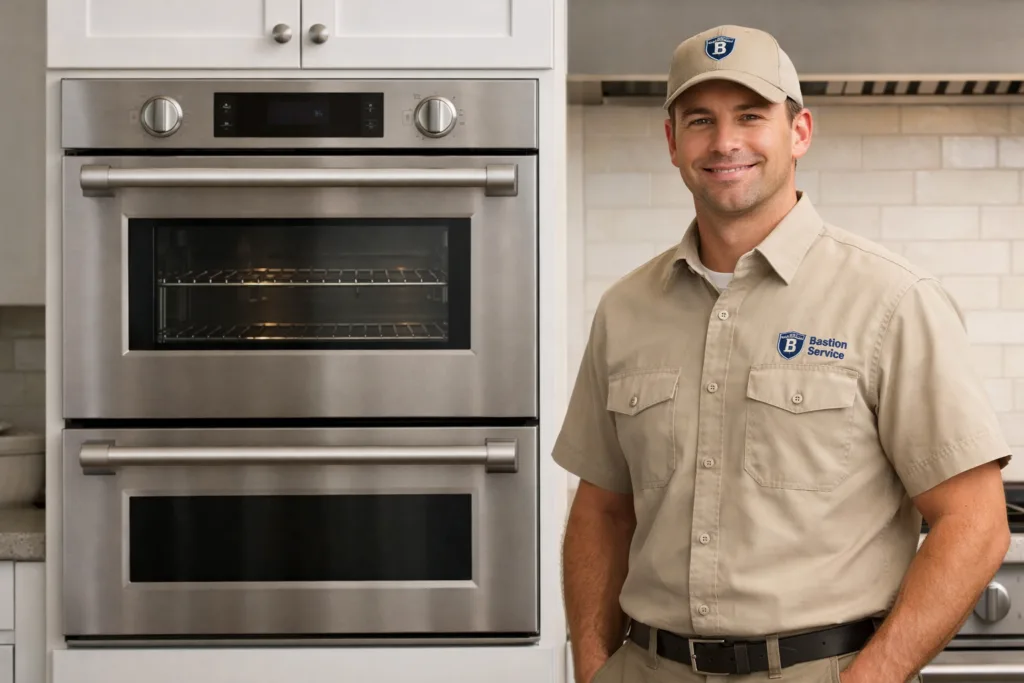
Performance issues in a Wolf oven usually show up in everyday cooking before the appliance stops working completely. You might notice cookies browning unevenly, roasts taking longer than expected, or a preheat cycle that seems to run far past normal. Those patterns matter because they often point to different causes, and the right repair depends on how the problem appears in actual use.
Common Wolf Oven Symptoms and What They May Mean
Wolf ovens are designed for stable temperature control, so even a modest fault can affect results quickly. A symptom-based inspection helps narrow the issue to the heating system, sensor circuit, controls, airflow, door seal, or power-related components.
Oven not heating
If the oven will not heat at all, possible causes depend on the model and fuel type. Electric models may have a failed bake or broil element, wiring damage, or a relay problem on the control board. Gas models may have an ignition issue that prevents proper burner operation. In either case, a dead oven should be tested before parts are replaced, because a display that powers on does not always mean the heating circuit is functioning correctly.
Slow preheat
A slow preheat cycle is one of the most common complaints in residential kitchens. Sometimes the oven eventually reaches temperature, but only after an unusually long delay. That can happen when a heating element is weak, an igniter is no longer drawing proper current, the temperature sensor is reporting inaccurate readings, or the control system is cycling heat incorrectly. Continued use often leads to longer cook times and inconsistent results.
Uneven baking
When food browns more on one side, one rack cooks faster than another, or results vary from one day to the next, the problem may not be a single bad part. Uneven baking can be tied to poor convection airflow, sensor drift, calibration issues, door seal problems, or partial heating failure. This is why homeowners in Del Rey often benefit from service based on cooking behavior, not just whether the oven turns on.
Temperature swings
All ovens cycle on and off to maintain heat, but wide swings are different from normal operation. If dishes come out undercooked even at familiar settings, or if the oven overshoots and burns food unexpectedly, the cause may involve a sensor, control board, relay, fan issue, or a combination of smaller faults. Temperature complaints are especially important to check when the appliance is otherwise still usable, since the problem can worsen gradually.
Control or display problems
A Wolf oven may become difficult to use if the display is blank, the controls stop responding, settings do not register, or the oven shuts down during a cycle. These symptoms can stem from the user interface, the main control, communication faults between components, or unstable power delivery inside the unit. Intermittent control issues often require more than a quick visual check because the failure may only appear after the oven heats up.
Why the Same Symptom Can Have Different Causes
Two ovens can show the same complaint and need entirely different repairs. For example, an oven that is not reaching set temperature could have a failing sensor, a weak heating component, a relay that is not closing consistently, or a door that is leaking heat. Replacing a part based on guesswork can solve nothing and add unnecessary cost.
That is why a useful service visit should connect the complaint to actual testing. With premium cooking appliances, the goal is to identify whether the fault is isolated, whether there are related issues developing, and whether repair makes sense for the appliance’s overall condition.
Signs the Problem Should Not Be Ignored
Some Wolf oven issues start as minor inconvenience and then become larger repair problems. If the appliance is still running, it can be tempting to wait, but recurring heating problems often put extra strain on controls, ignition components, and electrical connections.
- Preheat time has become noticeably longer
- Food is regularly undercooked or overcooked at familiar settings
- The oven stops during a bake cycle
- Error codes appear more than once
- The interior temperature does not match the selected setting
- The door does not close firmly or the seal looks worn
- The control panel is unresponsive or resets unexpectedly
If you notice a burning electrical smell, repeated tripped breakers, visible sparking, or signs of overheating, stop using the oven until it has been inspected.
Issues That Can Affect Baking Performance in Del Rey Homes
In a busy household, oven problems often become obvious during repeated use rather than in a single dramatic failure. A family that cooks several nights a week may first notice that sheet-pan meals take longer, baked goods rise unevenly, or dishes need to be rotated much more often than before. Those real-world symptoms are often more helpful than a general description like “it’s acting up.”
For homeowners in Del Rey, it helps to keep track of what changed first. Did preheating slow down before the temperature became unstable? Did the display start glitching before the oven began shutting off? That sequence can help narrow the problem faster and guide the repair path.
Repair or Replace: How to Think About the Decision
Repair is often worthwhile when the oven is otherwise in solid condition and the problem is limited to a specific component, control issue, or sensor-related fault. Replacement becomes a more serious consideration when there are multiple major failures, signs of broader electrical damage, or a repair cost that no longer makes sense compared with the appliance’s condition and service history.
Age alone does not answer the question. A well-kept Wolf oven may still be a good repair candidate, while a unit with repeated major issues may not be the best place to continue investing. The important part is understanding the scope of the current failure and whether it appears isolated or part of a larger decline.
What a Service Visit Should Clarify
A productive appointment should leave you with more than a general statement that the oven has a problem. It should identify what system is failing, what symptoms were confirmed, and whether the issue is likely to affect safe or reliable operation going forward.
- Whether the heating complaint is consistent and testable
- Which component or circuit is most likely responsible
- Whether there are secondary issues contributing to the symptom
- If continued use could worsen the problem
- Whether repair is practical for that specific oven
Helpful Preparation Before an Oven Repair Appointment
You do not need to diagnose the oven yourself, but a few observations can make the visit more efficient. Note whether the issue affects bake, broil, or both. Pay attention to whether the oven fails from a cold start, only after heating up, or only during longer cooking cycles. If there is an error code, write it down exactly as shown.
It is also helpful to mention if the problem is constant or intermittent. An oven that never heats calls for a different approach than one that works normally some days and fails on others. If baking results have changed over time, describing that pattern can be just as useful as reporting a complete shutdown.
Practical Next Steps for Wolf Oven Problems
When a Wolf oven begins showing heating, control, or temperature-related issues, the best next move is to base the repair decision on the actual symptom pattern and appliance condition. That keeps the process focused and helps avoid unnecessary part changes. For many Del Rey homeowners, the right outcome is not just getting the oven running again, but restoring the steady, predictable performance that makes everyday cooking easier.