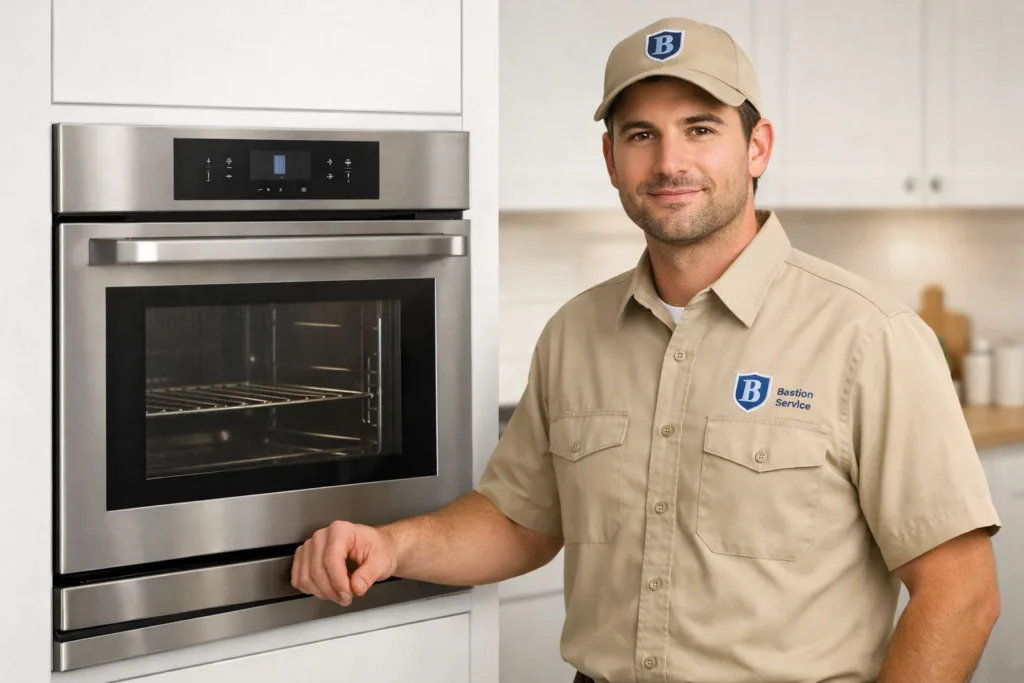
Cooking problems usually show up before a complete failure. If your Electrolux oven in Del Rey is taking far longer to preheat, baking unevenly, or stopping mid-cycle, the symptom pattern often points toward a specific heating, sensing, or control issue. Getting the cause narrowed down early can prevent extra wear on surrounding parts and reduce the chance of paying for an unnecessary repair.
How Electrolux oven problems usually develop
Most oven faults do not begin with a total shutdown. A bake element may weaken before it burns out, a gas igniter may glow but fail to open the gas valve reliably, or a temperature sensor may drift enough to affect cooking results without triggering an obvious fault code. Homeowners often first notice that recipes need extra time, baked goods brown unevenly, or the oven feels inconsistent from one use to the next.
That is why symptom-based diagnosis matters. “Not heating” can mean no heat at all, delayed heat, partial heat, or heat that does not match the set temperature. Those differences help separate a likely element failure from an ignition problem, sensor issue, relay fault, wiring defect, or electronic control problem.
Common Electrolux oven symptoms and what they can mean
Oven will not heat at all
If the display turns on but the cavity stays cold, the failure may involve the bake element, broil element, igniter, thermal protection components, control relays, or incoming power. On some electric ovens, one side of the power supply can fail while lights and controls still appear normal. On gas models, a weak igniter is a frequent cause of no-heat complaints because it may glow without drawing enough current to open the valve.
Slow preheating
When preheat takes much longer than it used to, the oven may still be producing heat but not enough of it. Electric models can lose one heating circuit and continue operating poorly. Gas models may have an igniter that is nearing failure and taking too long to light the burner. Slow preheat is often dismissed at first, but it can lead to longer cook times, poor roasting results, and unnecessary stress on related components.
Uneven baking or hot spots
If the back of a tray browns faster than the front, or one rack cooks noticeably differently than another, heat may not be circulating or cycling correctly. Possible causes include a worn sensor, a failing convection fan, weak element output, door seal leakage, or a control board issue that is not regulating temperature well. This symptom is especially frustrating for baking, where even small temperature swings can change results.
Temperature is inaccurate
An oven that says 350 degrees but behaves more like 300 or 400 may have a calibration issue, but persistent inaccuracy usually points to a hardware fault. Temperature sensors, control boards, and heating components all influence how closely the appliance matches the set point. If meals are consistently overcooked or undercooked, the problem is likely more than user perception.
Oven shuts off during cooking
Mid-cycle shutdowns can be tied to overheating, unstable electrical connections, failing controls, latch problems, or temperature regulation faults. This is more than a convenience issue because it makes cooking unpredictable and can leave food partially cooked. Intermittent shutdowns also tend to worsen over time rather than resolve on their own.
Error codes or unresponsive controls
Electronic faults can show up as flashing codes, touchpads that stop responding, or settings that change unexpectedly. In some cases the control is failing directly. In others, the control is reporting a problem elsewhere, such as a sensor circuit or door lock issue. Error codes are useful clues, but they need to be interpreted alongside the oven’s actual behavior.
Door does not seal well
A worn gasket, bent hinge, or misaligned door can let heat escape and create longer cook times, poor browning, and unstable temperature. Homeowners may notice excess heat around the front of the oven or food cooking unevenly near the door side. While this can seem minor compared with a no-heat failure, it affects performance every time the appliance is used.
Signs the oven should not keep being used
Some problems are inconvenient but manageable for a short time. Others are clear signs to stop using the appliance until it is checked. Do not continue operating the oven if you notice any of the following:
- Burning smells that do not go away after cleaning
- Visible sparking
- A breaker that trips repeatedly during operation
- The oven shutting off unpredictably during cooking
- Door lock problems after a self-clean cycle
- Control panel behavior that is erratic or unresponsive
If you have a gas oven and notice a strong or persistent gas smell, stop using it immediately. Leave the area if necessary and contact the gas utility or emergency service before arranging appliance repair.
Repair or replace: what usually makes the difference
Many Electrolux oven problems are repairable, especially when the issue is limited to a single component such as an igniter, heating element, sensor, fan motor, latch assembly, or door part. Replacement becomes a more serious consideration when the appliance has multiple electrical problems at once, recurring control failures, or repair needs that suggest broader deterioration.
A practical decision usually comes down to:
- The exact failed part
- The overall condition of the oven
- The age of the appliance
- Whether the current problem appears isolated or part of a larger pattern
For many households in Del Rey, the real question is whether the repair is likely to restore stable daily cooking rather than just get the oven barely running again.
What to check before scheduling service
There are a few basic observations that can help make the problem easier to identify. You do not need to disassemble anything, but it helps to note what the oven is doing:
- Does it fail on bake, broil, or both?
- Does preheat finish eventually, or not at all?
- Is the problem constant or intermittent?
- Did the issue begin after a self-clean cycle or power interruption?
- Are there visible signs of element damage, such as blistering or breaks?
- Does the display show an error code?
These details can help separate a heating failure from a control or sensor problem and make the service process more efficient.
Why intermittent oven problems are easy to underestimate
An oven that works correctly one day and struggles the next can be more frustrating than one that has failed completely. Intermittent faults are common with weakening igniters, loose wiring connections, control board problems, and drifting sensors. Because the oven still works some of the time, many homeowners delay service until the failure becomes more disruptive.
In practice, those early warning stages are often the best time to address the problem. Catching a weak component before it fails completely may help avoid extra stress on the control system or repeated cooking losses.
Electrolux oven issues that tend to disrupt household routines most
In Del Rey homes, the biggest frustration is often not a dramatic breakdown but an oven that can no longer be trusted. Slow preheat delays dinner, temperature swings ruin baking, and uneven heat makes meal planning harder than it should be. When cooking results stop being predictable, the appliance stops supporting the routine it is supposed to simplify.
Bastion Service helps homeowners assess Electrolux oven problems based on the actual symptom, the condition of the appliance, and the repair path that makes the most sense. Whether the issue is no heat, poor temperature control, or controls that are no longer responding correctly, the goal is to identify what failed and whether repair is the sensible next step.