
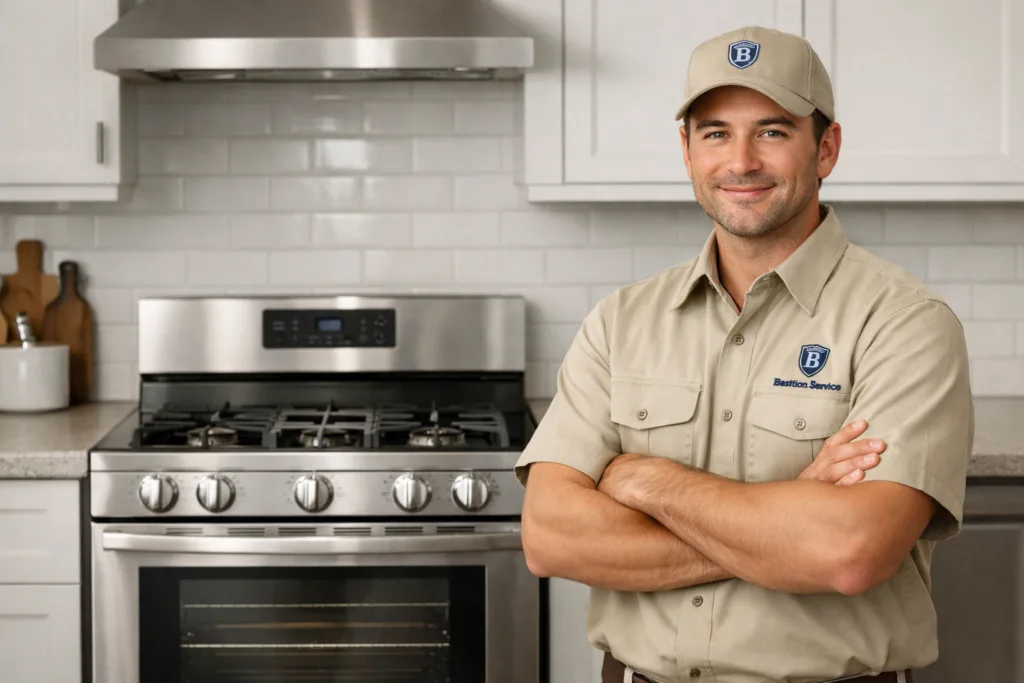





Ranges tend to fail in ways that are easy to notice but hard to interpret. One burner may stop working while the oven still heats, the igniter may click over and over, or the control panel may seem normal until a bake cycle starts. With LG models, those patterns matter because the same complaint can come from different parts of the appliance.
Related LG and range service paths in Cheviot Hills include LG Appliance Repair in Cheviot Hills, Range Repair in Cheviot Hills, and LG Refrigerator Repair in Cheviot Hills.
Start with the symptom, not the assumption
An LG range includes surface cooking components, oven heating components, ignition parts, sensors, wiring, and electronic controls. When one of those systems begins to drift out of spec, the first signs often show up in everyday cooking: longer preheat times, uneven baking, burners that lag, or settings that do not respond the way they used to.
For homeowners in Cheviot Hills, the most useful approach is to look at what the range is actually doing during use. Whether the problem happens every time or only occasionally, whether it affects the cooktop, the oven, or both, and whether heat output is weak, delayed, or inconsistent can all help narrow down the cause.
Surface burners that do not work correctly
On electric LG ranges, a burner that will not heat, heats only on certain settings, or cycles erratically may point to a failed element, worn receptacle, damaged wiring, or a bad infinite switch. In some cases, the burner appears to work but never reaches full heat, which can make boiling and searing noticeably slower.
On gas models, common complaints include clicking without ignition, delayed lighting, uneven flame, or a burner that lights only after several tries. That can be related to moisture, debris in the burner ports, an ignition problem, or a fault affecting gas delivery to that burner. If clicking continues after ignition or a burner behaves differently from the others, it usually deserves attention before the issue spreads or worsens.
Oven heating issues that affect cooking results
Oven problems often show up as food symptoms before owners think of the appliance itself. Cookies brown unevenly, casseroles take far longer than expected, or the top of a dish finishes while the center remains undercooked. Those signs can reflect a weak igniter, failing bake or broil element, sensor trouble, or a control issue that is mismanaging heat.
An LG oven that takes too long to preheat is especially important to evaluate because slow preheat can be more than an inconvenience. It can indicate a heating component that is still operating, but not well enough to bring the cavity to the right temperature in a reliable way.
Clicking, ignition, and startup problems
Repeated clicking is one of the most common range complaints because it is both obvious and disruptive. Sometimes the cause is simple, such as moisture after cleaning or spill residue near the igniter. In other cases, the range may have an ignition switch problem or a component that no longer sends or receives the right signal during startup.
If a burner lights late, lights unevenly, or clicks after the flame is established, that behavior should not be ignored. It can affect daily use, but it can also point to wear that gets worse with continued operation.
Control panel and display failures
When the display is blank, the keypad stops responding, or oven settings change unexpectedly, the issue may involve incoming power, a loose connection, the user interface, or the main control. Some LG range control faults are intermittent at first. The clock may dim, the panel may recover after a reset, or the oven may start only occasionally.
Intermittent electronic problems are worth addressing early. What starts as a nuisance can become a complete loss of bake or broil function, especially when repeated heat exposure has already stressed the control area.
Signs the range should not keep being used
Some faults allow limited use while a repair decision is being made, but others call for stopping right away. A persistent gas odor, visible sparking, signs of melting around knobs or switches, or a breaker that trips repeatedly when the range runs are strong reasons to stop using the appliance until it is checked.
It is also wise to pause normal use when oven temperature is clearly unreliable, ignition is becoming less consistent, or the control panel behaves unpredictably. Even if the appliance still turns on, continued use can lead to poor cooking results, added component damage, or safety concerns.
Common causes behind familiar complaints
- Burner will not heat: failed element, bad switch, damaged receptacle, or wiring fault
- Gas burner keeps clicking: moisture, dirty burner ports, ignition switch issue, or igniter-related fault
- Oven runs cold: weak igniter, failing element, sensor problem, or control malfunction
- Oven overheats: temperature sensor issue, control relay problem, or feedback error
- Display is dead or erratic: power supply issue, loose connection, failed interface, or bad control board
- Door does not seal well: worn hinges, gasket problems, or door alignment issues affecting heat retention
How door and seal problems affect performance
Not every range problem starts with a heating part. If the oven door feels loose, does not close evenly, or leaks heat around the edges, the range can struggle to maintain stable temperatures. That may lead to longer preheat times and uneven cooking even when the bake system itself is still functioning.
In Cheviot Hills homes where the range gets frequent daily use, hinge wear and gasket deterioration can gradually reduce performance without causing a full breakdown. If baking quality has changed and no obvious heating part has failed yet, the door seal is worth considering.
Repair or replacement: what usually makes sense
Many LG range problems are still good repair candidates, especially when the issue is isolated to one major component such as an igniter, surface element, sensor, switch, or control interface. Repair tends to make more sense when the range is otherwise in solid condition and the failure does not suggest broader electrical or structural wear.
Replacement becomes more likely when the appliance has several unrelated faults, repeated electronic problems, or visible damage that affects long-term reliability. The age of the range matters, but condition matters just as much. A newer unit with one failed part is different from an older unit with recurring heating and control issues together.
What helps speed up diagnosis
Before service, it helps to note exactly what the range is doing. Useful details include whether the problem affects bake, broil, or the cooktop, whether it happens every time, whether error codes appear, and whether the issue started after a spill, self-clean cycle, power interruption, or unusual noise. Those clues can make it easier to match the symptom to the likely failed system.
For LG range repair in Cheviot Hills, a careful review of those patterns often tells more than a broad description like “it is not working right.” The more specific the behavior, the easier it is to determine whether the problem is minor, urgent, or a sign that replacement should be considered.
What homeowners usually want to know first
Most people are trying to answer three practical questions: is the range safe to use, what part is most likely failing, and is the fix worth doing? The right answer depends less on the label of the complaint and more on how the appliance behaves during real cooking use.
When an LG range starts missing temperatures, failing to ignite cleanly, or losing control functions, the next step should be based on the exact symptom pattern and the condition of the appliance as a whole. That is what turns a frustrating kitchen problem into a repair decision that actually makes sense.


