
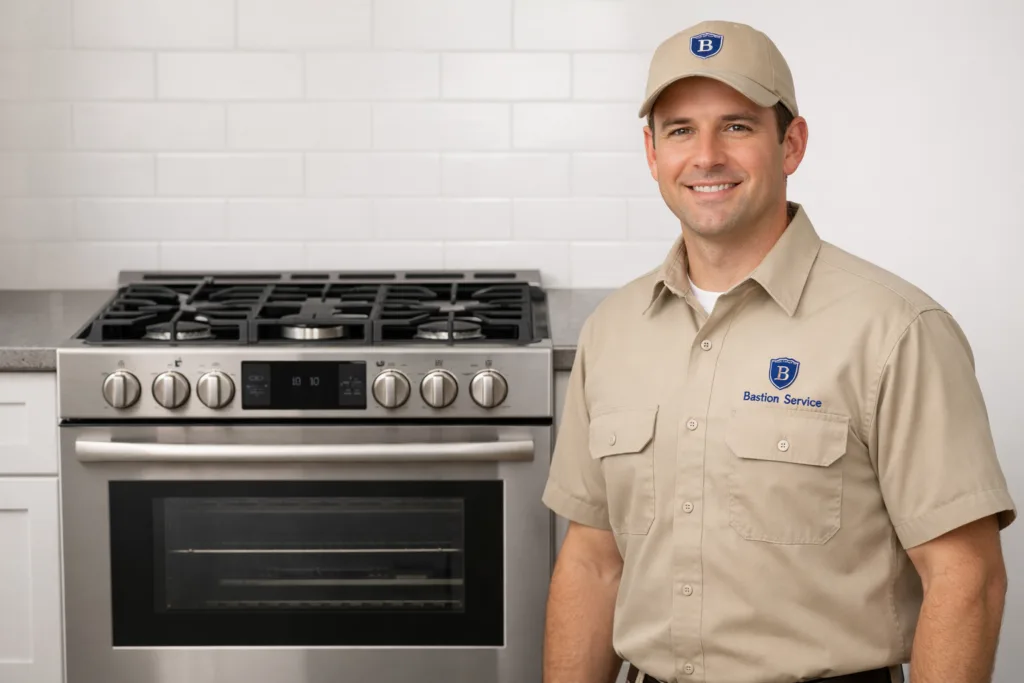





Range problems are easier to solve when the symptom is described clearly. A burner that clicks but does not light points in a different direction than an oven that heats, but never reaches the set temperature. On an Electrolux range, ignition parts, heating components, sensors, controls, and power or gas supply conditions can all affect performance, so the most efficient repair plan starts with what the appliance is doing consistently.
Related Electrolux and range service paths in Cheviot Hills include Electrolux Appliance Repair in Cheviot Hills, Range Repair in Cheviot Hills, and Electrolux Refrigerator Repair in Cheviot Hills.
Start with the part of the range that is failing
Most residential range complaints in Cheviot Hills fall into one of three categories: cooktop ignition or heating problems, oven temperature problems, or control-related issues. Identifying which section is acting up helps narrow the likely causes and avoid replacing parts based on guesswork.
If the problem is limited to one burner, the repair path is usually different than when all burners or both oven and cooktop functions are affected. A single symptom can also have multiple causes, which is why details such as unusual sounds, error codes, or whether the issue happens every time are important.
Gas burners clicking but not igniting
When a burner clicks repeatedly and will not light, common causes include moisture around the igniter, food debris near the burner head, a misaligned burner cap, ignition switch trouble, or a weak spark. If the burner lights but continues clicking, the ignition system may still need attention.
Sometimes the issue appears after routine cleaning or after a spill. In those cases, drying and re-seating the burner cap may help, but repeated clicking should not be ignored if it keeps returning. If you notice a strong or persistent gas odor, stop using the range and address that safety concern before scheduling appliance repair.
Electric surface elements not heating correctly
On electric Electrolux ranges, a surface element that stays cold, heats unevenly, or runs hotter than expected may be caused by the element itself, the receptacle connection, the control switch, or an electronic control problem. A burner that cycles unpredictably can make everyday cooking frustrating and can also lead to scorched cookware or inconsistent results.
If one element has failed completely while the rest of the range operates normally, the problem may be isolated. If several heating functions are behaving oddly at once, the diagnosis may need to focus more on controls or incoming power.
Oven not heating, slow preheat, or uneven baking
Oven complaints are often described as “not getting hot enough,” but that can mean several different things. The oven may not heat at all, may preheat slowly, may overshoot the set temperature, or may cycle poorly and produce uneven baking. Each pattern suggests a different failure path.
Possible causes include a faulty bake element, broil element, temperature sensor, relay problem, or control board issue. In some cases, the oven is producing heat but not regulating it accurately, which is why food comes out underdone on one rack and overdone on another.
Signs the issue may involve the control system
Modern Electrolux ranges often tie multiple functions into one control platform. If the display flashes, buttons stop responding, the clock resets, or oven functions will not start even though the unit appears powered on, the fault may involve the user interface, main control, wiring, or power supply.
Control-related problems can look random at first. You may see intermittent errors, partial display loss, or a range that works one day and fails the next. When both the cooktop and oven are affected, the control system becomes more likely than a simple single-component failure.
When a temperature issue is more than normal cooking variation
No oven holds the exact same temperature every second, but noticeable swings are different from normal cycling. If recipes that used to work now need much longer cook times, if preheat takes unusually long, or if one side of the oven browns much faster than the other, the range may need service.
- Cookies burn on the bottom before the tops are done
- Casseroles stay undercooked in the center
- The oven says it is preheated long before it is actually ready
- Broiling performance has become weak or inconsistent
- The same temperature setting gives very different results from week to week
These are often signs of a failing sensor, element, or control issue rather than just normal variation in cooking habits.
Problems that should not be ignored
Some range issues are inconvenient. Others can create safety concerns or lead to larger repairs if use continues. It is wise to stop using the appliance and have it checked sooner when the behavior becomes unpredictable.
- The oven trips the breaker or loses power during use
- A burner keeps sparking after ignition
- The oven will not shut off normally
- The door does not close securely
- Error codes return after resetting power
- Heating changes suddenly over a short period
Continued operation under these conditions can stress other parts and make diagnosis more complicated later.
Repair versus replacement for an Electrolux range
For many households in Cheviot Hills, repair makes sense when the range is otherwise in solid condition and the problem is limited to a serviceable part such as an igniter, element, sensor, switch, or control component. That is especially true when the unit still fits the kitchen well and has been performing reliably aside from the current fault.
Replacement becomes a more serious consideration when the range has several major issues at once, shows broader signs of wear, or would require a repair cost that does not match the appliance’s age and overall condition. The right decision depends less on one dramatic symptom and more on whether the problem is isolated or part of a bigger decline.
What to note before scheduling service
A few simple observations can make a service visit more productive. Try to note whether the issue affects the oven, the cooktop, or both; whether it happens every time or only occasionally; and whether the problem began after cleaning, a power interruption, or a spill.
- Which burner or function is affected
- Whether the problem is constant or intermittent
- Any error code shown on the display
- Whether the unit makes unusual clicking, buzzing, or humming sounds
- Whether food is undercooking, overcooking, or cooking unevenly
That kind of symptom-based information is often more useful than a general description like “the range is acting weird.”
What homeowners in Cheviot Hills can expect from a focused diagnosis
A useful range service call is not just about replacing a part. It is about confirming why the symptom is happening, checking whether other related components have been affected, and determining whether the repair is likely to restore normal day-to-day cooking. That matters with Electrolux ranges because ignition, temperature regulation, and control faults can overlap.
For homeowners in Cheviot Hills, the goal is straightforward: restore safe, predictable cooking without spending money on unnecessary parts. When the symptom pattern is identified correctly, the repair decision becomes much simpler.


