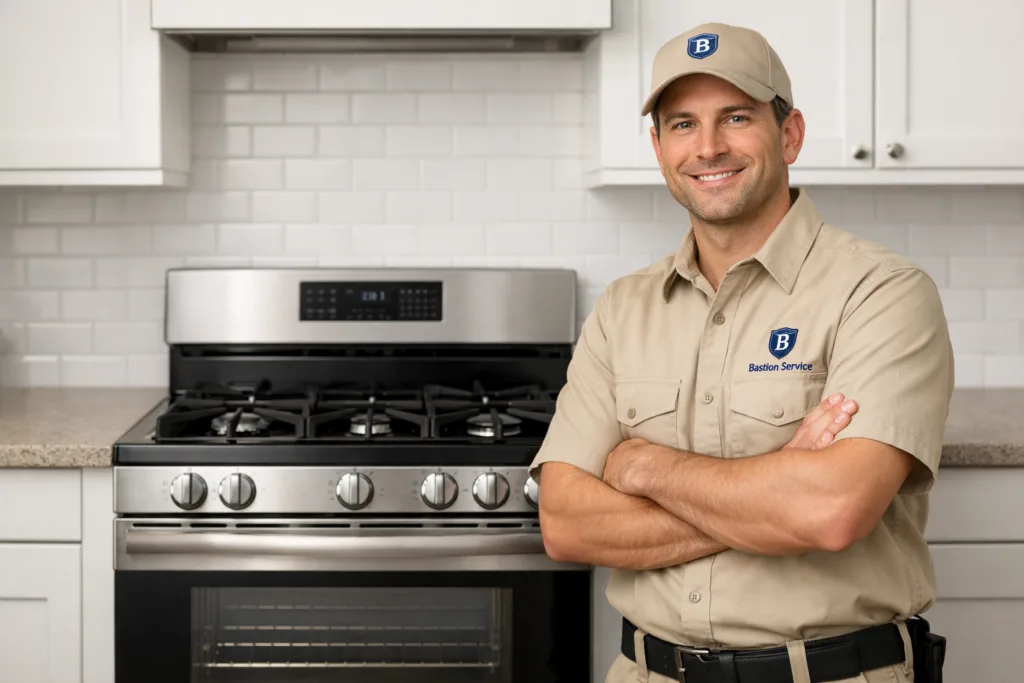
Range problems rarely stay limited to a minor annoyance. A burner that clicks for a few seconds too long, an oven that suddenly bakes unevenly, or controls that respond only sometimes can all point to parts that are wearing out or circuits that are no longer operating normally. For a household in Palos Verdes Estates, the most useful approach is to match the repair plan to the exact symptom pattern rather than assume every heating or ignition issue has the same cause.
Start with the symptom you can actually observe
Kenmore ranges combine several systems in one appliance, including surface burner ignition, oven heating, temperature sensing, user controls, wiring, and safety components. Because those systems overlap, one visible problem can have more than one possible cause. That is why the best first step is to pay attention to what the range is doing consistently, when it happens, and whether it affects one function or several.
For example, a single burner that will not light usually suggests a different repair path than several burners that all click irregularly. An oven that never reaches temperature is also different from one that preheats but drifts too hot after twenty minutes. Small details like that help narrow down whether the issue is related to ignition, regulation, a failed element, a sensor, or the control system.
Common Kenmore range problems and what they often mean
Burner will not ignite
If a surface burner does not light at all, lights only after repeated clicking, or works only occasionally, the issue may involve clogged burner ports, a worn ignition switch, spark problems, or moisture affecting the igniter area. On some ranges, food residue or cleaning overspray can also interfere with normal ignition.
When only one burner is affected, the problem is often isolated to that burner assembly or its related switch. When multiple burners show the same behavior, the fault may involve a shared ignition component or electrical problem.
Clicking that continues after ignition
Constant clicking is one of the more recognizable range symptoms. In some cases, it follows a spill or recent cleaning and clears once moisture fully dries. In other cases, persistent clicking points to a failing switch, a short in the ignition circuit, or a spark system that is no longer sensing conditions correctly. If the clicking keeps returning, it is usually worth having the range checked before the symptom spreads or worsens.
Oven not heating or taking too long to preheat
An oven that stays cold, heats only partially, or takes much longer than normal to reach the set temperature may have a weak bake element, a faulty broil element, an igniter problem on gas models, a failed sensor, or a control issue. Homeowners often first notice this through undercooked meals, inconsistent baking times, or a preheat cycle that seems to run far longer than it used to.
If the oven heats somewhat but not reliably, testing matters. A range can appear to be working while still falling well short of the actual temperature needed for normal cooking.
Uneven baking and temperature swings
When one tray browns too quickly, the center of dishes stays underdone, or the oven runs hotter or cooler than the display suggests, the cause is often related to temperature sensing or regulation rather than complete heating failure. Calibration drift, a weak sensor, intermittent relay behavior, or uneven heat distribution can all produce this type of complaint.
This issue is especially frustrating because it can seem random at first. Over time, though, patterns usually appear, such as repeated overbaking at the same setting or recipes that no longer cook evenly on familiar racks.
Burner too hot or not changing temperature correctly
On electric models, a surface element that stays too hot, cycles poorly, or ignores setting changes often points to a bad infinite switch, element connection problem, or control fault. If the burner does not respond when turned down, continued use can scorch cookware and make everyday cooking difficult to manage.
Controls not responding or display acting erratically
If buttons fail intermittently, the display goes blank, error codes appear, or the range loses power unexpectedly, the issue may involve the control board, wiring, or power supply. Problems with controls can affect both convenience and safety, especially when oven cycles do not start, stop, or regulate as expected.
Signs the problem may be getting more serious
Some range symptoms remain stable for a while, but others tend to spread. A burner that needs several tries to light may eventually stop lighting altogether. A sensor problem that causes mild temperature inaccuracy may later lead to major cooking inconsistencies. An electrical fault that starts as intermittent control failure can become a complete loss of oven or burner function.
Watch for signs such as:
- Ignition problems becoming more frequent
- Longer preheat times than normal
- Burners that no longer match their settings
- Error codes that return after clearing
- Intermittent power loss during cooking
- Repeated overheating or shutoff issues
When symptoms move from occasional to predictable, the range is usually past the point of hoping the problem will resolve on its own.
When to stop using the range
Some conditions should move beyond troubleshooting and into a service call right away. If the range trips breakers, shows signs of sparking, has scorched wiring smells, overheats noticeably, or behaves in a way that makes temperature impossible to control, continued use can increase both safety risk and repair scope.
If you notice a strong or persistent gas smell, stop using the appliance immediately. Leave the area if necessary and contact the gas utility or emergency service before arranging appliance repair.
Repair or replace: how to make the call
Many Kenmore range issues are worth repairing when the failure is limited to a part such as an igniter, surface element, switch, sensor, or related control component. If the appliance is otherwise in solid condition and the problem is isolated, repair is often the sensible choice.
Replacement becomes more worth considering when the range has several unrelated problems at once, repeated electronic control issues, significant wiring damage, or repair costs that come too close to the value of a more reliable replacement unit.
A homeowner in Palos Verdes Estates will usually make the best decision by weighing:
- The age and overall condition of the range
- Whether the fault is isolated or system-wide
- How safely the appliance can be used in the meantime
- Whether the expected repair cost fits the remaining value of the appliance
Why diagnosis matters on a Kenmore range
Ranges are a good example of why visible symptoms can be misleading. Poor oven heating does not automatically mean the bake element is bad. Repeated clicking does not always mean the same ignition repair on every model. A burner that overheats may not be caused by the burner itself. Replacing parts without confirming the actual failure can turn one problem into a longer and more expensive process.
A proper diagnosis helps determine whether the issue is mechanical, electrical, ignition-related, or tied to the control system. That makes the next step more straightforward and reduces the chance of unnecessary parts replacement.
Helpful checks before scheduling service
Without taking anything apart, homeowners can often note a few details that make service more efficient:
- Does the problem affect one burner or several?
- Is the oven failing to heat, or just heating inaccurately?
- Did the issue begin after a spill, cleaning, or power interruption?
- Are there display errors, unusual sounds, or a burning smell?
- Is the symptom constant, or does it happen only during certain cycles?
These observations can help separate a simple localized issue from a broader problem affecting the whole range.
What homeowners in Palos Verdes Estates usually need from range service
Most households are not looking for a complicated explanation. They want to know what failed, whether the range can be used safely, and whether the repair makes sense for the appliance they already have. That practical repair guidance is especially important when the range is used daily and even a small performance problem starts disrupting meal prep.
If your Kenmore range is showing early warning signs, acting inconsistently, or no longer heating the way it should, addressing the problem before a complete breakdown often leads to a better repair outcome. In Palos Verdes Estates, that usually means focusing on the specific symptom, confirming the failed component, and choosing the repair path that restores normal cooking performance without guesswork.