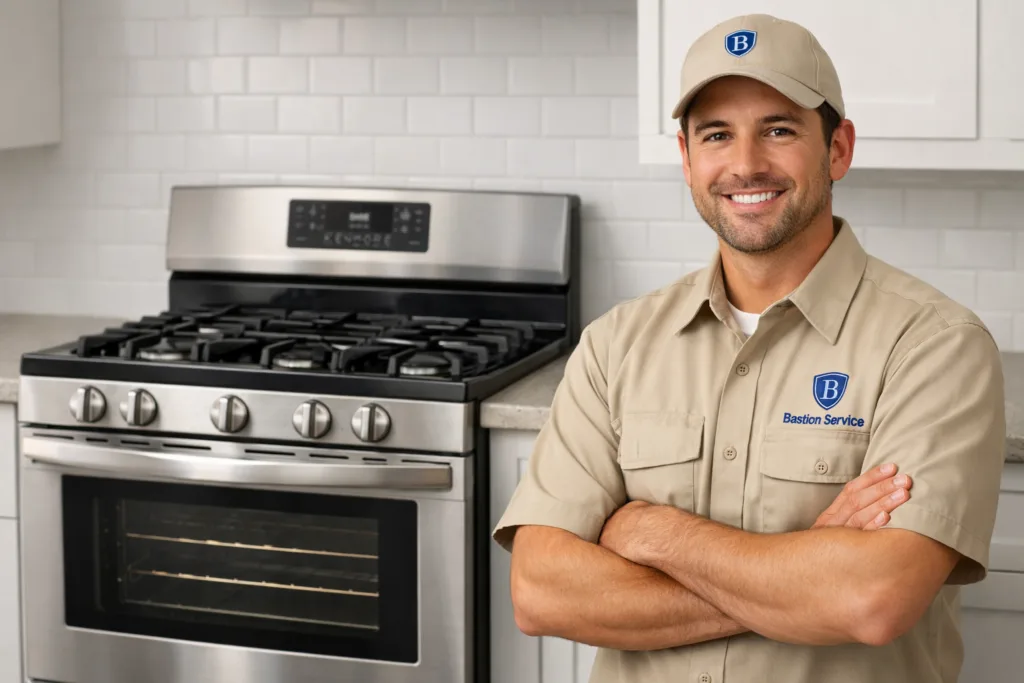
A faulty range can disrupt everyday cooking in small but frustrating ways, from a front burner that stops responding to an oven that suddenly takes much longer to preheat. With Kenmore models, the most useful way to approach the problem is by matching the symptom to the part systems most likely involved instead of guessing based on one visible issue.
Start with what the range is actually doing
Many range problems sound similar at first but come from very different causes. An oven that feels “not hot enough” may have a weak igniter, a failing bake element, a temperature sensor problem, or an electronic control issue depending on whether the unit is gas or electric. A burner that does not work could point to a switch failure, damaged wiring, a worn receptacle, or an ignition problem.
That is why the symptom pattern matters. It helps narrow down whether the issue affects the cooktop, the oven cavity, the control system, or the appliance power supply. It also helps determine whether the range is safe to keep using while waiting for service.
Common Kenmore range problems in Torrance homes
Oven will not heat
If the oven stays cold, never reaches temperature, or only heats on certain settings, the cause often depends on the heat source. On electric ranges, the bake or broil element may be open or partially failed. On gas ranges, the igniter may glow but still be too weak to open the gas valve properly. In both cases, sensor or control faults can also prevent normal heating.
Homeowners often notice this first when preheat takes much longer than normal or food comes out undercooked even though the display shows the selected temperature.
Oven temperature is off
When baking results suddenly become inconsistent, the problem is not always the same as a no-heat failure. A range may still produce heat but do so unevenly or inaccurately. Common causes include a drifting temperature sensor, a weakened element, poor heat circulation, or a door gasket that no longer seals well.
- Cookies browning too fast on one side
- Casseroles staying cold in the center
- Recipes needing extra time every time
- Food burning on the bottom before the top finishes
These signs usually point to a performance issue worth addressing before it becomes a complete heating failure.
Burner clicks but does not light
On gas Kenmore ranges, constant clicking is one of the most common complaints. Sometimes the problem is simple, such as moisture around the igniter or food debris blocking proper flame spread. In other cases, the issue may involve the spark ignition system, switch harness, or burner components that are no longer aligning correctly.
If one burner struggles but the others work normally, that can help isolate the fault. If multiple burners click at once or continue clicking after ignition, the problem may be broader than a single burner head.
Electric burner will not heat or overheats
For electric models, a surface element that stays cold may have a failed burner, a bad infinite switch, a damaged receptacle, or wiring trouble beneath the cooktop. A burner that only heats on high or cycles unpredictably can also point to switch failure rather than the element itself.
Intermittent heating matters too. A burner that works only after being moved or pressed into place often suggests a connection problem that can worsen with continued use.
Display is blank or controls are unresponsive
If the control panel is dead, the oven turns off mid-cycle, or settings no longer respond correctly, the issue may involve incoming power, terminal block damage, internal fuses, wiring, or the electronic control board. When several functions fail at once, it usually makes sense to stop troubleshooting by trial and error and have the range inspected properly.
Door, gasket, and hinge problems
Door issues can affect more than convenience. A worn gasket, loose hinge, or door that will not close fully lets heat escape and can make preheat slower and baking less predictable. On self-cleaning models, latch problems may also prevent certain cycles from starting or finishing correctly.
Signs the problem may be getting worse
Some range problems stay stable for a while, but many do not. What begins as slow ignition or uneven heating can eventually lead to full loss of cooking function. It is a good idea to schedule service sooner if you notice symptoms such as:
- Preheat times increasing from week to week
- Burners failing intermittently before stopping completely
- Error codes appearing more often
- Controls working only sometimes
- Visible element damage, sparking, or scorching
- Repeated breaker trips during oven or cooktop use
These are often signs that the failed part is stressing related components or that the underlying fault is expanding beyond a single part replacement.
When to stop using the range
There are situations where continued use is not worth the risk. If a burner will not regulate heat, if wiring smells hot, if a heating element is visibly split or arcing, or if the range loses power during use, it is best to stop using the appliance until it can be checked.
For gas models, ignition trouble requires extra care. Repeated clicking, delayed ignition, or flames that do not look normal should be taken seriously. If there is a strong or persistent gas smell, stop using the range immediately and contact the gas utility or emergency service before arranging appliance repair.
Repair or replace?
Many Kenmore range issues are still worth repairing, especially when the fault is limited to one serviceable part such as an igniter, element, switch, sensor, knob, hinge, or gasket. Repair becomes less attractive when the appliance has several active problems at once, major control failures, heavy wear, or poor overall reliability.
A sensible decision usually depends on:
- The age of the range
- How often it has needed service recently
- Whether the current problem is isolated or part of a pattern
- The condition of the oven, cooktop, and controls overall
- Whether parts are available for the specific model
If the range has otherwise worked well and the issue is clearly tied to one failed component, repair often makes good sense. If performance has been declining across multiple functions, replacement may be the better long-term investment.
What homeowners in Torrance should expect from service
Useful service should do more than name a part. It should explain why the symptom is happening, whether the problem is confined to one system, and whether the repair is likely to restore normal daily use. That is especially important with ranges, where oven performance, burner response, and control behavior can overlap in ways that make misdiagnosis expensive.
For many households in Torrance, the goal is simple: get back to consistent, safe cooking without replacing parts unnecessarily. Whether the issue is a burner that will not ignite, an oven that will not heat evenly, or controls that have become unreliable, the right repair path starts with the actual symptom pattern and the condition of the range as a whole.