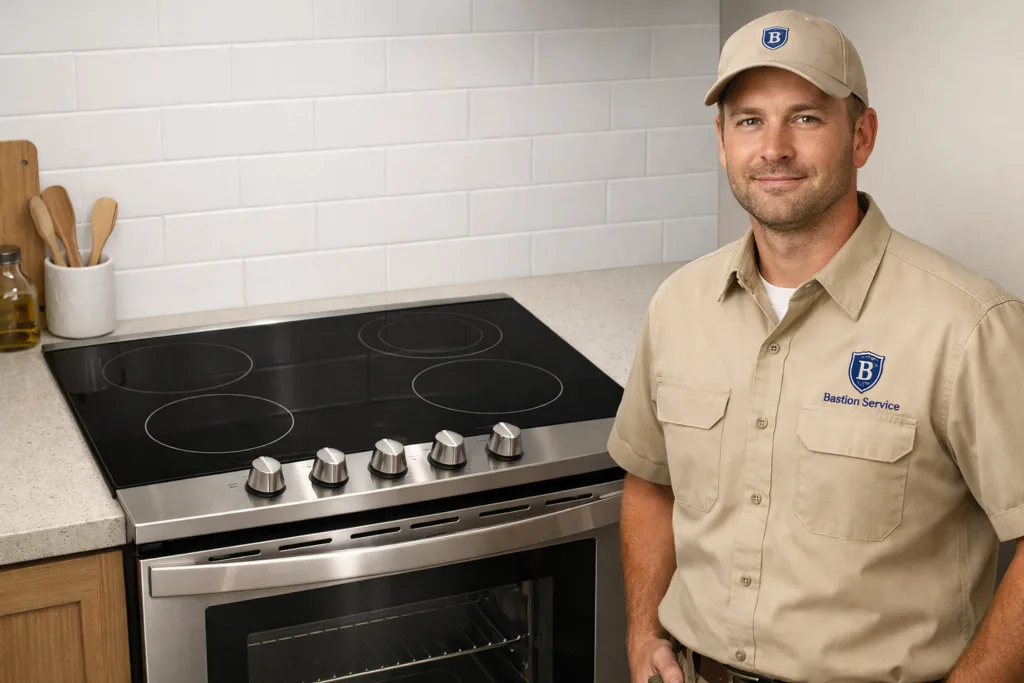
Common Kenmore cooktop problems and what they usually mean

Cooktop issues often look simple from the surface, but the same symptom can come from very different parts. On a Kenmore cooktop, a burner that will not heat, an igniter that keeps clicking, or a control that behaves unpredictably may involve the burner assembly, switch, wiring, ignition components, or surface damage under the top.
For homeowners in Torrance, the most useful next step is to match the repair plan to the exact symptom pattern. That helps avoid replacing parts based on guesswork and gives a better sense of whether the unit is a good repair candidate.
Burner will not heat
On electric Kenmore cooktops, a dead burner may be caused by a failed surface element, a damaged receptacle, a bad infinite switch, or a wiring problem below the cooktop. If the burner works sometimes and then cuts out, the fault may be developing rather than fully failed.
On gas models, a burner that does not light may have a clogged burner head, a misaligned cap, an ignition problem, or restricted gas flow to that burner. If one burner is affected and the rest work normally, the problem is often limited to that specific burner system.
Burner heats unevenly or gets too hot
Uneven heating can show up as hot spots, poor simmer control, or food cooking faster on one side of the pan. On electric units, this can point to a weakening element or a control that is no longer regulating heat correctly. On gas models, it may come from blocked ports, poor flame distribution, or burner parts that are not seated correctly.
A burner that runs hotter than the selected setting should be checked promptly. Overheating can damage cookware, make cooking unpredictable, and sometimes signal a control fault that will worsen with use.
Igniter clicks repeatedly
Constant clicking is one of the most common gas cooktop complaints. In many cases, the cause is moisture around the igniter, a dirty burner cap, a cap that is out of position, or a worn spark switch. If the burner lights but the clicking continues, the ignition system may not be sensing properly or may be sending spark when it should stop.
If clicking is paired with a strong or persistent gas smell, stop using the cooktop and handle safety first through the gas utility or emergency services before arranging appliance repair.
Weak, yellow, or unstable flame
A normal gas flame should look steady and burn evenly around the burner. If the flame appears weak, irregular, or yellow, the burner may have blocked ports, contamination, alignment issues, or a gas delivery problem affecting performance. Delayed ignition is another sign that the burner should be inspected rather than used normally.
These problems do not just affect cooking results. They can also increase wear on ignition parts and make the cooktop less predictable in daily use.
Controls do not respond normally
If a knob turns but the burner does not respond correctly, the issue may be in the switch, control, or related wiring. Some faults show up as intermittent operation, where the burner works one day and not the next. Others appear as heat settings that no longer match actual output.
Because control problems can mimic burner failure, testing matters. A part that looks like the obvious cause is not always the one that has actually failed.
Cracked glass or visible surface damage
On smooth-top Kenmore cooktops, a crack in the glass should not be ignored even if the burner still works. Surface damage can create safety concerns and may allow moisture to reach internal electrical components. Chips, impact damage, and heat-stress fractures can spread over time.
In these cases, the repair decision usually depends on the extent of the damage, the age of the appliance, part availability, and whether the rest of the cooktop is in solid condition.
Why symptom-based diagnosis matters
Many cooktop failures overlap. A burner that seems dead might actually be receiving power but not being regulated correctly. Repeated ignition clicking may come from a switch issue rather than the igniter itself. Uneven electric heat may be caused by a control problem instead of the heating element.
That is why service tends to go better when the problem is traced by symptom, testing, and inspection rather than by assumptions. For a household in Torrance, that usually means a more accurate estimate of repair scope and a better decision on whether to proceed.
Signs you should schedule repair soon
It is a good idea to have the cooktop checked when you notice any of the following:
- A burner no longer heats or lights
- Clicking continues after ignition
- Heat output has become inconsistent
- The flame is weak, yellow, or uneven
- A burner runs too hot or will not regulate
- The glass top is cracked or visibly damaged
- There is a burning smell, sparking, or signs of scorching
Even when the cooktop still works part of the time, intermittent problems usually mean the failure is progressing. Catching it earlier can limit added damage to switches, wiring, burner parts, or the cooktop surface.
When continued use can make the problem worse
Some symptoms should not be treated as a minor inconvenience. A burner that overheats, a control that does not regulate properly, visible arcing, cracking, delayed gas ignition, or repeated relighting all point to problems that deserve prompt attention. Continued use can increase the repair scope and may create safety concerns in the kitchen.
For electric models, tripped breakers, a burning odor, or a burner that stays on beyond its setting should be taken seriously. For gas models, unusual flame behavior or ignition trouble should not be brushed off as normal aging.
Repair or replace: how the decision is usually made
Many Kenmore cooktop problems are repairable when the fault is isolated and the appliance is otherwise in good shape. Burner components, ignition parts, switches, and some control-related failures are often reasonable repairs if the rest of the unit has held up well.
Replacement becomes more likely when there is major glass damage, repeated failures in multiple systems, limited part availability, or a repair cost that is too close to the value of the cooktop. Age matters, but overall condition matters more. A unit that has been reliable and only has one clearly defined fault may still be worth fixing.
Helpful details to note before service
If your Kenmore cooktop is acting up, a few observations can make diagnosis more efficient:
- Whether the issue affects one burner or several
- Whether the problem is constant or intermittent
- Whether clicking happens only at ignition or continues afterward
- Whether heat changed suddenly or gradually over time
- Whether you noticed sparks, smoke, odor, or visible cracking
- Whether the problem started after cleaning, boiling over, or heavy use
For Torrance homeowners, those details often help narrow the fault faster and make the repair decision more straightforward. The goal is not just getting the cooktop running again, but restoring safe, predictable performance for everyday cooking.