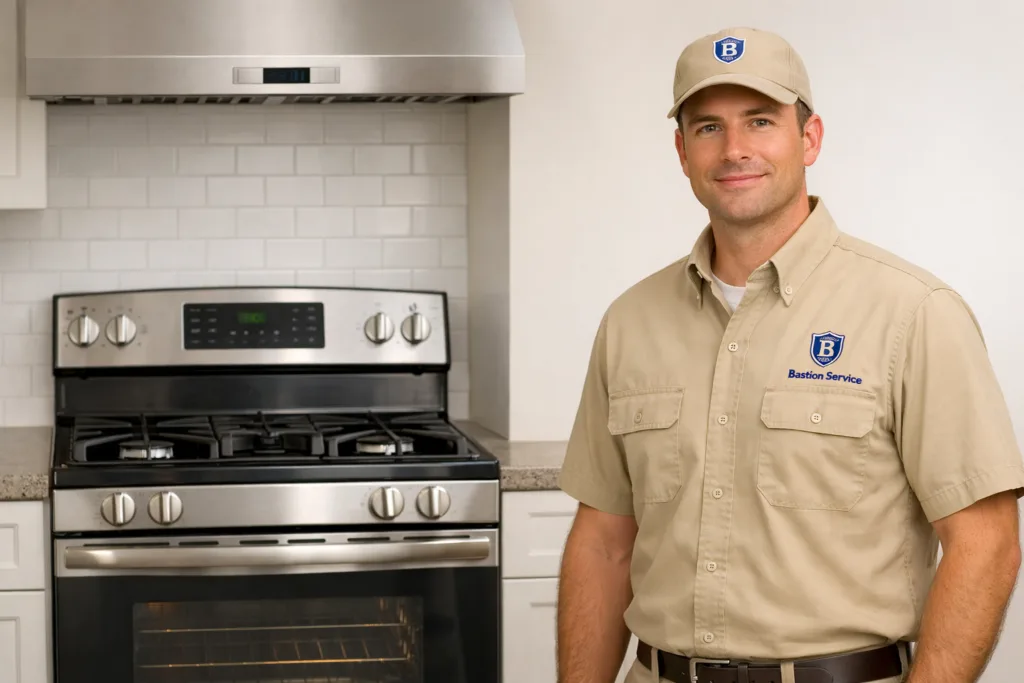
Common GE Range Problems in Torrance Homes

Most range failures start with a symptom the household notices right away: a burner that will not light, an oven that takes too long to preheat, food that bakes unevenly, or controls that stop responding normally. With GE ranges, those symptoms can come from more than one component, so the best next step is to match the repair plan to the exact behavior of the appliance.
Some problems affect only one cooking function, while others point to a broader issue involving power, ignition, sensors, or electronic controls. Paying attention to what the range is doing consistently helps narrow down whether the issue is likely minor, developing, or serious enough to stop using the appliance until it is checked.
Burners Not Lighting or Clicking Repeatedly
If a surface burner clicks but does not ignite, the cause may be as simple as burner cap misalignment or debris in the burner ports. In other cases, the trouble may involve the igniter, spark switch, wiring, or spark module. Moisture after cleaning can also trigger constant clicking on some GE models.
When only one burner is affected, the issue is often isolated to that burner assembly. When several burners click unpredictably or ignition becomes inconsistent across the range, the problem may be more central to the ignition system. If there is a strong or persistent gas smell, stop using the appliance and address the safety issue first before arranging repair.
Oven Not Heating, Heating Slowly, or Not Reaching Temperature
An oven that stays cold, preheats very slowly, or never reaches the set temperature may have a weak igniter, a failing bake or broil element, a bad temperature sensor, or a control fault. Homeowners often notice this first when meals take much longer than expected or when preheating seems to stall.
On gas ranges, a weak igniter is a common reason the oven does not heat properly even though the rest of the appliance appears normal. On electric models, a damaged element or wiring issue may be the reason. Because several parts can create similar symptoms, testing matters more than guessing from the display or sound alone.
Uneven Baking and Temperature Swings
If one side of the oven browns faster, cookies bake inconsistently from rack to rack, or recipes suddenly need extra time, the oven may be cycling heat incorrectly. That can point to a sensor issue, a weakening element, an igniter that is no longer performing properly, or control-related temperature regulation trouble.
These problems are easy to live with for a while, but they usually become more noticeable over time. For households that cook often, inaccurate oven temperatures can turn everyday meal prep into trial and error.
Controls, Display, and Error Code Problems
GE ranges can also develop touchpad problems, flashing displays, failed keypad response, or repeating error codes. In some cases the appliance still powers on but certain functions, such as bake, broil, timer controls, or burner ignition, stop working correctly.
Control issues are worth checking sooner rather than later because they can affect multiple systems at once. A display problem may not be only a display problem if the board is also interfering with heating or ignition commands.
What Different Symptoms Can Mean
Symptom-based diagnosis is especially useful with ranges because the visible problem is not always the failed part. A burner that will not ignite may look like an igniter failure but turn out to be blockage or poor alignment. An oven that seems to need a new element may actually have a sensor or control problem that is preventing normal heat cycling.
- Single burner not working: often tied to that burner’s cap, ports, igniter, or switch
- All burners acting erratically: may involve shared ignition components or electrical issues
- Oven heats but food undercooks: possible weak igniter, sensor drift, or control regulation problem
- Range has power but functions are inconsistent: may point to interface, board, or wiring faults
- Intermittent operation: can suggest loose connections, moisture-related issues, or a part beginning to fail
This is why replacing parts based only on the most obvious symptom can become expensive without solving the real problem.
When a GE Range Should Be Serviced Promptly
Some range problems are inconvenient but manageable for a short time. Others should be addressed quickly because they affect safety, reliable cooking, or the chance of a larger failure. If the appliance is struggling to ignite, cannot maintain temperature, or behaves unpredictably, delaying service can make daily use harder and may put more strain on other components.
It is usually time to schedule service when:
- The oven will not preheat or does not hold temperature
- Burners click constantly or fail to light reliably
- The range trips power, shuts off, or works only intermittently
- Error codes keep returning after resets
- Cooking results have become noticeably inconsistent
- Controls respond incorrectly or not at all
For households in Torrance that use the range every day, even a moderate issue can become disruptive quickly. Early service can also help prevent extra wear caused by components trying to compensate for a developing fault.
Repair or Replace?
Many GE ranges are still good repair candidates when the problem is limited to ignition components, sensors, heating elements, switches, or certain control-related parts. If the appliance is otherwise in solid condition and has been working well up to this point, repair often makes sense.
Replacement becomes more likely when the range has multiple major issues at once, shows significant overall wear, has a history of repeated breakdowns, or needs repairs that approach the value of the appliance. Age by itself does not decide the question, but age combined with several stacked problems often changes the calculation.
A proper diagnosis helps homeowners make that decision with better information. Instead of treating every symptom as a separate emergency, it shows what has failed, what else may be affected, and whether repair is likely to restore normal day-to-day cooking.
Helpful Steps Before Service
Before a service visit, it helps to note exactly what the range is doing. Small details can make diagnosis faster and more accurate.
- Check whether the problem affects one burner, all burners, the oven, or the full range
- Write down any error codes showing on the display
- Notice whether the issue is constant or only happens occasionally
- Pay attention to sounds such as repeated clicking or delayed ignition
- For oven problems, note whether the appliance heats at all or simply heats poorly
You do not need to disassemble the appliance or keep testing a problem repeatedly. In fact, continued testing can make some conditions harder to evaluate, especially if ignition is unreliable or the controls are behaving erratically.
Residential GE Range Repair Focused on Everyday Use
In a busy household, a range problem is rarely minor for long. Whether the issue involves a burner that will not light, an oven that runs cool, or controls that no longer respond consistently, the goal is to identify the fault clearly and determine the most sensible repair path for the appliance in its current condition.
For Torrance homeowners, that means looking beyond the surface symptom and focusing on what will restore safe, predictable cooking without unnecessary parts replacement. When the diagnosis is accurate, the decision to repair, monitor, or replace becomes much easier.