





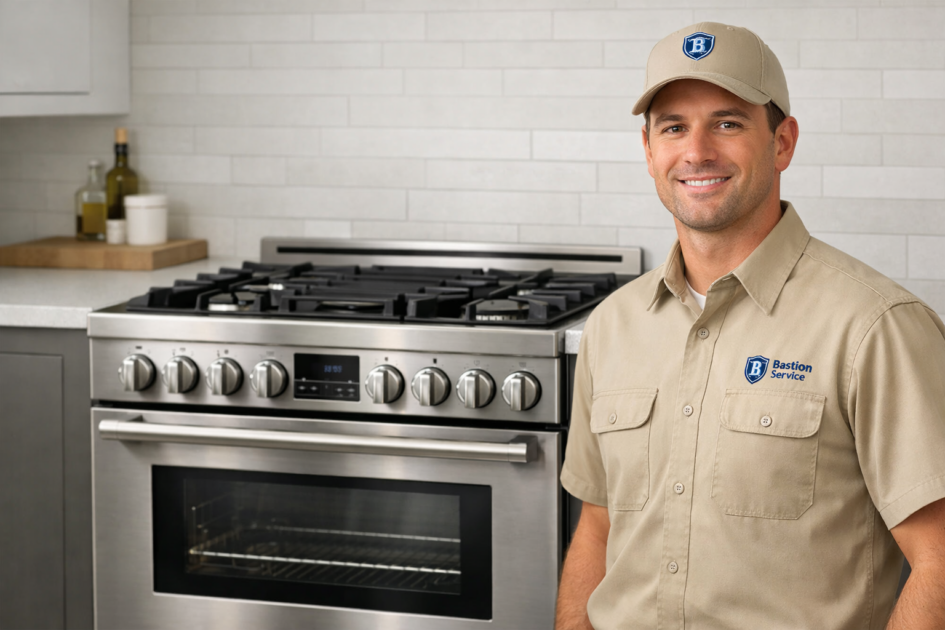
Cooking problems rarely start with a complete breakdown. More often, a Fisher & Paykel range begins showing smaller warning signs such as delayed ignition, uneven baking, unreliable burner flame, or controls that do not respond the same way every time. Catching those patterns early can help prevent a minor issue from turning into a larger repair.
Common Fisher & Paykel range problems seen in Torrance homes
Range symptoms can overlap, which is why the exact behavior matters. A burner that will not light, an oven that runs cool, and a display that acts erratically may all seem unrelated at first, but they can point to specific ignition, heating, sensor, or control faults. The most useful starting point is identifying whether the problem affects the cooktop, the oven, or both.
Burner won’t ignite or keeps clicking
One of the most common complaints is a gas burner that clicks repeatedly but does not light normally. In some cases, the cause is simple, such as moisture after cleaning, a burner cap that is slightly out of position, or blocked burner ports. In other cases, the issue may involve the igniter, spark module, switch, or wiring.
If the clicking continues after the flame is lit, or if ignition is slow and inconsistent, it is worth having the range checked. Delayed ignition should not be ignored, especially when the same symptom appears on more than one burner.
Oven takes too long to preheat
An oven that heats slowly often points to a weakening igniter on gas models, though temperature sensor and control issues can also cause long preheat times. Homeowners usually notice this when recipes that once worked well begin taking longer or producing uneven results.
Slow preheating is more than an inconvenience. It can be an early sign that a heating component is struggling and may fail completely if the appliance continues to be used heavily.
Oven temperature is off
If food comes out undercooked, overbrowned, or inconsistent from one rack position to another, the oven may not be reading or maintaining temperature accurately. Possible causes include a faulty sensor, calibration drift, intermittent heating behavior, or an electronic control problem.
Temperature complaints are often mistaken for cookware or recipe issues at first. When the problem repeats across different meals, the range itself usually needs testing.
Uneven baking or hot spots
When one side of the oven cooks faster than the other, or when the top and bottom of a dish finish at different rates, the problem may involve uneven heat distribution, a failing component, or poor temperature regulation. This kind of symptom can be subtle at first, but it usually becomes more obvious over time.
Households that bake often tend to notice these changes quickly because the oven stops producing predictable results.
Display, keypad, or control problems
Flashing numbers, unresponsive buttons, partial display failure, or settings that do not hold properly can all indicate a control issue. Sometimes the failure is in the interface itself. In other cases, the display problem is part of a larger electrical or board-related fault.
When control problems appear alongside heating problems, it is important not to assume they are separate. A single underlying fault can affect multiple functions at once.
How symptom patterns help narrow down the cause
A range does not need to stop working completely to reveal useful diagnostic clues. The timing of the issue often matters as much as the symptom itself. For example:
- If a burner fails only after cleaning, moisture or burner cap positioning may be involved.
- If the oven preheats eventually but takes much longer than before, ignition or heat production may be weakening.
- If temperature varies from one use to the next, the problem may be intermittent rather than constant.
- If both oven and cooktop behavior change around the same time, power, control, or shared electrical issues may be part of the problem.
These details help separate a localized part failure from a broader operational issue.
When continued use can make the problem worse
Some range issues are mostly inconvenient, while others can place added strain on components or create unreliable cooking conditions. Service is usually the better option when:
- ignition is delayed or inconsistent
- the oven cannot hold temperature
- controls work only intermittently
- one function fails and another begins acting oddly soon after
- the same problem returns after cleaning or resetting the appliance
If the unit is tripping breakers, shutting off unexpectedly, or showing combined control and heating symptoms, it makes sense to stop guessing and have the range evaluated before the failure spreads.
Repair or replace?
Many Fisher & Paykel range problems are repairable when the issue is limited to a specific ignition, heating, sensor, or control-related fault. A targeted repair often makes sense when the appliance has otherwise been working well and the current problem appears isolated.
Replacement becomes a more serious consideration when the range has repeated major failures, multiple expensive components are failing together, or the appliance shows a pattern of declining performance across several functions. Age alone does not decide the issue. What matters more is whether the current fault is contained or part of a larger cycle of breakdowns.
What to note before scheduling service
If you are arranging Fisher & Paykel Range Repair in Torrance, a few observations can make the visit more efficient. Try to note:
- whether the problem affects the cooktop, oven, or both
- whether the symptom happens every time or only occasionally
- if there is clicking, delayed ignition, weak heating, or a display error
- whether the issue began suddenly or developed gradually
- if basic cleaning, drying, or resetting changed the behavior at all
That information helps connect the symptom to the most likely cause and reduces the guesswork that often leads to unnecessary parts replacement.
Focused help for everyday cooking problems
For homeowners in Torrance, the main goal is simple: restore normal cooking without wasting time on the wrong fix. Whether the issue is a burner that will not light, an oven that no longer heats evenly, or controls that have become unpredictable, the best next step is based on how the range is actually failing in day-to-day use.
When those symptoms are understood clearly, it becomes easier to decide whether repair is the practical choice and what kind of work is most likely to solve the problem for the long term.


