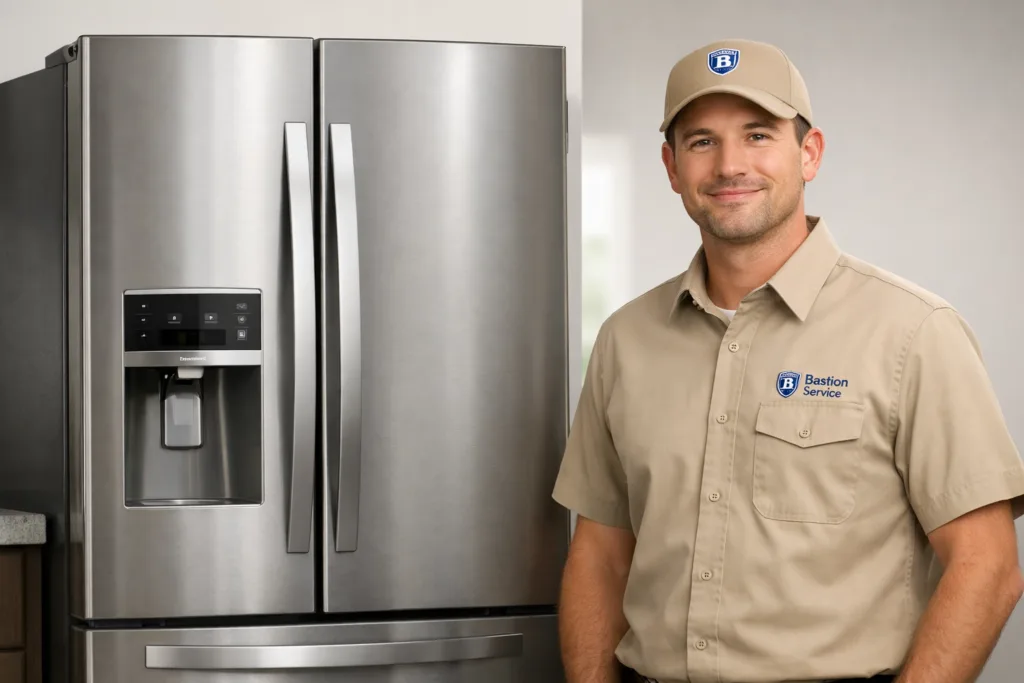
Refrigerator trouble rarely stays minor for long. If your Kenmore unit is warming up, collecting frost, leaking, or sounding different than usual, the most useful first step is to match the symptom pattern to the likely failure area. That helps separate simple issues from problems that can threaten food storage, damage flooring, or put extra strain on major components.
Common Kenmore refrigerator symptoms and what they often mean
Many refrigerator complaints look similar at first, but the underlying causes can be very different. A warm fresh food section might come from blocked airflow, a failed fan motor, a defrost problem, or a control issue. Water on the floor could be a drain problem, a door-seal problem, or an ice maker supply issue. Looking closely at how the symptom appears usually gives a better direction than replacing parts based on a guess.
Refrigerator not cooling enough
If food is soft, drinks are not staying cold, or the freezer is no longer holding temperature, possible causes include condenser problems, evaporator fan failure, a faulty start device, a thermostat or sensor issue, or frost buildup interfering with airflow. In some cases the refrigerator may still run, but it cannot move cold air where it needs to go.
This symptom should be taken seriously because temperature loss can worsen quickly. If the machine is running constantly but cooling poorly, the system may be working harder than normal without solving the actual problem.
Freezer cold but fresh food section warm
This is one of the more common complaint patterns in residential refrigeration. Often, the freezer is still producing cold air, but that air is not reaching the refrigerator compartment properly. Restricted vents, evaporator fan problems, damper issues, or defrost failures are common reasons.
Homeowners in Torrance often notice this problem first when produce spoils early while frozen items still seem normal. That usually points more toward air distribution trouble than a complete cooling shutdown.
Frost buildup inside the freezer
Heavy frost on the back panel, around shelves, or near vents usually suggests a defrost-related issue or unwanted warm air entering through a poor door seal. When frost builds up enough to block airflow, cooling performance can drop in both compartments.
If frost returns soon after being cleared, the issue is likely not cosmetic. Repeated buildup typically means the refrigerator is not defrosting correctly or moisture is getting in faster than it should.
Water leaking under or inside the refrigerator
Puddles under the unit, water under crisper drawers, or sheets of ice on the freezer floor often trace back to a clogged defrost drain. Leaks can also come from water line connections, ice maker components, or doors that are not sealing consistently.
Even a slow leak matters. Over time, moisture can affect flooring, baseboards, or nearby cabinetry, especially if the problem goes unnoticed for several days.
Clicking, buzzing, rattling, or nonstop running
Not every sound means there is a failure, but a clear change in sound usually deserves attention. Clicking at startup may point to a compressor start issue. A loud hum or buzz can come from a struggling fan, vibration, or a component working under strain. Rattling may be as simple as a loose panel, but it can also reflect airflow or motor trouble.
If the refrigerator seems to run all the time, that can indicate dirty coils, a weak seal, airflow restriction, temperature control problems, or a cooling system issue that prevents the unit from satisfying demand.
Why symptom timing matters
When a refrigerator problem happens can be just as important as what happens. A unit that warms up only during the afternoon may be dealing with poor heat transfer or an overworked cooling system. A leak that appears only after a defrost cycle suggests a drainage problem. A clicking sound only at startup points in a different direction than a fan noise that continues all day.
Useful details include:
- Whether both compartments are affected or only one
- Whether frost is light, heavy, or keeps returning
- Whether the unit cycles normally or runs almost nonstop
- Whether leaking happens near the freezer, fresh food section, or underneath the cabinet
- Whether unusual sounds occur at startup, during cooling, or continuously
These patterns help narrow the issue faster and make repair decisions more informed.
Problems that can get worse with continued use
Some refrigerator problems allow limited short-term use, but others tend to escalate. A blocked defrost system can turn a small airflow issue into a full cooling failure. A failing evaporator fan can leave one section warm while forcing the rest of the system to work harder. A bad door seal can cause excessive run time, moisture buildup, and unstable temperatures.
Leaks also deserve quick attention. What begins as occasional water under the unit can become cabinet damage or a slipping hazard in the kitchen. If thawing is spreading, food safety becomes a concern as well.
When to stop waiting and schedule service
It is usually time to schedule service when:
- Food is spoiling before its normal date
- The fresh food section is warm but the freezer still seems cold
- Frost keeps returning after you clear it
- Water is pooling under the refrigerator or inside drawers
- The refrigerator is running constantly without reaching normal temperature
- New clicking, buzzing, or fan noise has appeared
If cooling has dropped sharply, try to minimize door openings while deciding on the next step. If there is leaking near electrical areas or major thawing is underway, the problem should not be left to continue.
Repair or replace: how homeowners usually weigh it
Repair is often reasonable when the issue is tied to a serviceable part such as a fan motor, drain problem, control component, sensor, seal, or defrost part, especially if the cabinet and doors are still in solid condition. Replacement becomes a more realistic consideration when the refrigerator has multiple active failures, ongoing cooling complaints, heavy wear, or a major component issue that no longer makes sense for the appliance overall.
That choice is easier when it is based on the actual failure rather than frustration. A refrigerator that seems finished may only need one targeted repair. On the other hand, a unit with repeated breakdowns and declining performance may not be the best place for continued investment.
What a helpful service visit should answer
Most households in Torrance are not looking for a long technical lecture. They want to know what is failing, whether food can still be protected, whether the problem is likely isolated or more extensive, and whether the repair path is worthwhile. Good service should leave you with a practical explanation of the symptom, the likely cause, and the next step that makes the most sense for your Kenmore refrigerator.