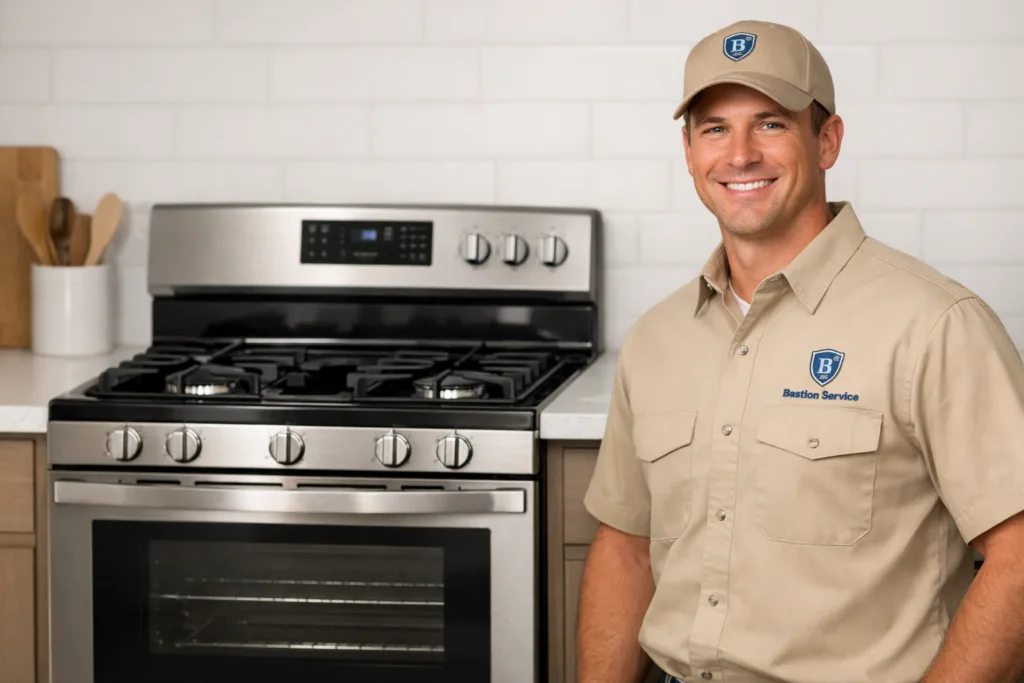
Range problems tend to show up in everyday cooking first: an oven that takes too long to preheat, a burner that clicks without lighting, or temperatures that seem inconsistent from one meal to the next. With Amana ranges, those symptoms can come from several different components, so the most useful approach is to match the repair plan to the exact behavior of the appliance.
Start with the symptom pattern
A range includes separate systems for surface cooking, oven heating, temperature sensing, and electronic control. Two issues that look similar at first can have very different causes. An oven that never heats is not the same problem as an oven that heats slowly, and a burner that sparks continuously is different from a burner that does nothing at all.
Paying attention to when the problem happens can help narrow things down. It helps to note whether the issue affects the cooktop, the oven, or both, whether it happens every time, and whether the display shows any error or irregular behavior.
Signs the oven heating system may need service
If your Amana range oven is underheating, overheating, or cooking unevenly, likely causes can include the igniter, bake or broil element, temperature sensor, control board, or wiring. In many homes, this shows up as food taking much longer than normal, one side of a dish browning faster than the other, or recipes that suddenly stop turning out the way they used to.
- Oven will not heat at all
- Preheat takes much longer than normal
- Temperature does not match the setting
- Food bakes unevenly or burns unexpectedly
- Broil works, but bake does not, or the reverse
When heating is inconsistent, continued use can lead to frustrating results and may add stress to already weakened components. If the problem appears more than once, it is usually worth having the range checked instead of relying on repeated test runs.
Surface burner problems and what they often mean
Cooktop issues can be straightforward or more involved depending on whether one burner is affected or several are acting up at the same time. On gas models, a burner may click, light slowly, produce a weak flame, or fail to ignite. On electric models, an element may stay cold, heat unevenly, or work only on certain settings.
Possible causes include clogged burner ports, worn ignition parts, faulty burner switches, damaged receptacles, failed surface elements, wiring trouble, or a control issue. If only one burner is failing, the repair may be limited to that position. If multiple burners are showing similar symptoms, diagnosis should also include shared power or control components.
Clicking, sparking, and delayed ignition
One of the more common complaints with gas ranges is repeated clicking. Sometimes the burner eventually lights. Sometimes it does not. Moisture, residue around the burner, ignition component wear, or switch-related faults can all contribute to that behavior.
Clicking that continues after ignition, or clicking from more than one burner at once, should not be ignored. While some causes are minor, others point to parts that are no longer operating normally and should be evaluated before the issue becomes more disruptive.
Display, keypad, and control issues
Some Amana range problems are less about heat output and more about how the appliance responds. A blank display, beeping, error codes, delayed keypad response, or settings that change unexpectedly may indicate a failing sensor, control board issue, keypad fault, or unstable electrical connection.
These symptoms often make the range unpredictable even if part of it still works. If the controls are inconsistent, it becomes harder to trust temperature settings and cooking times, especially for baking or longer oven cycles.
When to stop using the range
Certain symptoms move beyond inconvenience and call for immediate caution. Stop using the range and arrange service if you notice any of the following:
- A burner that does not shut off properly
- Frequent tripping of power while the range is in use
- Burning smells from controls, wiring, or the cooktop area
- Oven temperatures that swing far above the set point
- Ignition behavior that becomes unreliable or erratic
If you smell gas strongly or persistently, do not continue troubleshooting the appliance. Leave the area if needed and contact the gas utility or emergency service first. Appliance repair should wait until the immediate safety issue has been addressed.
Repair or replacement: what usually makes sense
Many range problems are worth repairing when the issue is tied to a specific part and the appliance is otherwise in good condition. That often includes igniters, heating elements, temperature sensors, burner switches, and some surface ignition components.
Replacement becomes more likely when the range has several unrelated failures, significant wiring or control damage, a history of repeated breakdowns, or repair costs that are too close to the value of replacing the unit. For homeowners in Torrance, the decision usually comes down to the age of the appliance, the number of systems affected, and whether the expected repair will restore normal daily use.
What a service visit should clarify
A useful Amana range repair visit should do more than identify one failed part. It should confirm the source of the symptom, check related components, and explain whether the repair is likely to solve the whole problem or only part of it.
For example, an oven that is not heating may involve the igniter or element, but it can also involve the sensor, control, or wiring. A burner that will not light may need more than a surface cleaning if the ignition or switch system is failing underneath the symptom.
Good service should leave you with clear answers on three practical points:
- What is causing the problem
- Whether continued use could create more damage or safety concerns
- Whether repair is the sensible next step for this specific range
Helpful observations to note before scheduling service
If you are planning service in Torrance, a few simple observations can make the problem easier to pinpoint. Try to note whether the issue happens every time or only occasionally, whether it affects one burner or several, and whether the oven eventually reaches temperature or never gets there at all.
It is also helpful to mention recent changes such as a power interruption, a spill around the cooktop, unusual noises, or an error code on the display. Those details can help connect the symptom to the most likely failure and reduce guesswork once diagnosis begins.
Focused help for everyday cooking problems
When a range starts interfering with normal meals, the main goal is getting back to safe, predictable cooking without replacing parts unnecessarily. Bastion Service helps Torrance homeowners diagnose Amana range problems and understand whether the repair path is limited and worthwhile or a sign that the appliance is nearing the end of its practical life.