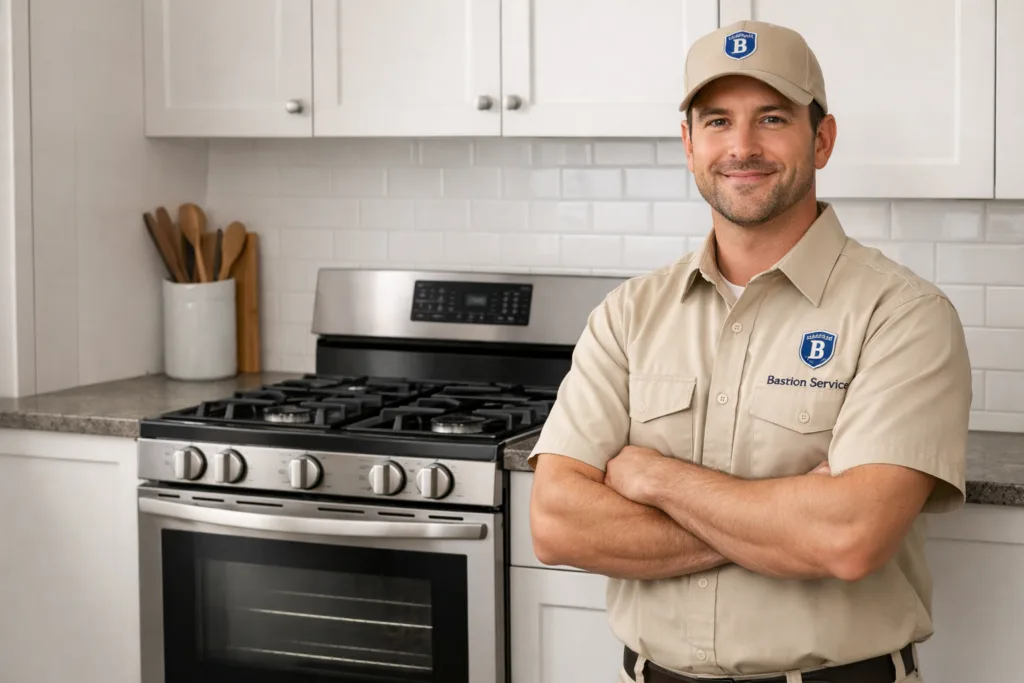
Cooking problems tend to show up in ways that seem simple at first, but an LG range can fail in several different systems at once. A burner that will not light, an oven that takes far too long to preheat, or controls that stop responding may each point to a different repair path. Looking closely at the exact behavior usually tells more than the symptom name alone.
How LG range problems usually show up at home
Most range issues fall into a few broad categories: surface burner trouble, oven heating trouble, ignition problems, or electronic control problems. The useful distinction is whether the appliance fails all the time, only during certain cycles, or only after it has been running for a while. Intermittent symptoms often suggest a different cause than a complete no-heat condition.
It also helps to notice whether the problem affects the cooktop, the oven, or both. If the oven struggles but the burners work normally, the fault may be isolated to an oven component. If the whole range seems unstable, loses power, or shows display errors, the issue may involve wiring, controls, or incoming power rather than a single heating part.
Signs the oven is not heating correctly
Uneven baking, slow preheating, undercooked centers, or food that burns unexpectedly can all point to an oven heating problem. On some LG ranges, the oven may appear to be operating normally while never actually reaching the selected temperature. In other cases, it may overshoot and run too hot.
- Preheat takes much longer than usual
- The oven says it is ready, but food cooks too slowly
- One rack position cooks much faster than another
- The broil function works better than bake, or the reverse
- Temperature results change from one use to the next
These symptoms can relate to an igniter, bake element, broil element, sensor, relay, or control issue depending on whether the unit is gas or electric and how the failure appears during operation.
Surface burner and cooktop issues
Cooktop problems are often easier to notice because they interrupt meal prep immediately. A gas burner may click constantly, light slowly, or fail to hold a flame pattern. An electric surface element may stay cold, cycle incorrectly, or overheat regardless of the setting.
In many homes, the first clue is inconsistency. One burner works normally while another does not, or a burner only acts up after spills, heavy use, or cleaning. That pattern can help separate a localized burner issue from a larger switch, spark, or control failure.
Control panel, display, and power symptoms
Some LG range failures are not really about cooking performance at all. A blank screen, flashing code, beeping controls, locked keypad, or random shutoff can keep the appliance from working even when the heating parts themselves are still functional.
If the range trips a breaker, resets its clock, or loses power mid-cycle, it is wise to stop repeated testing. Those symptoms may indicate a deeper electrical problem, and continued use can turn an intermittent fault into a more expensive one.
Common causes behind the most frustrating symptoms
Why an oven may not reach temperature
When an LG oven will not heat properly, the cause is often tied to the components that create or regulate heat. On electric models, a weakened bake or broil element can reduce performance without failing completely. On gas models, a worn igniter may glow yet still fail to draw enough current to open the gas valve reliably.
Temperature regulation can also suffer when the sensor reads inaccurately or the control board does not cycle heat correctly. That is why two ovens with similar cooking complaints may need very different repairs.
Why a burner keeps clicking
Constant clicking on a gas range usually points to an ignition system issue. Moisture, food debris, misalignment, or wear in the spark system can all keep the igniter from recognizing proper ignition. Sometimes the burner will light but continue clicking; other times it clicks without lighting at all.
If the clicking starts after a spill or deep cleaning, the issue may be simpler than a failed part. If it continues day after day, the system should be checked before the problem spreads to related ignition components.
Why an electric burner overheats or will not adjust
An electric surface burner that stays too hot or ignores lower settings may have a failed switch or control problem. A burner that does not heat at all could involve the element itself, the receptacle connection, wiring, or the control it depends on. Because these parts work together, replacing one item based on a guess can miss the actual fault.
When continued use is a bad idea
Some range issues are inconvenient but manageable for a short time. Others are signs to stop using the appliance until it has been evaluated. If you notice sparking that does not stop, a visibly damaged heating element, repeated breaker trips, or an oven that behaves unpredictably at high heat, it is safer not to keep experimenting with it.
A persistent gas smell deserves immediate caution. Do not keep trying to relight the oven or burners. Leave the area if needed and contact the gas utility or emergency service first, then arrange appliance repair once the immediate safety concern has been addressed.
Repair or replacement for an LG range
Many LG range problems are worth repairing, especially when the appliance is otherwise in good shape and the failure is limited to one system. Burner switches, igniters, heating elements, sensors, and some control-related parts can often restore normal performance without replacing the whole unit.
Replacement becomes more likely when the range has several major issues at once, has a long history of repeat failures, or needs a repair that approaches the value of the appliance. Age matters, but condition matters just as much. A newer unit with one isolated failure is a very different situation from an older range with heating, control, and wiring problems happening together.
What homeowners in Torrance should pay attention to before service
A few details can make a diagnosis faster and more accurate. Try to note whether the problem is constant or intermittent, whether it affects one burner or several, and whether the issue started suddenly or got worse over time. Error codes, unusual smells, delayed ignition, or changes after a spill are all useful clues.
- Does the problem happen every time or only occasionally?
- Is it limited to the oven, the cooktop, or both?
- Did it begin after cleaning, a spill, or a power interruption?
- Are there visible signs such as sparking, charring, or a warped element?
- Does the appliance lose power, reset, or show a code?
For households in Torrance, these details help narrow down whether the issue is likely mechanical, electrical, ignition-related, or control-related.
What a service visit should help you decide
The goal of a repair visit is not just to identify a bad part. It should clarify what failed, whether the appliance can be used safely in the meantime, and whether the fix makes sense for the condition of the range. That is especially important when symptoms overlap, such as weak heating with display problems or burner trouble combined with ignition noise.
For LG range repair in Torrance, the most helpful outcome is a direct explanation of the failing system and the next sensible step. Whether the problem is uneven baking, burner ignition trouble, clicking, or unresponsive controls, a focused diagnosis gives you a better basis for deciding on repair now versus replacement later.