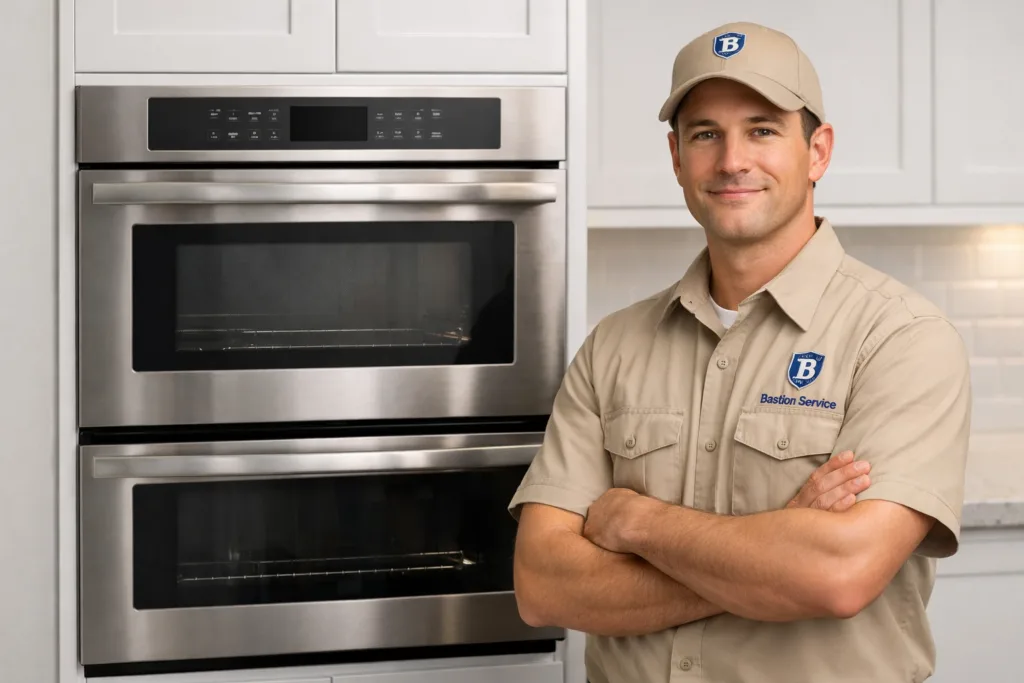
Built-in ovens tend to fail in ways that disrupt everyday cooking quickly. A GE wall oven may still power on but bake poorly, take far too long to preheat, or stop in the middle of a cycle. In other cases, the display goes blank, the controls stop responding, or the door remains locked after self-clean. The most efficient path is to match the symptom pattern to the likely failure point before any repair decision is made.
Common GE wall oven problems in Torrance homes
Many service calls start with one of a few familiar complaints: the oven is not heating, food is coming out unevenly cooked, preheat takes much longer than it used to, or the temperature feels inconsistent from one use to the next. Because wall ovens are built into the kitchen, even a modest fault can become a major inconvenience for the household.
On GE models, similar symptoms can come from different causes. A weak bake element, a faulty temperature sensor, a failing relay, a damaged door gasket, or a control problem can all affect cooking performance. That is why the symptom itself matters, but the way it appears matters just as much.
Oven not heating or not reaching temperature
If the display and lights work but the oven cavity stays cool, diagnosis often focuses on the bake circuit, broil circuit, control relays, or wiring. Some ovens heat partially, which can make the problem less obvious. A weakened element may glow yet still fail to produce enough heat for normal baking.
When the oven starts heating but never reaches the selected temperature, the issue may involve the sensor, calibration drift, or a control that is cycling the heat incorrectly. Homeowners often first notice this as longer cook times, underbaked centers, or recipes that suddenly become unreliable.
Uneven baking and temperature swings
Uneven baking is not always a simple temperature setting issue. If one side of a dish browns faster than the other, or food burns on the top rack while remaining pale below, the oven may have uneven heat distribution, a convection-related fault on applicable models, or a component that is no longer maintaining steady temperature.
Temperature swings can also point to a sensor that is reading inaccurately or a control problem that is overshooting and undershooting the target range. Repeated inconsistent cooking usually means the oven is no longer regulating heat the way it should.
Slow preheat
Slow preheating is one of the most common early warning signs. The oven may eventually get hot, but the extra time often signals a failing heating component or an issue in the control system. Homeowners in Torrance who cook frequently usually notice this symptom before a complete no-heat failure appears.
Addressing slow preheat early can help prevent a situation where the oven begins missing temperatures entirely or struggles more under longer cooking cycles.
Display, keypad, and control issues
If the clock resets, the control panel freezes, buttons do not respond, or error codes appear, the problem may be in the interface, electronic control, or associated wiring. A wall oven that turns off during cooking or randomly powers down should also be checked promptly, especially if the fault is becoming more frequent.
Intermittent electronic issues are worth taking seriously because they can be difficult to predict and often progress into complete loss of function.
Door lock and self-clean problems
Some GE wall oven problems show up right after a self-clean cycle. High heat can stress door lock components, sensors, switches, and controls. If the door stays locked, the oven will not start after cleaning, or a latch-related code keeps returning, the problem is often tied to that system rather than the cooking elements themselves.
A door that does not close fully can also affect performance. Heat loss around the seal may lead to poor baking results, longer cook times, and extra strain on surrounding components.
How different symptoms point to different repair paths
A useful diagnosis does more than name a part. It separates symptoms that only look similar on the surface. For example, an oven that runs cool could have a sensor problem, an element issue, or a control fault. A blank display could be caused by the control board, but it could also stem from a power supply issue, terminal connection, or internal wiring problem.
This matters because replacing the wrong part wastes time and money. It also matters when a wall oven has more than one issue at once, such as an aging heating system combined with unreliable controls. In that case, the repair conversation should include overall condition, not just the first failed component.
When to stop using the oven and schedule service
Some symptoms are inconvenient. Others suggest that continued use is a bad idea. Service should be scheduled promptly if the oven is tripping the breaker, shutting off mid-cycle, showing persistent electrical errors, or producing a burning smell from the control area or cabinet opening.
You should also stop using the appliance if you notice visible sparking, signs of overheating, or a door lock problem that leaves the oven in an unsafe or unusable state. These issues can indicate electrical faults that should be checked before the oven is operated again.
Repair or replace a GE wall oven?
Many GE wall oven issues are repairable, especially when the failure is limited to a sensor, heating element, latch component, fan-related part, or a specific control issue. Repair often makes sense when the appliance is otherwise in good condition and the built-in fit is important to preserve.
Replacement may be the better path when the oven has multiple major failures, repeated electrical problems, severe heat damage, or an estimate that approaches the value of a newer unit. Built-in appliances also involve cabinet fit and installation considerations, so the decision should account for more than the immediate part cost.
What homeowners in Torrance should expect from a service visit
A productive visit should identify whether the problem is isolated or part of broader wear within the appliance. It should also clarify whether continued use risks further damage and whether the repair is likely to restore dependable operation or only postpone a larger issue.
For many households in Torrance, the goal is simple: understand why the oven is failing, what it will take to fix it, and whether that fix is worth doing. When the symptom is matched to the actual cause, the next step becomes much easier to choose.
Why symptom-based diagnosis helps with built-in ovens
Wall ovens are different from freestanding ranges because access, installation, and heat management all play a bigger role in service decisions. A symptom-based approach helps narrow down whether the issue is with heating performance, controls, airflow, door sealing, or incoming power, instead of assuming every baking complaint means a bad element.
That approach is especially helpful when the oven still works some of the time. Partial heat, delayed response, inconsistent preheat, and intermittent shutdowns can all be signs of components that are failing gradually rather than all at once. Catching those patterns early often leads to a more straightforward repair plan.