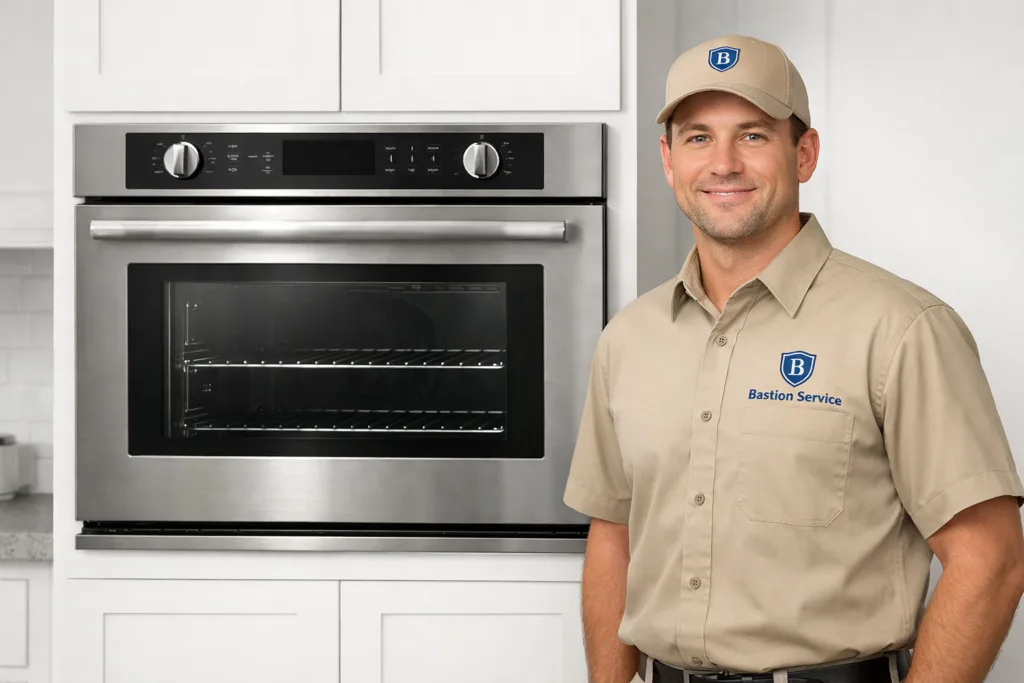
Cooking problems usually show up in everyday ways first: dinner taking much longer than expected, baked food browning unevenly, or a preheat cycle that seems to drag on. With GE ovens, those symptoms can point to different failures depending on whether the unit is electric or gas, and whether the issue affects bake, broil, temperature sensing, or the electronic controls.
Start with the exact symptom pattern
The most useful way to evaluate an oven problem is to narrow down what the appliance is doing consistently, what it does only sometimes, and which functions still work normally. A GE oven that will not bake but still broils suggests a different repair path than an oven that powers on, clicks, and never heats. Small details like error codes, delayed ignition, or a door that no longer seals tightly can change the diagnosis.
Before service, it helps to note:
- Whether the oven is electric or gas
- If bake, broil, convection, and self-clean all behave the same way
- Whether the display is normal, flashing, or blank
- If the problem began suddenly or got worse over time
- Whether there are unusual smells, sparks, or breaker trips
Common GE oven problems in Torrance homes
Oven not heating at all
If the control panel appears normal but the cavity never heats, the cause may be a failed bake element, weak igniter, blown thermal protection component, wiring fault, or control issue. On gas models, a weak igniter is a very common reason the oven stops heating properly even though the unit still seems to be trying to start.
When only one function fails, that detail matters. For example, if broil still works but bake does not, the problem often narrows to the bake circuit rather than the entire oven.
Slow preheating
Slow preheat often gets overlooked because the oven still eventually becomes usable. In many cases, though, it is an early sign that a component is weakening. Electric models may have a bake element that is no longer heating at full strength. Gas models may have an igniter that is too weak to open the gas valve quickly and consistently. A sensor or control problem can also lead to delayed or confused heating behavior.
When preheating keeps getting slower, continued use can place extra strain on other parts and make daily cooking more frustrating.
Uneven baking or temperature swings
If one rack cooks faster than another, food burns on top while staying underdone in the center, or recipes suddenly require major adjustments, the oven may not be regulating temperature correctly. Possible causes include a failing temperature sensor, calibration drift, a weak element, poor heat circulation, or a door gasket that is letting heat escape.
These issues are especially noticeable with baking because oven temperature stability matters more for cakes, cookies, casseroles, and roasted foods than many homeowners realize.
Oven overheating
An oven that runs hotter than the set temperature can be more than a cooking inconvenience. It may point to a sensor problem, relay failure, or electronic control issue. If cookware smokes unexpectedly, food scorches too quickly, or the oven seems unable to cycle down once hot, it is best to stop using it until the cause is diagnosed.
Display problems, beeping, or unresponsive controls
Repeated beeping, a flashing clock, buttons that only work intermittently, or settings that will not start can indicate trouble with the touchpad, user interface, control board, or electrical connections. These symptoms can seem minor at first, but they often lead to cycles that stop mid-cook or fail to begin at all.
Door problems and heat loss
A GE oven door that will not shut squarely, has a worn gasket, or feels loose at the hinges can affect cooking performance more than many people expect. Heat loss can cause long preheat times, uneven results, and extra stress on heating components because the oven has to work harder to maintain temperature.
Symptoms that should not be ignored
Some oven issues are inconvenient but manageable for a short time. Others are signs to stop using the appliance until it is checked. That includes:
- Burning or electrical odors
- Visible sparking
- Breaker trips tied to oven use
- Gas smell or repeated failed ignition attempts
- Overheating beyond the selected setting
- Scorching around the control area or wiring access points
These conditions can indicate a safety issue as well as a mechanical or electrical failure.
What tends to fail on GE ovens
Most repairs come down to a smaller group of parts rather than the entire appliance. Depending on the symptom, service may involve the igniter, bake element, broil element, temperature sensor, control board, door gasket, hinges, wiring, or related safety components. The goal is to identify the failed part and confirm that it is the true cause, rather than replacing components based on guesswork.
That matters because the same complaint can have more than one source. “Not heating” can mean no power, weak ignition, broken heating element, sensor failure, or control failure. “Uneven baking” can stem from temperature sensing, heat loss, or partial heating performance.
Repair or replace?
Many GE oven issues are worth repairing when the failure is isolated and the rest of the appliance is in good condition. Common examples include a bad igniter, failed sensor, worn gasket, or single heating element problem. Those repairs are often more sensible than replacing the oven.
Replacement becomes a more serious consideration when multiple major components have failed, the control system has broader damage, or the appliance has a history of repeated breakdowns. Age matters, but so does the overall condition of the oven, how well it has been performing before the current issue, and whether the repair solves the problem cleanly or only partly.
For Torrance homeowners, the best decision usually comes from weighing three things together:
- The exact failure and how extensive it is
- The condition of the oven overall
- Whether the expected repair restores normal, reliable use
How to get more value from a service visit
A focused appointment should leave you with more than a yes-or-no answer on whether the oven still turns on. It should clarify what failed, whether continued use is safe, whether the problem appears isolated or part of broader wear, and what repair path makes the most sense for your household.
If you have noticed changes in preheat time, baking consistency, or control behavior over the last few weeks, mention that timeline. Pattern changes often help explain whether a component failed suddenly or has been weakening gradually.
Helpful checks before scheduling service
There are a few simple observations homeowners can make without taking anything apart:
- Test whether both bake and broil work
- Check whether the display is holding time and settings normally
- Notice whether the oven reaches temperature and maintains it
- Look for a torn or flattened door gasket
- Pay attention to unusual clicking, long ignition delay, or repeated cycling
These notes can make diagnosis faster and more accurate, especially when the issue is intermittent.
Residential GE oven repair focused on normal day-to-day cooking
Most households do not need technical jargon. They need to know why the oven is not cooking correctly, whether the problem is likely to get worse, and whether repair is a sensible investment. For homes in Torrance, that means evaluating the symptom in the context of real kitchen use: weeknight meals, baking, roasting, and an appliance that needs to work predictably every day.
When a GE oven starts missing temperature, struggling to heat, or acting erratically at the controls, early diagnosis is often the best way to prevent wasted food, extra inconvenience, and more expensive damage later.