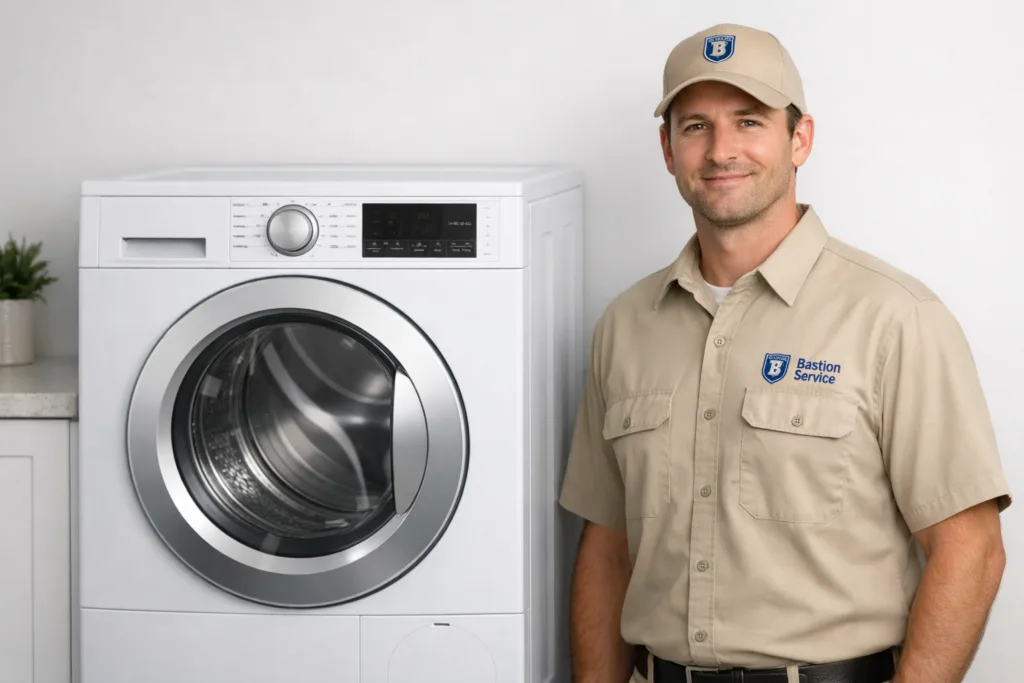
Dryer problems rarely stay minor for long. A Bosch unit that starts leaving clothes damp, pauses unexpectedly, or develops new noise is usually signaling a specific fault path, and the most cost-effective repair often depends on catching that pattern early instead of continuing to run extra cycles.
How Bosch dryer symptoms usually point to the real problem
Many dryer complaints sound similar at first, but the underlying causes can be very different. A machine that tumbles without drying may have a heating issue, an airflow restriction, or a moisture-sensing problem. A machine that will not start may have a door switch, power, control, or safety component issue. Because Bosch dryers rely on coordinated sensors and electronic controls, symptom-based testing matters more than guessing at parts.
Looking at what the dryer does before, during, and after a cycle often helps narrow the repair path. Homeowners usually notice one of a few common patterns.
Runs but does not heat
If the drum turns normally but clothing stays cool and damp, the problem may be tied to the heater circuit, temperature regulation components, airflow limitations, or a fault that prevents the dryer from producing consistent heat. This symptom often leads to repeated cycle use, which increases wear while doing little to solve the actual issue.
Signs that point to a true no-heat problem include:
- Clothes feel unchanged after a full cycle
- The drum tumbles normally but there is no warmth
- Cycle times seem normal, but drying performance drops sharply
- Loads that were easy to dry now stay damp throughout
Takes too long to dry
Long dry times are one of the most common early warnings. In many cases, the dryer still heats, but not efficiently enough to finish within the usual cycle window. Restricted airflow, partial heating failure, sensor issues, and vent-related conditions can all create this symptom. It is also one of the most misleading problems, because the machine appears to be working while performance steadily declines.
If one load now needs two or three cycles, that usually indicates more than normal wear. It is a sign that the dryer is compensating for a problem rather than operating as designed.
Will not start
When a Bosch dryer does nothing after pressing start, the issue may involve the latch system, door switch, incoming power, thermal protection components, or control-related faults. Sometimes the display turns on but the cycle will not begin. In other cases, the appliance appears completely inactive. Those differences matter, because they can point technicians in different diagnostic directions.
Starts, then stops mid-cycle
A dryer that begins normally and shuts off before finishing may be overheating, losing communication between components, or developing a motor or control problem. This symptom can be intermittent at first, which makes it tempting to keep trying. But repeated stop-and-start behavior usually means the machine is moving closer to a complete failure.
Makes unusual noise
Squealing, scraping, rattling, rhythmic thumping, and vibration often indicate wear in moving parts or internal support components. A dryer can still run with these issues, but continued use may turn a manageable repair into a more extensive one if drum-related parts, blower components, or supports continue to wear out of alignment.
Shows error codes or acts inconsistently
Buttons that stop responding, cycles that behave unpredictably, or a display that flashes errors without finishing a load may point to sensor feedback issues, wiring faults, or control board problems. On Bosch dryers, these symptoms are especially important to evaluate carefully because one failed input can cause several confusing operating issues at once.
Signs the dryer should not keep running
Some problems are inconvenient. Others are a reason to stop using the appliance until it has been checked. It is wise to pause use if you notice any of the following:
- A hot or sharp electrical smell
- The dryer shutting off repeatedly in the same cycle
- Clothing coming out unusually hot
- Sharp scraping or metal-on-metal sound
- The breaker tripping during use
- The drum not turning normally
- Performance changing dramatically from load to load
These symptoms can indicate overheating, mechanical damage, or electrical faults that are better addressed before the dryer is used again.
What can cause poor drying besides a failed part
Not every drying complaint comes from a single broken component. Bosch dryers are sensitive to airflow and sensing conditions, so a machine can underperform even when the heater is still operating. That is why the full symptom picture matters.
Common contributors to poor drying include:
- Airflow restriction inside the dryer path
- Vent conditions that reduce heat and moisture removal
- Moisture sensor performance issues
- Intermittent heater operation
- Control issues affecting cycle management
- Overheating protection limiting normal operation
When these issues are not identified correctly, homeowners can end up replacing the wrong part while the original problem remains.
Repair or replace: how the decision usually gets made
For most households in El Segundo, the right choice depends on the dryer’s age, overall condition, service history, and whether the current problem is isolated or part of a larger pattern. A Bosch dryer with one specific correctable failure is often a strong repair candidate, especially if it has otherwise been performing well.
Replacement becomes more worth considering when multiple systems are showing wear at the same time, the appliance has a history of repeat problems, or a major electronic or mechanical issue appears alongside age-related decline. The important point is that symptoms alone do not answer the repair-versus-replace question. Two dryers with the same complaint can have very different outlooks once the actual cause is identified.
What homeowners can notice before scheduling service
A few simple observations can make the problem easier to describe and diagnose. Before service, it helps to note:
- Whether the drum turns at all
- Whether the dryer produces any heat
- How long the problem has been happening
- Whether the issue affects every cycle or only certain settings
- Any new sounds, smells, or display behavior
- Whether drying performance worsened gradually or failed suddenly
These details help connect the complaint to the most likely system involved and reduce trial-and-error repair decisions.
What a symptom-based service visit should accomplish
Most homeowners are not looking for a technical lecture. They want to know what failed, whether the repair is sensible, and what to expect next. For residential Bosch dryer repair in El Segundo, that usually means confirming the fault, checking for related wear or airflow issues, and determining whether the appliance can be restored without unnecessary parts replacement.
If your dryer is not heating, taking too long, refusing to start, stopping mid-cycle, or making new noise, the most useful next step is service built around the symptom pattern and the condition of the machine as a whole.