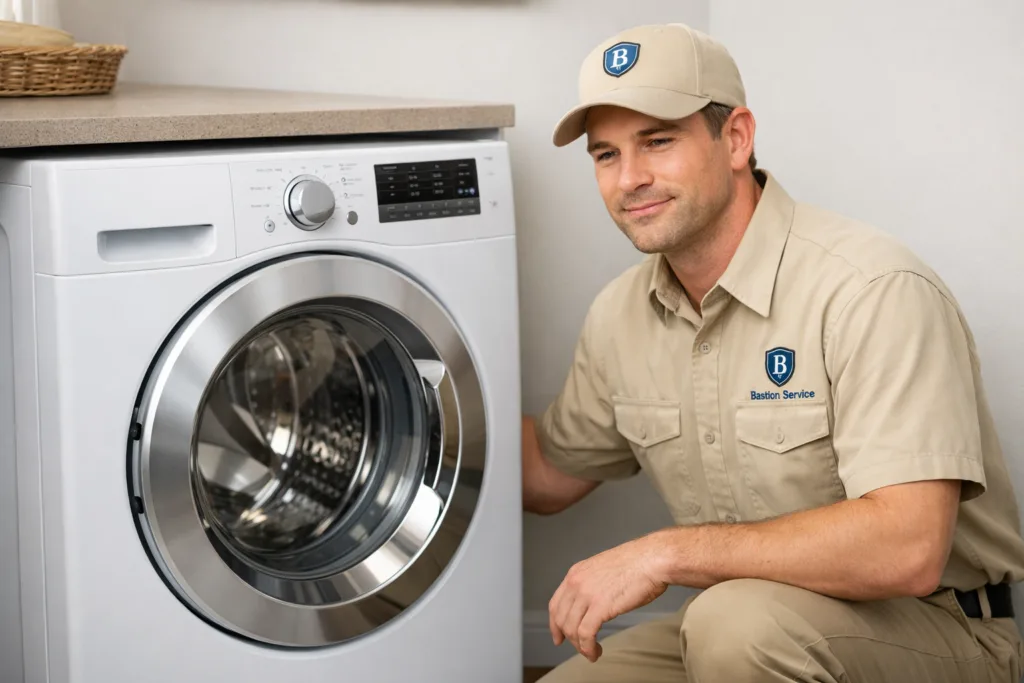
A washer problem rarely stays small for long. Wet loads, standing water, or a leak at the base of the machine can quickly affect laundry routines and, in some cases, nearby flooring. With Frigidaire models, the same outward symptom can come from more than one failed part or system, so the most reliable way to move forward is to match the repair to what the machine is actually doing.
Start with the exact symptom pattern
Frigidaire washers often give clues before they fail completely. A unit that hums but does not drain points in a different direction than one that shuts off during spin. A washer that leaks only during fill suggests a different issue than one that leaks near the end of the cycle. Paying attention to when the problem happens helps narrow down whether the cause is related to water supply, draining, the drive system, locking, suspension, or electronic controls.
In many West Los Angeles homes, early symptoms are easy to dismiss for a few days, especially if the machine still finishes some cycles. But repeated resets, louder operation, and longer cycle times usually mean the problem is progressing rather than resolving on its own.
Common Frigidaire washer problems and what they may mean
Washer will not start
If the control panel lights up but the cycle will not begin, the door or lid lock may not be engaging properly. On some models, the machine can appear unresponsive when the actual issue is a failed latch assembly, a control communication problem, or a power issue affecting the interface. If there is no response at all, the diagnosis may also involve the outlet, cord, noise filter, or main control.
Washer fills but does not wash
When water enters the tub but the basket or agitator does not move as expected, likely causes include drive motor faults, belt problems on belt-driven models, a failed capacitor, or a control problem that prevents the wash portion of the cycle from starting. Continuing to run the washer in this condition can place extra strain on related components.
Washer will not drain
A Frigidaire washer that leaves water in the tub may have a clogged drain path, a blocked filter area, a jammed or weak pump, or an issue that prevents the control from advancing into drain. Small items such as socks, coins, and fabric debris are common causes. If the machine repeatedly stops with water inside, avoid forcing additional cycles until the source is identified.
Clothes come out too wet
When laundry is still dripping after the cycle ends, the problem is not always the spin system alone. Poor draining often prevents full spin speed, and a lock fault can keep the machine from entering high-speed extraction. On some units, worn suspension or an out-of-balance condition causes the washer to reduce or cancel spin to protect itself.
Leaks during or after the cycle
Leaks can come from fill hoses, inlet valves, the drain system, a torn door boot on front-load machines, internal tub hoses, or oversudsing caused by detergent issues. The timing of the leak matters. Water on the floor at the start of the cycle often points to fill-related parts, while leaks later in the cycle may be tied to draining, spinning, or tub movement.
Loud banging, grinding, or shaking
Excessive noise usually means more than normal wear. A banging tub may indicate worn suspension parts or imbalance problems. Grinding can suggest bearing damage, foreign objects in the pump or drum area, or drive-related wear. If the washer shifts position on the floor or becomes significantly louder than usual, it is best to stop regular use until the cause is checked.
Washer stops mid-cycle
Mid-cycle shutdowns can be caused by overheating components, control faults, drain problems, lock failures, or water level issues. If the machine pauses at the same point in multiple loads, that pattern is often a strong clue about which system is failing.
Error codes or flashing lights
Error codes are useful, but they are not a full diagnosis by themselves. A drain-related code, for example, may still require checking the pump, hose path, pressure sensing, and control behavior. Repeated codes after resetting the machine usually mean the underlying fault is still active.
Symptoms that should not be ignored
Some washer problems are mostly inconvenient. Others can lead to larger repairs or water damage if the machine keeps running. It is wise to stop using the washer and arrange service if you notice any of the following:
- Water leaking onto the floor
- A burning smell or hot electrical odor
- Loud grinding, scraping, or metal-on-metal sounds
- Repeated failure to drain or spin
- The breaker tripping during operation
- The door remaining locked with water inside the tub
- Heavy shaking that was not present before
These symptoms can indicate active mechanical or electrical failure, and continued use may increase damage to the motor, pump, suspension, controls, or surrounding home surfaces.
Front-load and top-load issues can differ
Frigidaire front-load washers often show problems through door lock faults, boot leaks, drainage restrictions, and vibration during high-speed spin. Top-load models are more likely to present symptoms related to lid locking, suspension wear, drive problems, and off-balance interruptions. The repair path depends heavily on the washer style, because the same complaint from the homeowner can point to different parts on different designs.
Simple checks homeowners can make first
Before scheduling repair, a few basic checks may help narrow down the issue without taking the machine apart:
- Make sure the washer is receiving power and the outlet has not tripped
- Confirm the water supply valves are fully open
- Check whether the load is severely unbalanced
- Look for visible hose kinks behind the machine
- Note whether the problem happens during fill, wash, drain, or spin
- Write down any error code exactly as displayed
If the washer still will not complete a cycle, these details can make the next step more efficient and help separate a simple setup issue from a component failure.
Repair or replace?
For many households in West Los Angeles, repair is still worthwhile when the failure is limited to a serviceable component such as a pump, latch, hose, valve, belt, or suspension part. A single, well-defined fault on an otherwise solid machine is often a reasonable repair candidate.
Replacement becomes more likely when the washer has multiple major issues, severe internal wear, recurring control problems, or signs of bearing and tub-related damage that make the total repair path harder to justify. Age matters, but condition matters just as much. A newer washer with one failed part may be a straightforward fix, while an older unit with several developing issues may not be the best place to keep investing.
What service should accomplish
Effective Frigidaire washer repair in West Los Angeles should identify not only the failed part, but also whether that part failed by itself or as part of a larger wear pattern. That distinction matters. Replacing one component without confirming the rest of the system can lead to repeat breakdowns, especially with drain, spin, and vibration complaints.
For homeowners, the goal is simple: understand why the washer is acting up, what repair is needed, and whether that repair is likely to restore normal operation in a sensible way. When the diagnosis follows the symptom pattern closely, the decision to repair or move on becomes much clearer.