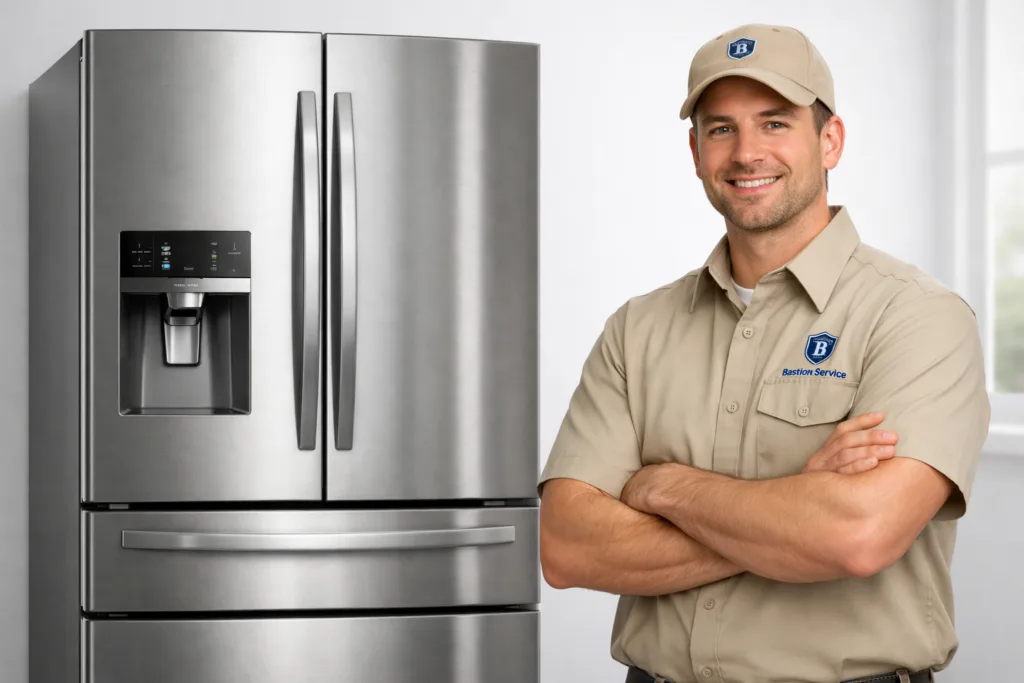
Food storage problems usually become urgent quickly. If a GE refrigerator is warming, leaking, frosting over, or running louder than normal, the symptom pattern often tells you where the trouble starts. A unit that is cold in the freezer but warm in the fresh food section points to a different repair path than one that is fully warm, clicking at startup, or cycling on and off unpredictably.
How GE refrigerator problems usually show up
Many refrigerator failures begin gradually rather than all at once. You might notice soft ice cream, milk that does not stay cold long enough, condensation on shelves, or a compressor that seems to run far more than usual. In West Los Angeles homes, these early signs are worth paying attention to because continued operation can turn a smaller airflow or defrost problem into a more expensive repair.
With GE models, the same outward symptom can have several possible causes. That is why the most useful starting point is matching the complaint to the actual section affected, how often it happens, and whether performance changes throughout the day.
Cooling problems and temperature swings
Fresh food section is warm but freezer still works
This often suggests an airflow issue rather than a total cooling failure. Possible causes include an evaporator fan problem, frost blocking air movement, vent restriction, sensor trouble, or a control issue. When cold air cannot move correctly from the freezer side into the refrigerator section, groceries in the main compartment warm first even though frozen items still seem mostly normal.
Both sections are getting warm
When the entire refrigerator is losing temperature, the problem may involve condenser airflow, compressor starting trouble, dirty coils, a control fault, or a sealed-system concern. If the cabinet feels warm and the unit is running continuously without recovering temperature, service should not be delayed.
Temperatures rise and fall without warning
Intermittent warming can be especially frustrating because the refrigerator may seem fine during a quick check. This can happen with failing sensors, control board issues, defrost interruptions, loose electrical connections, or a fan motor that cuts in and out. If the appliance cools well one day and struggles the next, that pattern is still meaningful and should be described during scheduling.
Leaks, moisture, and water where it should not be
Water under a GE refrigerator does not always mean the same thing. A clogged defrost drain can send water onto the floor or into lower compartments. A refrigerator with an ice maker or dispenser may also leak from a water line, inlet valve, filter housing, or connection point. In some cases, heavy condensation from poor door sealing creates a leak complaint even when the water system is not the source.
Moisture inside crispers, droplets on shelves, or puddling near the door can also indicate warm air entering the cabinet. If left alone, recurring leaks can affect flooring, baseboards, or nearby cabinetry.
Frost buildup, ice formation, and door seal issues
Frost on the back panel, around vents, or near drawers usually means more than a cosmetic issue. It can signal a defrost system failure, poor door sealing, frequent warm air infiltration, or a circulation problem that allows moisture to collect and freeze. Once frost builds up enough, airflow drops and cooling performance usually follows.
Door-related issues are also common. A worn gasket, misaligned hinge, overpacked shelf, or bin that keeps the door from closing fully can cause longer run times and unstable temperatures. If the door pops open slightly after closing, that should be corrected early before cooling becomes unreliable.
Ice maker and dispenser symptoms
A GE refrigerator that cools properly but stops making ice needs a narrower diagnosis than a general cooling complaint. Common causes include restricted water flow, a frozen fill tube, a failed inlet valve, filter issues, temperature problems in the freezer, or a defective ice maker assembly. Small cubes, slow dispensing, or inconsistent ice production often point to water supply or fill-related issues rather than the ice maker itself.
If both cooling and ice production are affected, the root cause may be broader than the ice system alone.
What unusual noises can mean
Refrigerators make normal operating sounds, but a new or worsening noise usually deserves attention. Buzzing can relate to a compressor start issue or water valve activity. Rattling may come from a loose panel, drain pan, or vibrating component. Grinding or loud fan noise can happen when ice interferes with a fan blade or when a motor begins to fail.
Clicking without normal cooling is more concerning, especially if the refrigerator repeatedly tries to start and then stops. In that situation, protecting food and getting the unit checked promptly is often the best next step.
When continued use may make the repair worse
Some households keep using the refrigerator as long as it still feels somewhat cold, but that can increase strain on important components. A GE refrigerator running with blocked airflow, heavy frost, weak fan operation, or poor condenser ventilation may stay on longer than normal and place more stress on the cooling system. Repeated startup problems can be especially hard on the compressor.
If cooling is clearly failing, move perishable food to a safe alternative and keep door openings to a minimum. If the refrigerator is rapidly warming, not running at all, or repeatedly losing power, continued use is usually not practical.
When to schedule service
It makes sense to schedule GE refrigerator repair in West Los Angeles when food is no longer staying consistently cold, leaks continue after basic cleanup, frost returns after defrosting, or noise changes are paired with weaker cooling. Service is also worth arranging when the refrigerator seems to recover temporarily after a reset but then slips back into the same problem.
Intermittent issues should not be ignored just because they disappear for a few hours. A pattern of occasional warming, random beeping, or inconsistent ice production often means a part or system is failing before it stops completely.
Repair or replace?
For many homeowners in West Los Angeles, that decision depends on the refrigerator’s age, overall condition, repair scope, and whether the problem is isolated or part of a longer history. Repairs are often reasonable when the failure involves a fan motor, defrost component, gasket, valve, sensor, or another targeted part. Replacement becomes a stronger consideration when the appliance has repeated major problems, significant internal wear, or a sealed-system issue on an older machine.
The goal is not just restoring operation for the moment, but understanding whether the fix is likely to provide reliable everyday use afterward.
What a service visit should help you understand
A worthwhile visit should identify the failed part or system, explain how the symptom connects to that failure, and clarify whether using the refrigerator in the meantime risks more damage or food loss. That matters with modern GE refrigerators because cooling, defrost, airflow, and dispenser functions often affect one another.
When the problem is narrowed down correctly, the next step becomes much easier: repair the exact issue, avoid unnecessary part replacement, and restore stable kitchen use as efficiently as possible.