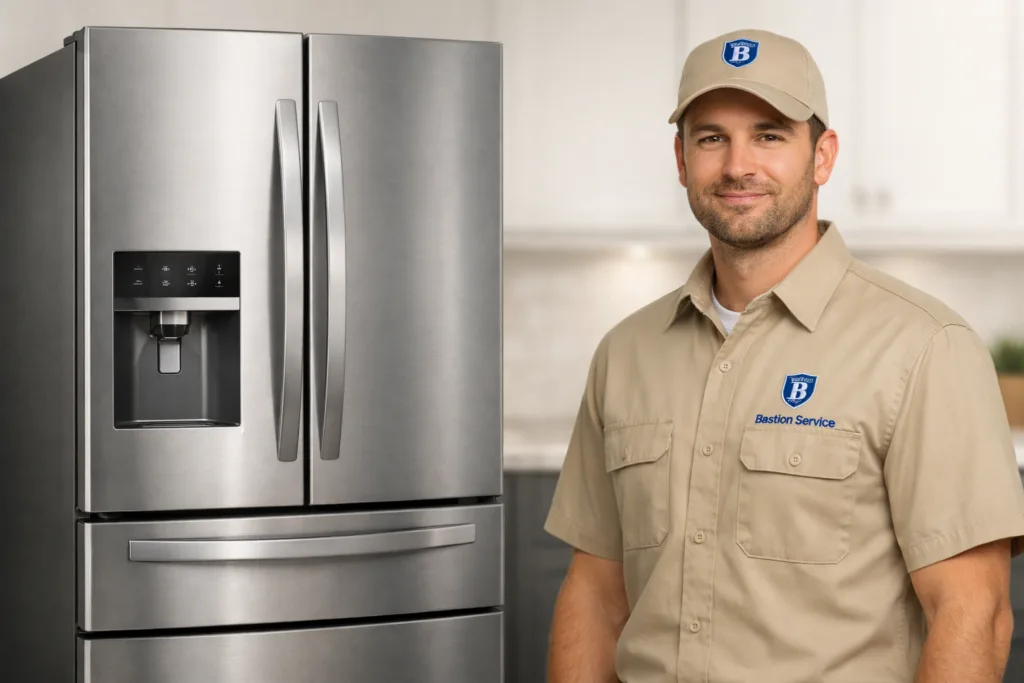
Refrigerator problems are easiest to solve when the symptom is described accurately instead of reduced to “not working.” An EdgeStar unit that is warm in one section, leaking under a drawer, frosting over the back wall, or clicking on and off may have very different root causes. In West Los Angeles homes, the details matter because they affect both food safety and whether the repair is likely to be straightforward or more involved.
Start with what the refrigerator is actually doing
Before service is scheduled, it helps to notice a few basics: which compartment is warming up, whether the problem is constant or intermittent, when the noise happens, and whether doors are sealing normally. Those details often separate airflow problems from defrost failures, drainage issues, sensor faults, or compressor-start problems.
- Fresh food section warm, freezer still cold: often points to airflow restriction, frost buildup, or an evaporator fan issue.
- Both sections warming: may suggest condenser airflow trouble, a control fault, start component failure, or a more serious cooling-system problem.
- Water inside or under the unit: commonly tied to a blocked drain, excess condensation, or a door that is not closing correctly.
- Heavy frost or ice accumulation: usually means a defrost or air-infiltration issue that will continue to affect performance.
- Clicking, buzzing, or nonstop running: can indicate fan obstruction, relay trouble, temperature control problems, or strain while trying to maintain cooling.
Common EdgeStar refrigerator symptoms and what they may mean
Warm refrigerator compartment
If milk, produce, or leftovers are warming up while frozen items still seem solid, the problem is often not a total loss of cooling but a circulation issue. Cold air may not be moving properly from the freezer side, or frost may be blocking the air path. In some cases, the unit is cooling but cannot distribute that cooling evenly.
Homeowners also sometimes notice that the temperature improves briefly after rearranging shelves or manually defrosting the unit. That kind of short-term recovery usually points to an issue that still needs repair rather than a permanent fix.
Freezer softening or full temperature loss
When frozen food starts softening, the issue has usually moved beyond a minor comfort problem. Condenser airflow restriction, weak fan performance, faulty controls, or compressor-start trouble can all lead to broader temperature loss. If both compartments are affected, it is smart to treat the issue as urgent, especially if the refrigerator is running longer than usual without reaching normal temperatures.
Water leaks and moisture problems
Leaks are not always plumbing-related. Many refrigerator water issues come from condensation, a blocked defrost drain, or melting frost that cannot drain away correctly. Water under crisper drawers, along the bottom of the cabinet, or on the floor in front of the unit can all come from different points in the same drainage path.
Moisture beads on shelves or around bins can also mean warm room air is entering more often than it should. A worn gasket, a slightly misaligned door, or a habit of the door not closing fully can create a cycle of condensation, frost, and poor cooling.
Frost on the back panel or around stored food
Light frost can build up from normal use, but thick ice, a frosted interior panel, or repeated ice formation around vents usually signals a problem. Defrost components may not be cycling properly, or humid air may be entering through a sealing problem. Either way, heavy frost can block airflow and make the refrigerator seem weak even when some cooling components are still working.
Noises that are new, louder, or more frequent
Not every refrigerator sound means failure, but changes in sound matter. Clicking at startup can mean the compressor is struggling to engage. Scraping may point to fan blades hitting ice. Rattling can be as simple as a loose panel or as important as vibration from a stressed component. A refrigerator that suddenly becomes much louder than usual should be evaluated in context with its temperature performance.
Why guessing at parts is risky
Several EdgeStar refrigerator issues overlap. Poor cooling may be caused by dirty condenser coils, fan failure, a sensor problem, a control fault, defrost trouble, or a sealed-system issue. Frost can come from a failed defrost cycle or repeated warm-air entry. Water leaks can come from drainage trouble or a sealing problem. Replacing one part based only on the most obvious symptom can leave the real cause untouched.
A useful repair approach starts with the failure pattern, checks the likely systems in order, and then determines whether the fix is minor, moderate, or likely to involve a larger cooling-system decision.
When to stop using the refrigerator normally
Some refrigerator issues are annoying but manageable for a short time. Others should not be ignored.
- Food temperatures are clearly unsafe or inconsistent.
- The unit clicks repeatedly and struggles to start.
- Water is leaking onto the floor often enough to risk damage.
- Frost buildup is spreading quickly.
- The refrigerator trips power or shuts off unpredictably.
- The cabinet feels unusually hot while cooling performance drops.
If the unit is no longer holding safe temperatures, continued everyday use can lead to food loss and may place more stress on already-failing components.
Cases where prompt repair can prevent a bigger failure
Many refrigerator problems begin as limited faults. A fan motor that slows down, a drain that clogs, or a gasket that no longer seals tightly can all start small. Left alone, those same issues can lead to longer run times, rising cabinet temperatures, frost accumulation, and added wear on the compressor and controls.
This is especially true when the refrigerator seems to “fix itself” after being unplugged or reset. Temporary recovery often means the symptom was interrupted, not resolved.
Repair versus replacement depends on the actual failure
Some EdgeStar refrigerator repairs are often reasonable when the appliance is otherwise in solid condition. That can include fan problems, drain issues, door seal faults, certain sensors, thermostatic controls, and startup components. These are the kinds of issues that may restore normal daily use without turning into a major appliance decision.
Replacement becomes more likely when the refrigerator has a serious cooling-system failure, repeated compressor-related trouble, or several separate issues at once. Age, condition, past repair history, and current performance all matter. The goal is not to repair every unit at any cost, but to make the choice that makes sense for the household.
What helps during a service visit
Homeowners can make diagnosis easier by noting when the problem started, whether it followed a power interruption, and what changed first: temperature, noise, frost, or leaking. It also helps to mention whether the refrigerator has been recently moved, overfilled, manually defrosted, or unplugged to get it running again.
Those details can shorten the path to the cause and help determine whether the issue is isolated or part of a larger performance decline.
What West Los Angeles homeowners usually want answered first
Most people want practical answers: Is the food still safe? Is this likely to get worse quickly? Is the issue something repairable, or is the refrigerator nearing the point where replacement makes more sense? A good visit should answer those questions clearly and explain the next step based on what the appliance is actually doing, not on assumptions.
EdgeStar units in everyday household use
In many homes, the refrigerator is opened constantly, packed heavily before weekends, and expected to recover quickly after long door-open periods. That daily use can make smaller issues show up faster. A weak gasket, reduced airflow, or partial frost blockage may not seem dramatic at first, but it becomes obvious once the refrigerator struggles to bounce back to normal temperatures.
For that reason, unusual cycling, recurring condensation, and gradual cooling decline are worth paying attention to even before the unit stops cooling completely.