




Premium appliances can fail in ordinary ways, but the symptoms are not always straightforward. A warm refrigerator, an oven that preheats slowly, or a dishwasher that leaves water behind may each have several possible causes, so it helps to look at the full pattern before deciding whether the issue is minor, urgent, or a sign of a larger repair.
For specific Dacor appliance paths in Brentwood, review Dacor Refrigerator Repair in Brentwood, Dacor Freezer Repair in Brentwood, and Dacor Dishwasher Repair in Brentwood.
Start with the symptom, not the suspected part
Dacor appliances often use advanced controls, sensors, and specialty features, which means the visible problem is not always the failed component. Temperature fluctuation can come from airflow restrictions, sensor drift, control issues, sealing problems, or wear in a cooling or heating system. Unusual noise might point to a fan, pump, motor, vibration issue, or a part working under strain rather than the noisiest component itself.
For homeowners in Brentwood, the most useful first step is to notice exactly what changed. Did the appliance stop working completely, lose performance gradually, or become intermittent? Did the problem begin after a power interruption, heavy use, cleaning, or a self-clean cycle? Those details often help separate a simple condition from a fault that needs service.
Cooking appliance problems that should not be ignored
Cooktop and range symptoms
Dacor cooktops and ranges commonly develop issues such as burners that will not ignite, repeated clicking, weak or uneven heating, indicator lights that stay on, or controls that respond inconsistently. On electric units, one dead burner can indicate an element, switch, or wiring problem. On gas models, ignition trouble may involve burner alignment, an igniter issue, moisture, or a problem in the spark system.
Repeated clicking without ignition usually means normal use should pause until the cause is known. The same is true when a burner overheats, cycles unpredictably, or produces a flame pattern that looks abnormal. If there is a persistent gas odor, treat that as a safety issue first rather than a routine appliance appointment.
Oven and wall oven performance issues
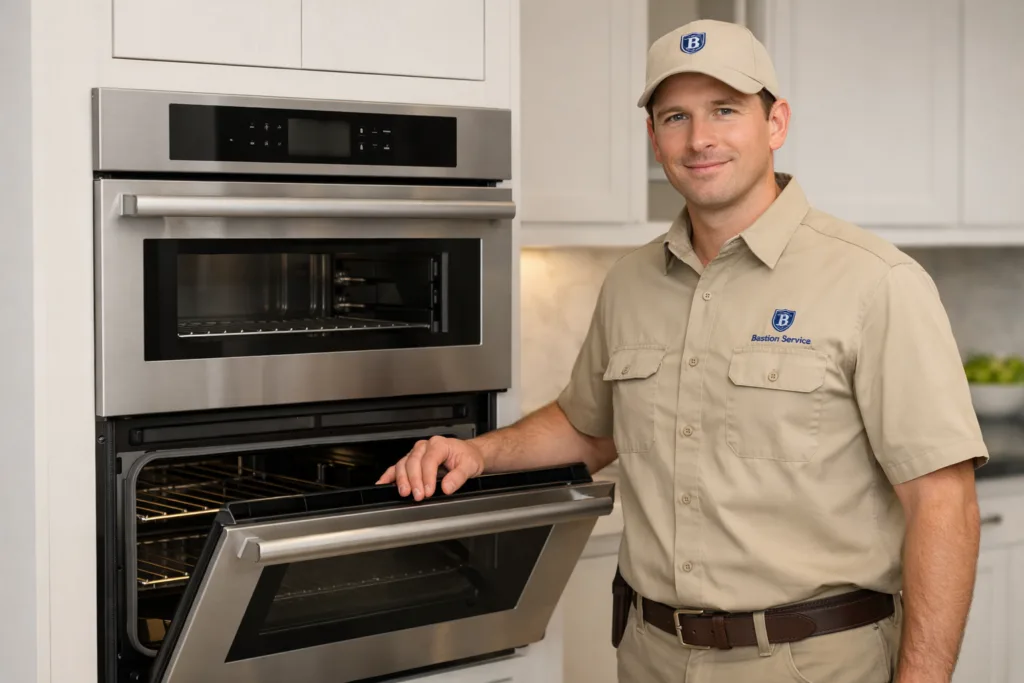
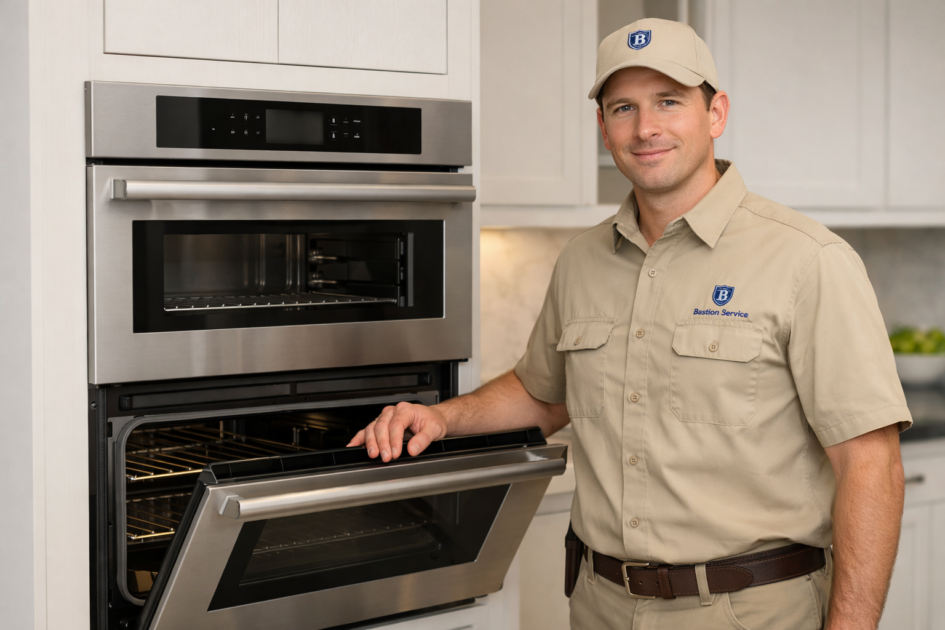
Dacor oven and wall oven problems often show up as slow preheating, uneven baking, temperature that runs too hot or too cool, door problems, convection fan issues, or error messages that return after a reset. Some failures are tied to heating elements, while others involve sensors, relays, latch systems, or electronic controls.
One useful clue is whether the problem affects every cooking mode or only one. If bake fails but broil still works, that can suggest a different path than an oven that will not heat at all. If food burns on one rack but stays underdone on another, airflow or temperature regulation may be involved rather than simple user settings.
An oven that overheats, shuts off during use, or displays recurring fault codes should be checked before heavy cooking days. Continued use can turn a manageable repair into damage affecting more than one component.
Dishwasher problems that often indicate a real fault
A Dacor dishwasher may seem to have a simple cleaning issue when the real problem is circulation, drainage, water fill, or sensing. Common complaints include cloudy dishes, standing water, leaks, incomplete cycles, poor drying, or a machine that goes silent mid-cycle.
Symptom patterns matter here:
- If dishes stay dirty on every cycle, the issue may be spray arm blockage, low water fill, filtration buildup, or a weak wash system.
- If water remains at the bottom, the cause may be a drain restriction, pump problem, or installation-related drainage issue.
- If dishes come out wet but otherwise clean, the concern may involve rinse aid use, heating performance, or normal cycle selection rather than a total machine failure.
- If water appears under the door or cabinet edge, a seal, hose, connection, or overfill condition may be involved.
Leaks deserve prompt attention because they can affect flooring, cabinetry, and nearby surfaces long before the dishwasher stops operating entirely. Repeated drainage failure also should not be dismissed as a one-time clog if it returns after basic cleaning.
Refrigerator and freezer issues where timing matters
Refrigerator cooling and noise concerns
Dacor refrigerators can show early warning signs before a full cooling loss. Food spoiling sooner than expected, frost in the wrong area, frequent cycling, warm spots in the fresh food section, water under drawers, or new buzzing and grinding sounds all suggest the appliance is no longer operating normally.
A refrigerator that runs constantly is not always dealing with the same problem as one that hardly runs at all. Constant operation can be tied to dirty condenser areas, poor door sealing, airflow problems, or a system struggling to maintain temperature. Intermittent cooling may point to controls, sensors, fans, or defrost-related faults. If one section is warm while another seems normal, that often narrows the possibilities.
Because food safety becomes part of the decision quickly, cooling changes should be taken seriously. If milk, leftovers, or produce are not holding temperature, it is better to reduce door opening and arrange diagnosis before the unit becomes a complete no-cool.
Freezer-specific warning signs
Dacor freezers may develop heavy frost, soft frozen food, unstable temperature, excess ice buildup, or unusual fan noise. A frost-covered interior panel often points in a different direction than a freezer that is simply warm with little frost visible. Likewise, a loud fan can mean ice interference, airflow restriction, or motor wear rather than a sealed system failure.
For households in Brentwood that use freezer storage heavily, waiting too long can mean both food loss and a more expensive repair. When packages begin softening or frost starts spreading across interior surfaces, the problem is usually beyond normal housekeeping.
When basic homeowner checks make sense
Before assuming a major repair, a few simple observations can help. Make sure the appliance has power, settings were not changed accidentally, doors are closing fully, and accessible filters or vents are not visibly blocked. On dishwashers, check for obvious debris in the filter area. On refrigerators, look for doors left slightly open or bins preventing full closure. On cooking appliances, confirm the issue is not limited to a timer, control lock, or selected mode.
These checks are useful because they can rule out simple operating issues, but they are not a substitute for repair when the symptom persists. If the unit trips breakers, leaks, overheats, shows repeated errors, or stops doing its main job, service is usually the smarter next step.
Repair or replace: how homeowners usually weigh it
Most decisions come down to age, condition, repair scope, and recent history. Repair often makes sense when the problem is isolated and the appliance is otherwise performing well. Replacement becomes more likely when there are multiple failing systems, repeated breakdowns, or a high-cost electronic or sealed-system issue on an older unit.
It also helps to think about the risk of waiting. A dishwasher leak can damage nearby materials. A struggling refrigerator can spoil food. An oven with unstable temperature can become unreliable exactly when you need it most. Even when replacement is eventually the better option, a proper diagnosis helps you make that decision based on the actual failure rather than guesswork.
What to note before scheduling service
A few details can make troubleshooting much faster:
- When the symptom started
- Whether it is constant or intermittent
- Any error code displayed
- Changes in noise, temperature, or cycle length
- Whether one function works while another does not
- Whether the problem followed cleaning, a power outage, or unusually heavy use
For example, saying that only the lower oven is affected, only one burner clicks, or the refrigerator warms overnight but recovers by morning is more helpful than saying the appliance is “not working right.”
What Brentwood homeowners usually need from the process
Most people are not looking for a long technical explanation. They want to know what is failing, whether continued use is safe, and whether repair is worth doing. That is especially true with Dacor products, where premium features can make symptoms seem more confusing than they first appear.
When the issue is approached methodically, it becomes easier to choose the right repair direction, avoid replacing good parts, and get back to normal use with a realistic understanding of the appliance’s condition.


