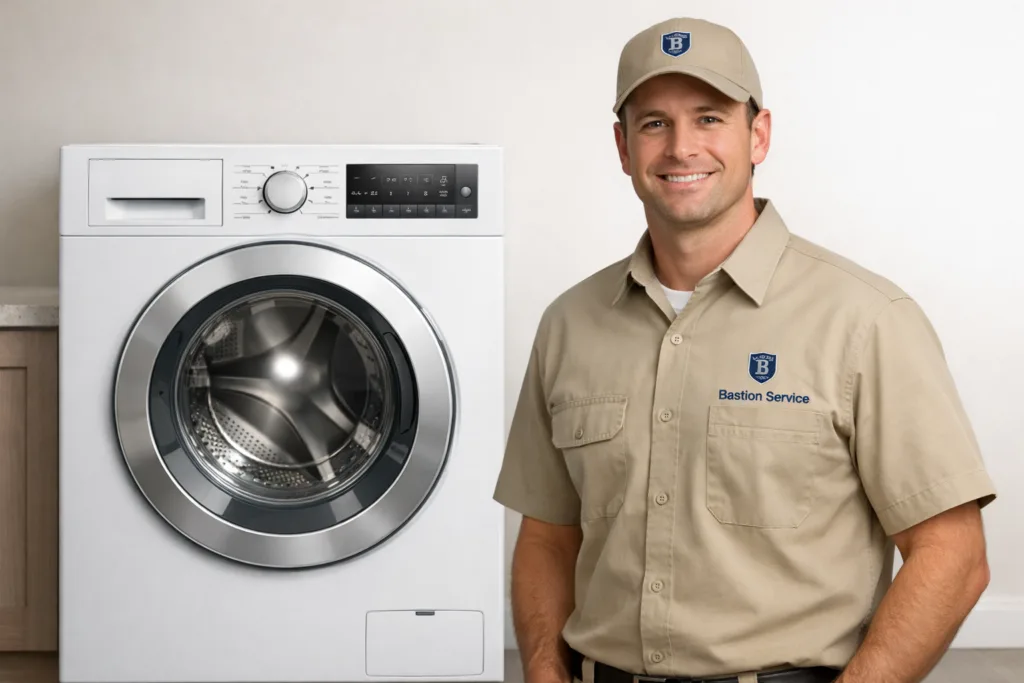
Washer trouble usually shows up as a small change before it becomes a bigger interruption: a load that comes out wetter than usual, a door that takes too long to unlock, a puddle near the machine, or a cycle that suddenly stops. With Bosch units, those symptoms can overlap, so the most useful approach is to look at when the problem happens and what the washer does right before it fails.
That symptom pattern often reveals whether the issue is tied to draining, filling, balance, door locking, heating, or electronic control response. For homeowners in Rancho Palos Verdes, that makes it easier to decide whether the washer should be taken out of use right away or whether the problem appears limited and repairable.
Common Bosch washer problems and what they often mean
Washer not draining
If water stays in the tub at the end of the cycle, the problem may involve a blocked filter, restricted drain hose, weak drain pump, or a control issue preventing the washer from moving into the final drain and spin stages. Sometimes the machine will also keep the door locked because it still detects water inside.
Typical signs include:
- Standing water after the cycle ends
- Clothes that remain heavy and soaked
- Humming without full draining
- A cycle that stalls before spin
- The door staying locked longer than normal
Repeated draining problems should not be ignored. Leftover water can create odor issues, strain the pump, and make the next load fail the same way.
Poor spin performance or wet clothes after washing
A Bosch washer that tumbles normally but leaves laundry too wet may have trouble reaching full spin speed. The cause can be as simple as load imbalance, but it can also point to drainage problems, suspension wear, door lock issues, or sensing problems that cause the machine to reduce or cancel spin for safety.
This is especially noticeable with towels, blankets, and mixed loads. If the symptom happens across several different load types, it is less likely to be a one-time balance issue and more likely to need service.
Leaks under or around the washer
Leaks are not all the same. Water near the front can come from the door boot or oversudsing. Water near the back may be related to inlet hoses or drain connections. Internal leaks can involve the pump housing, tub-to-pump hose, valve components, or other seals that only leak during certain parts of the cycle.
Watch for patterns such as:
- Water only during fill
- Water only during drain or spin
- Moisture appearing after the cycle is finished
- Small recurring drips instead of one large leak
Even minor leaks deserve attention because repeated moisture can affect flooring and nearby wall materials long before the source becomes obvious.
Washer not filling or filling too slowly
If the washer starts a cycle but little or no water enters, the issue may involve inlet valves, supply restrictions, screens, pressure sensing, or control-related problems. Some Bosch washers will pause early in the cycle if fill conditions are not met within the expected time.
You might notice a faint click, a brief hum, or a cycle that appears to start but never really begins washing. Slow fill problems can also lead to poor wash results because the machine never reaches the proper water conditions for the selected cycle.
Heating issues and poor wash results
When a Bosch washer is not heating correctly, loads may come out with detergent residue, body oils, or an overall dull look even though the cycle ran to completion. Heating problems can also affect cycle timing because some wash programs rely on reaching a target temperature before moving forward.
Possible signs include:
- Clothing that does not feel properly cleaned
- Detergent not dissolving as expected
- Cycles taking much longer than normal
- Recurring temperature-related errors
Because poor cleaning can also come from overloading, detergent issues, or low water input, it helps to evaluate the full symptom pattern rather than assuming one failed part.
Noise, vibration, or movement during spin
Bosch washers are generally designed to run with controlled motion. A sharp change in noise level or movement usually means something has changed in the load handling or internal support system. Excessive vibration may come from leveling problems, worn suspension components, drum issues, or a washer that cannot distribute the load correctly before spin.
Grinding, scraping, or banging sounds are more serious than routine spinning noise. If the washer starts moving noticeably, stop using it until the cause is identified. Repeated high-vibration cycles can increase wear on both the machine and surrounding laundry area.
Door lock and cycle interruption problems
If the door will not lock, will not unlock, or the cycle stops halfway through, the fault may involve the latch assembly, drainage confirmation, water input, pressure sensing, or the electronic control system. On Bosch units, one interrupted function can prevent the rest of the cycle from completing normally.
This is why a door symptom does not always mean the door mechanism itself is the only problem. A washer may keep the door locked because it still senses water inside, or it may refuse to start because another system check has failed first.
Why Bosch washer symptoms can be misleading
One reason Bosch washer repair can be difficult to guess correctly is that several failures can produce nearly the same outward behavior. A no-spin complaint may actually begin with incomplete draining. A locked-door complaint may start with standing water. A cycle that seems to freeze may be waiting on fill, heat, or sensor feedback rather than suffering from a total control failure.
That is why symptom-based testing matters more than replacing parts based on the first visible sign. A washer that shows one error or one repeated behavior still needs the underlying cause identified before a repair decision is made.
When to stop using the washer and schedule service
Some washer issues are more urgent than others. In general, it makes sense to stop using the machine if continued operation could worsen damage or create household water risk.
Service should be scheduled promptly if you notice:
- Water left in the tub after more than one cycle
- Leaks on the floor or moisture around the cabinet
- Harsh grinding, banging, or scraping sounds
- A burning smell or signs of overheating
- Recurring fill or drain errors
- The washer stopping mid-cycle repeatedly
- The door refusing to unlock after the cycle should be complete
If the problem happened once during an unusually heavy or uneven load, it may have been situational. If it repeats, the washer is telling you the issue is more than a one-time cycle disruption.
Repair or replace: how homeowners usually evaluate it
For many households in Rancho Palos Verdes, the decision is not only whether the washer can be repaired, but whether it should be. That usually depends on the age of the unit, the condition of major components, the cost of the repair compared with replacement, and whether the washer has been having multiple unrelated problems.
Repair is often sensible when the failure is limited to a specific serviceable component and the rest of the machine is in good condition. Replacement becomes a stronger option when the washer has advanced wear, repeated major faults, or a repair estimate that is too close to the cost of installing a newer unit.
Without diagnosing the actual cause, it is hard to judge value accurately. What looks expensive at first may turn out to be a targeted repair, while a symptom that seems minor can sometimes point to broader wear.
Helpful details to note before service
You do not need to disassemble anything or try to diagnose the machine yourself, but a few observations can make troubleshooting faster and more accurate.
Before service, it helps to note:
- Whether the washer fills with water
- Whether it drains fully
- Whether the issue happens on every cycle or only certain settings
- At what point the noise starts
- Whether the door locks at the beginning of the cycle
- Whether any code appears and if it repeats
- Whether heavy items make the problem worse
Those details often help separate a balance issue from a drainage problem, a fill problem from a control issue, or an isolated event from a repeating fault pattern.
Bosch washer repair for Rancho Palos Verdes homes
A washer that does not drain, leaks, fails to fill, overheats, or stops mid-cycle can disrupt the entire household routine. For Bosch washer repair in Rancho Palos Verdes, the best path is to match the repair plan to the actual symptom pattern, the condition of the machine, and the likely failure area. That gives homeowners a more useful way to decide whether repair is the right next step and what level of service the washer is likely to need.