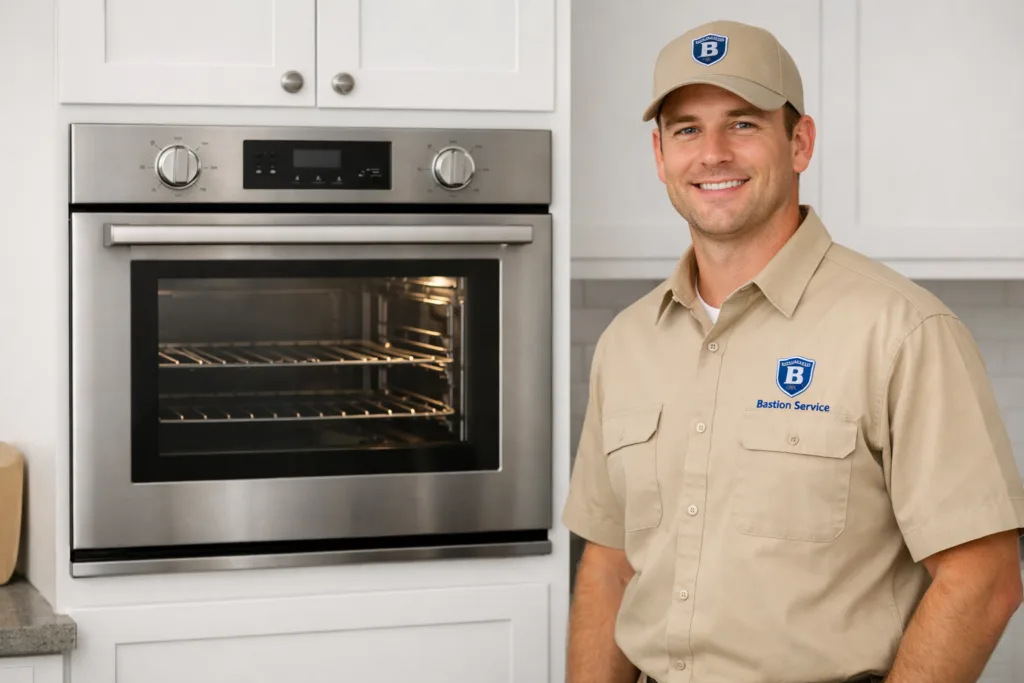
Cooking problems are often easier to notice than they are to diagnose. An oven that undercooks one night and burns food the next can point to several different failures, including heating components, temperature sensing problems, control issues, or power-related faults. Getting the cause right matters because the same symptom can come from very different parts of the oven.
How Blomberg oven problems usually show up
Most homeowners first notice a performance change rather than a total breakdown. Preheat may start taking much longer than normal. Cookies may brown unevenly from front to back. Roasted dishes may need extra time even though the display says the oven reached temperature. In other cases, the oven may not start at all, may shut off mid-cycle, or may show control problems that make it unreliable for everyday use.
With Blomberg ovens, these symptoms should be checked as a pattern rather than as a one-time event. A single poor baking result can come from cookware, rack placement, or recipe variation. A repeated pattern usually points to a mechanical or electrical issue that needs attention.
Common symptoms and what they can mean
Oven will not heat
If the oven powers on but never gets hot, the problem may involve the bake element, broil element, temperature sensor, control board, wiring, or incoming power. On some units, the clock or display can still appear normal even when the heating circuit is not functioning. This is one of the most important cases to diagnose correctly, since replacing one visible part without testing can miss the real failure.
Slow preheat
Slow preheating often starts as a mild annoyance and gradually becomes more obvious. A weakening element, inaccurate sensor reading, or regulation issue at the control can all cause the oven to lag behind the set temperature. In daily use, that often shows up as recipes needing more time than expected or preheat taking long enough to disrupt normal meal prep.
Uneven baking
When the top browns too quickly, one side cooks faster, or batches come out inconsistent, heat may not be distributing or cycling correctly. A partially failing heating element, sensor drift, or door seal problem can all affect baking consistency. Uneven results are especially noticeable with cakes, cookies, casseroles, and anything that depends on stable temperature over time.
Temperature swings or overheating
An oven that runs too hot can ruin food quickly, but an oven that swings between too hot and too cool can be just as frustrating. Sensor faults, calibration issues, or control failures may cause temperatures to drift away from the selected setting. If meals are repeatedly burning on the outside while remaining undercooked inside, the oven may not be regulating heat correctly.
Control panel or startup problems
If the display is unresponsive, buttons do not register properly, settings reset, or the oven starts only sometimes, the issue may be in the user interface, electronic control, or power supply path. Intermittent problems are especially important to document because they can seem random until the full symptom pattern is reviewed.
Door not closing or sealing well
A door that does not close firmly can let heat escape, increase cook times, and make temperature control less stable. Hinges, springs, gasket wear, and alignment issues can all contribute. Even if the oven still turns on and heats, a poor seal can reduce performance enough to affect everyday cooking.
Signs the problem is getting worse
Oven issues rarely improve on their own. A small delay in preheat can turn into a no-heat complaint. Slight unevenness can become obvious hot and cold spots. Controls that occasionally fail to respond may eventually stop working during normal use. Watching for progression helps homeowners in Westwood decide when a repair call makes sense instead of waiting for a complete failure.
- Preheat times keep getting longer
- Food is repeatedly undercooked or burned at normal settings
- The oven temperature feels noticeably different from the selected setting
- Error behavior, resets, or startup issues begin happening more often
- The door no longer closes evenly or heat escapes around the seal
When to stop using the oven until it is checked
Some symptoms are more than a cooking inconvenience. If the oven trips power, shuts off unpredictably, overheats badly, smells strongly electrical, or shows obvious wiring or control problems, continued use is not a good idea. The same is true when the door will not stay aligned or the oven’s temperature is clearly unsafe for normal cooking.
Pausing use can help prevent added damage to surrounding components. A failing sensor or relay, for example, can sometimes place extra strain on the heating system when left unresolved.
Repair or replace?
Many Blomberg oven problems are repairable, especially when the issue is limited to a heating element, sensor, door hardware, or a single control-related fault. Replacement becomes a more serious consideration when the appliance has multiple failures at once, recurring electronic issues, or overall wear that makes the next repair unlikely to restore dependable use.
The best decision usually depends on three things: the confirmed failure, the general condition of the oven, and whether the repair solves the problem without leading to a cycle of repeated service.
What a focused service visit should accomplish
A useful appointment should do more than identify a likely part. It should connect the symptom you are seeing at home with the actual failed component or condition, explain whether the issue is isolated or part of broader wear, and help you understand the repair path before work moves forward.
For homeowners in Westwood, that approach is especially helpful when the oven still works sometimes but no longer works correctly. Intermittent heating, changing bake results, and inconsistent controls can be difficult to judge without testing. A symptom-based evaluation helps narrow down whether the problem is electrical, mechanical, temperature-related, or a combination of those issues.
Helpful details to note before service
If you are scheduling Blomberg oven repair in Westwood, a few observations can make diagnosis more efficient. Try to note whether the oven fails during preheat or after reaching temperature, whether the problem affects bake, broil, or both, and whether the display shows any unusual behavior. It also helps to know if the issue is constant or only appears on certain settings.
- Whether the oven gets no heat, low heat, or excessive heat
- How long preheat is taking compared with normal use
- Whether uneven cooking happens in the same area each time
- If the controls reset, freeze, or fail to respond
- Whether the door closes tightly or leaks heat
Why symptom patterns matter
Two ovens can both seem to have the same issue while needing completely different repairs. “Not heating right” might mean an element failure in one unit and a sensor or control problem in another. “Won’t start” could be a control issue, a latch-related condition, or a power problem. Looking at the full symptom pattern helps avoid unnecessary part changes and leads to a more accurate repair decision.
When a Blomberg oven stops performing the way it should, the goal is not just to get heat back. It is to restore stable, predictable cooking so the appliance can be used with confidence again in everyday household routines.