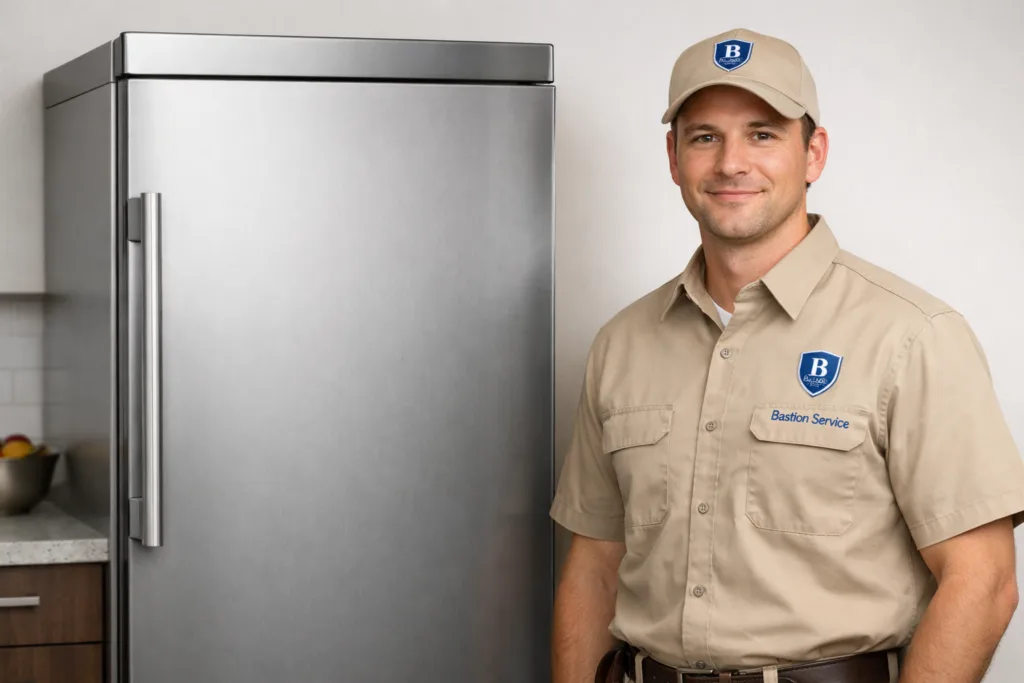
Food loss can happen quickly when a freezer starts drifting above normal temperature, building excess frost, or making unfamiliar sounds. In many cases, the visible symptom is only the surface issue. A temperature problem may begin with poor airflow, a failed fan, a door that is not sealing correctly, a defrost fault, or trouble in the cooling system itself.
Common Asko freezer problems homeowners notice first
Most freezer issues start with a change in day-to-day performance rather than a complete shutdown. Homeowners in Rancho Park often spot the problem when frozen food softens, ice cream loses firmness, drawers become hard to open, or the appliance seems to run much longer than usual.
With Asko units, symptom patterns matter. Where frost appears, how often the compressor runs, whether the interior fan can be heard, and whether the warming is constant or intermittent can all point to different repair paths.
Freezer not freezing hard enough
If food is no longer staying deeply frozen, the cause may be as simple as blocked vents or as involved as a failing fan motor, sensor problem, control issue, or compressor-related fault. Some freezers cool unevenly, leaving one section cold while another section warms up. That often suggests an airflow restriction or frost hidden behind the interior panel.
Signs this problem is becoming more serious include soft ice cream, frost-covered packages that later show thawing, or frozen items sticking together after partial defrosting. When temperature swings continue, food quality and safety both become concerns.
Frost buildup on walls, drawers, or stored food
Frost that keeps returning usually means moisture is getting in or the freezer is not defrosting correctly. A worn gasket, a door left slightly ajar, misaligned drawers, or a defrost system failure can all create heavy frost. Once ice starts accumulating, airflow drops and cooling performance usually gets worse.
Frost limited to one area may suggest a specific circulation or evaporator problem, while widespread frost can point to repeated warm air entry. In either case, scraping ice away without addressing the cause rarely solves the issue for long.
Water leaks or a sheet of ice at the bottom
Water under drawers or ice collecting along the floor of the compartment often indicates a blocked defrost drain or drainage issue. This may start as a small nuisance and turn into stuck drawers, recurring ice buildup, and extra strain on interior parts.
If the door is not sealing evenly, condensation can also contribute to pooling and refreezing. Because leaks inside a freezer can look minor at first, they are easy to put off until access becomes difficult or cooling starts to suffer.
Buzzing, clicking, fan noise, or nonstop running
A freezer should make some operating noise, but changes in sound are worth attention. Clicking can suggest a start or compressor circuit issue. A scraping or grinding sound may come from a fan blade hitting ice. A steady loud hum combined with weak cooling can indicate that the appliance is working hard without reaching the target temperature.
If the freezer runs almost constantly, it may be compensating for temperature loss, frost-restricted airflow, or a control problem. Persistent noise combined with warming is usually a stronger warning sign than noise alone.
Why the same symptom can have different causes
One reason freezer repairs can be confusing is that different failures often look alike from the outside. A unit that seems to have a thermostat problem may actually have an evaporator fan issue. A freezer with visible frost may have a door seal leak rather than a failed defrost heater. A compartment that warms slowly may point to restricted airflow instead of a major cooling system failure.
That is why diagnosis matters before parts are replaced. The goal is to identify the actual fault path, not just react to the most obvious symptom.
What to check before scheduling service
There are a few simple observations that can help narrow things down before service:
- Make sure the door closes fully without resistance from bins, shelves, or food packages.
- Check whether frost is concentrated in one area or spread across the interior.
- Listen for fan noise, clicking, or long uninterrupted run cycles.
- Confirm the temperature setting was not changed accidentally.
- Look for blocked interior vents that could prevent cold air from moving properly.
- Note whether water is pooling, refreezing, or appearing near the bottom drawer area.
These observations can make the service visit more efficient and help explain whether the problem is constant, intermittent, or getting progressively worse.
When continued use can make the problem worse
Some freezer problems can wait a day or two for service, but others should be addressed promptly. If the unit is warming rapidly, tripping breakers, clicking without starting properly, or producing repeated thaw-and-refreeze cycles, continued operation may lead to more spoilage and greater strain on key components.
It is also smart to avoid forcing frozen drawers open or repeatedly unplugging and restarting the appliance. Those steps can make diagnosis harder and may not improve the underlying problem.
Repair versus replacement for an Asko freezer
Not every freezer issue points toward replacement. Many problems involving door gaskets, fans, drains, controls, sensors, or defrost components can be repairable if caught at the right stage. In those cases, restoring normal airflow and temperature regulation can return the appliance to reliable household use.
Replacement becomes a more realistic discussion when there is major sealed-system trouble, repeated breakdown history, or a repair cost that approaches the appliance’s remaining value. The decision usually depends on the exact failed component, the condition of the freezer overall, and whether the repair is likely to restore stable performance rather than provide only a short-term improvement.
What a service visit should help you answer
For homeowners in Rancho Park, the most helpful outcome of a service visit is not just naming a part. It is understanding what failed, whether the failure is isolated or part of a larger pattern, and whether the repair makes sense for the appliance’s condition.
With Asko freezer repair in Rancho Park, that means looking at the symptom history, checking cooling behavior, and determining whether the problem is tied to airflow, defrost, controls, drainage, door sealing, or the core refrigeration system. Once that is clear, it becomes much easier to decide on the right next step for the freezer and for the food you need it to protect.