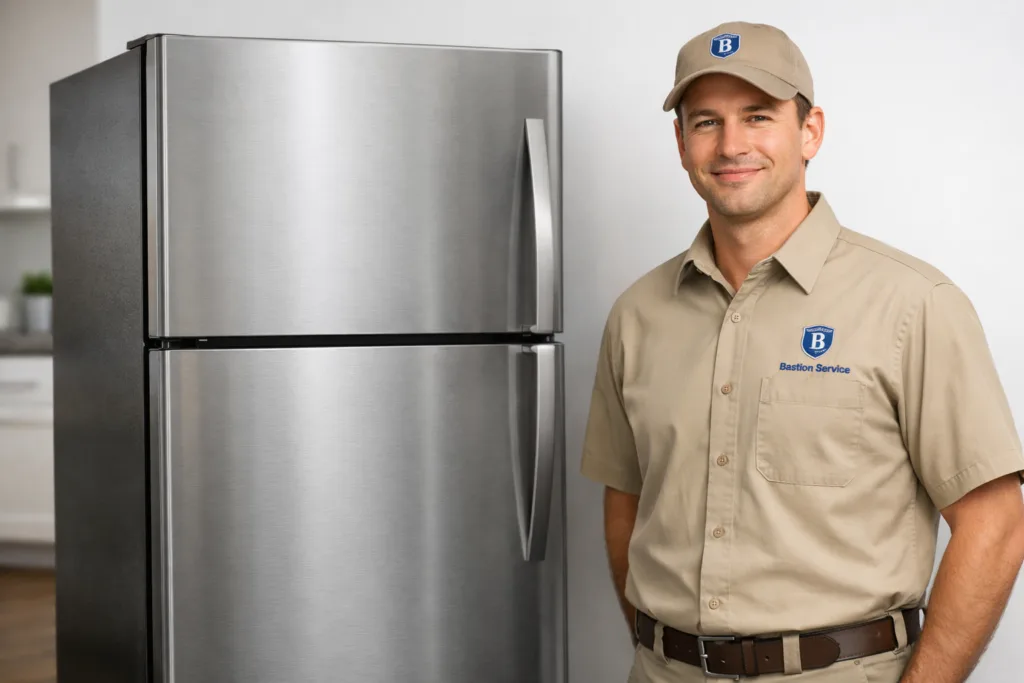
Refrigerator problems usually reveal themselves through a pattern rather than a single symptom. If the fresh-food section is warming, the freezer is icing over, or the machine is running far longer than usual, those details help identify whether the issue is related to airflow, defrost operation, controls, water delivery, or the cooling system itself. For homeowners in Mid-Wilshire, that symptom-by-symptom approach is often the fastest way to understand whether an Amana refrigerator repair is straightforward or more involved.
How symptom patterns point to the likely problem
Two refrigerators can appear to have the same complaint while needing very different repairs. A warm refrigerator compartment with a still-cold freezer often suggests that cold air is not moving correctly between sections. If both compartments are warming, the fault may be affecting the refrigerator more broadly. Paying attention to what changed first can help narrow the cause.
Fresh-food section warm but freezer still cold
This commonly points to an airflow problem. Possible causes include an evaporator fan issue, frost buildup behind the freezer panel, blocked vents, or a damper that is not opening and closing as it should. In many cases, homeowners notice that frozen food still seems solid while milk, leftovers, and produce start warming first.
Both sections losing temperature
When neither compartment is holding temperature, the problem may involve condenser airflow, a failing start device, control faults, or a more serious compressor or sealed-system issue. If the refrigerator is running but not recovering temperature, that usually deserves prompt service before food loss gets worse.
Unit runs constantly or cycles abnormally
An Amana refrigerator that rarely shuts off may be struggling to reach the set temperature. Dirty coils, poor door sealing, sensor problems, defrost trouble, or an overworked cooling system can all cause long run times. On the other hand, very short cycling or repeated clicking can point to a start problem that prevents normal operation.
Cooling complaints that should be addressed quickly
Cooling issues tend to get worse, not better. A refrigerator that is only slightly warm today can become a full no-cool problem with little warning, especially if airflow is being restricted by ice or if a compressor is having trouble starting.
- Food spoils too quickly: often a sign the refrigerator compartment is not staying in a safe range even if the display looks normal.
- Frozen items are softening: may indicate reduced cooling performance, airflow restriction, or a developing compressor-related problem.
- Temperature swings throughout the day: can be linked to sensor, control, fan, or defrost faults.
- Back wall of freezer develops frost: often suggests a defrost failure or airflow issue that will eventually affect cooling.
Leaks and water problems are often more than a nuisance
Water around or inside a refrigerator can come from several different sources. A blocked defrost drain is a common reason for water under crisper drawers or pooling beneath the unit. If the appliance has an ice maker or water dispenser, supply line issues, inlet valve problems, or fill-tube icing may also be involved.
Moisture problems can create secondary damage if they are ignored. Water can refreeze into heavy ice buildup, interfere with fan movement, or damage nearby flooring. If leaking is recurring, the goal is not just drying things up but finding out where the water is starting and why it keeps returning.
Signs the leak source may be drain-related
- Water appears inside the fresh-food section
- Ice forms along the freezer floor or lower panel
- Leak happens after defrost cycles rather than constantly
Signs the water system may be involved
- Ice maker stops producing while moisture appears nearby
- Buzzing occurs during fill attempts
- Dispenser and ice maker problems happen at the same time
Frost buildup usually means airflow or defrost trouble
Not all frost means the same thing. Light frost after a door is left open is different from repeated ice accumulation that keeps coming back. The location and amount of frost help point to the likely repair path.
Heavy frost on the freezer back panel often indicates that the evaporator area is icing over because the defrost system is not clearing it properly. That can reduce airflow enough to warm the refrigerator compartment even while the freezer still seems somewhat cold. Frost around doors or on food packaging may be more related to warm-air entry from a sealing issue, alignment problem, or frequent moisture intrusion.
If frost keeps returning after being temporarily cleared, the underlying problem usually remains. Continued use can eventually block air movement enough to affect both storage sections.
What unusual noises can mean
Refrigerators make normal operating sounds, but new or repeated noises often give useful clues. The timing and location of the sound matter just as much as the sound itself.
- Clicking followed by silence: may suggest a compressor start issue.
- Grinding or scraping: can happen when a fan blade hits ice or when a fan motor is failing.
- Rattling: may come from a loose panel, drain pan, or vibration during compressor operation.
- Buzzing near the water system: can point to a valve or fill problem.
- Loud fan noise from inside the freezer: often indicates ice interference or a worn evaporator fan motor.
Ice maker and dispenser issues often connect to larger temperature problems
An ice maker that stops working does not always mean the ice maker assembly itself has failed. If the freezer temperature is unstable, ice production may slow or stop because the refrigerator is not reaching the conditions needed for normal harvest cycles. Fill-tube icing, inlet valve faults, shutoff arm issues, or control problems are also possible.
Slow water dispensing can be caused by a restricted filter, low supply pressure, a partially frozen reservoir, or a failing valve. If both the dispenser and ice maker stop at once, that usually points attention toward the shared water supply path rather than treating them as separate problems.
When to stop using the refrigerator
There are times when continued use can make the situation worse. If the refrigerator is actively leaking, repeatedly clicking without starting, overheating around the compressor area, or no longer keeping food at safe temperatures, it is usually best to limit use and arrange service. A machine that is trying and failing to start can place extra stress on electrical and compressor components.
In Mid-Wilshire homes, the practical decision often comes down to food safety, risk of floor damage, and whether the appliance is still maintaining stable temperature in either compartment. If cooling is drifting but not fully gone, early service is often better than waiting for a complete shutdown.
Repair or replace: what usually makes sense
Many Amana refrigerator problems are repairable, especially when they involve fans, defrost components, drains, valves, sensors, gaskets, or control-related parts. Those issues can often be resolved without replacing the appliance.
Replacement becomes more likely when the diagnosis points to a major sealed-system failure, compressor trouble on an older unit, or a repair cost that does not make sense compared with the refrigerator’s age and overall condition. The important point is that the symptom alone does not decide it. A refrigerator that seems completely dead may need a targeted electrical repair, while one that still runs may have a much more expensive cooling-system problem.
Helpful observations to note before service
Before scheduling repair, it helps to check a few basics. These details can make troubleshooting more efficient and help separate a cooling problem from a control or airflow problem.
- Whether interior lights come on
- Whether fans can be heard running
- Whether frost is visible on the freezer back wall
- Whether the issue started suddenly or gradually
- Whether both compartments are affected or just one
- Whether doors are sealing and closing normally
- Whether the problem is constant or intermittent
If your Amana refrigerator is warming, leaking, frosting over, or making unfamiliar noises, the next step is to match the symptoms to the system most likely at fault. That approach helps Mid-Wilshire homeowners protect food, avoid extra wear on the appliance, and decide whether repair is the right move.