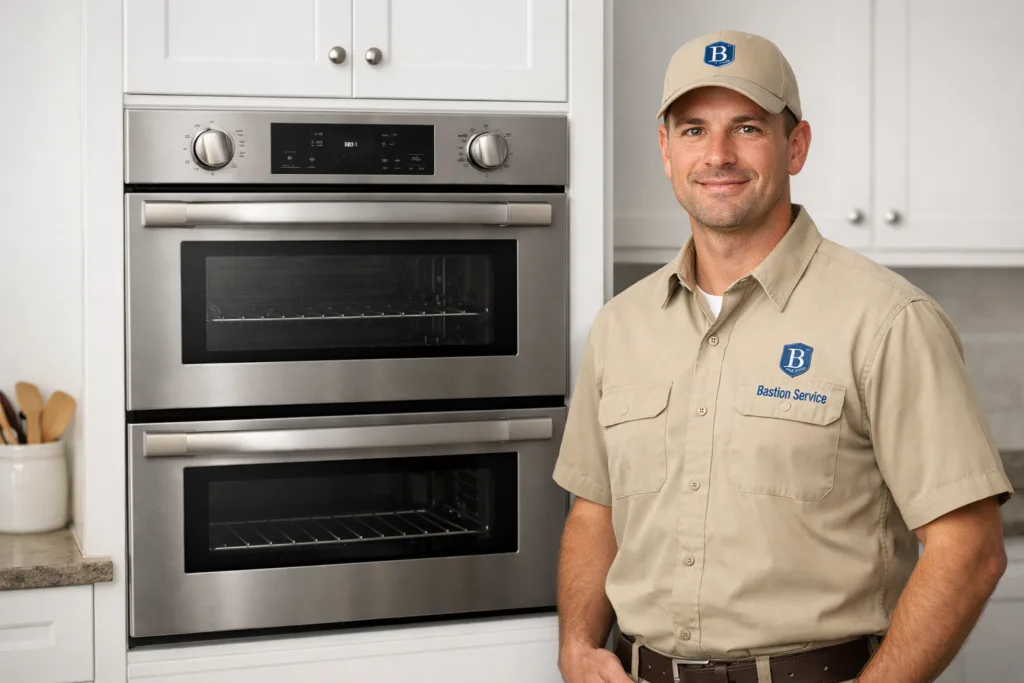
Start with the exact behavior of the oven

GE ovens can fail in ways that look similar from the outside but come from very different parts inside the appliance. An oven that will not heat, one that heats slowly, and one that bakes unevenly may all require different repairs. That is why the most useful first step is to pay attention to what the oven does during preheat, whether bake and broil act differently, and whether the problem happens every time or only now and then.
In West Los Angeles homes, oven problems often become noticeable during everyday cooking rather than in a complete breakdown. A unit may still turn on and seem usable, yet produce undercooked food, scorched edges, or long meal delays because temperature control is no longer accurate.
Common GE oven symptoms and what they may mean
Oven not heating at all
If the display works but the oven never gets hot, likely causes include a failed bake element, a weak igniter on gas models, a faulty temperature sensor, wiring trouble, or an electronic control issue. If broil works but bake does not, that usually points away from a general power problem and more toward a failed bake-side component.
Slow preheat
A GE oven that eventually reaches temperature but takes much longer than it used to may have a weakening igniter, a partially failed element, or a control problem that is not delivering heat correctly. Slow preheat often gets worse gradually, so homeowners may first notice longer cook times before the oven stops working properly.
Uneven baking
When one rack browns faster than another, cookies finish unevenly, or casseroles stay cool in the center, the problem may involve a drifting sensor, an element that is no longer heating evenly, or trouble maintaining set temperature. Heat distribution issues can also show up as repeated overcooking on one side of the cavity.
Temperature swings
Some cycling is normal, but large swings are not. If the oven overshoots temperature, drops too low, or gives inconsistent results from one use to the next, the cause may be a sensor circuit issue, calibration problem, failing control board, or intermittent wiring fault.
Oven will not turn on
A blank display, unresponsive controls, or a unit that appears dead may be related to incoming power, a tripped breaker, a failed control board, or an internal electrical fault. If the clock is on but cooking functions will not start, diagnosis usually shifts toward the control system, lock assembly on some models, or heating circuit.
Error codes or random shutoffs
Repeated fault codes, canceled cycles, or an oven that shuts off during use often indicate a sensor, control, or communication problem rather than a simple heating element issue. Intermittent faults usually need direct testing because guessing at parts can quickly become expensive.
Gas and electric GE ovens fail differently
Knowing whether your oven is gas or electric helps narrow the issue faster. On many gas GE ovens, weak ignition is a frequent cause of no-heat or slow-heat complaints. The igniter may glow yet still fail to draw enough current to open the gas valve reliably. That can lead to delayed heating, inconsistent preheat, or a burner that never lights properly.
On electric GE ovens, no-heat complaints often trace back to a bake or broil element, wiring at the element connection, or a control failure. In some cases, one part of the oven works while another does not, which can make the appliance seem only partially broken even though normal cooking performance is already compromised.
Signs the problem is getting worse
Many oven failures progress over time. A repair is worth scheduling sooner rather than later when you notice:
- Preheat taking longer each week
- Food finishing differently than it used to under the same settings
- Broil working normally while bake struggles
- Temperature needing frequent manual adjustment
- Error codes returning after being cleared
- Clicking, buzzing, or repeated ignition attempts
Catching the pattern early can help prevent added stress on controls, wiring, or other components.
When to stop using the oven
Some symptoms are more than a convenience problem. Stop using the oven if it trips the breaker, smells like burning insulation, overheats badly, or shuts down unpredictably during cooking. Those signs can point to an electrical issue that should not be ignored.
For gas GE ovens, a persistent gas smell is a separate safety concern. If you smell gas strongly, stop using the appliance and follow gas-safety steps before arranging repair. If there is no gas odor but ignition is delayed or inconsistent, normal use should still wait until the oven is checked.
Repair or replace: what usually makes sense
Many GE oven repairs are reasonable when the failure is limited to a specific part such as an igniter, element, sensor, or switch. Repair becomes less attractive when the oven has multiple faults, ongoing control problems, or overall wear that suggests more failures are likely soon.
For many households in West Los Angeles, replacement is not always the easy choice, especially when the oven is built into the kitchen layout or matched to surrounding appliances. In those cases, understanding the exact failed component matters because a focused repair may restore normal cooking without the disruption of changing the appliance.
Helpful details to note before service
If the oven is still safe to power on, a few observations can make diagnosis easier:
- Does the oven fail in bake, broil, or both?
- Does it reach temperature and then fall off?
- Is the problem constant or intermittent?
- Do you hear normal ignition or relay sounds?
- Are there any error codes on the display?
- Did performance decline gradually or stop suddenly?
These details often help separate a heating problem from a sensor, control, or power issue.
What homeowners in West Los Angeles can expect from a sound repair approach
A useful service visit should answer three questions clearly: what has failed, whether the repair is worthwhile, and what result to expect after the repair is completed. That matters most with ovens that are still partly working, because partial operation can make the wrong problem seem obvious when it is not.
For GE oven repair in West Los Angeles, the best outcome usually comes from matching the repair path to the exact symptom pattern and overall condition of the appliance. That gives homeowners a realistic next step, whether the solution is a targeted part replacement or a broader decision about the oven itself.