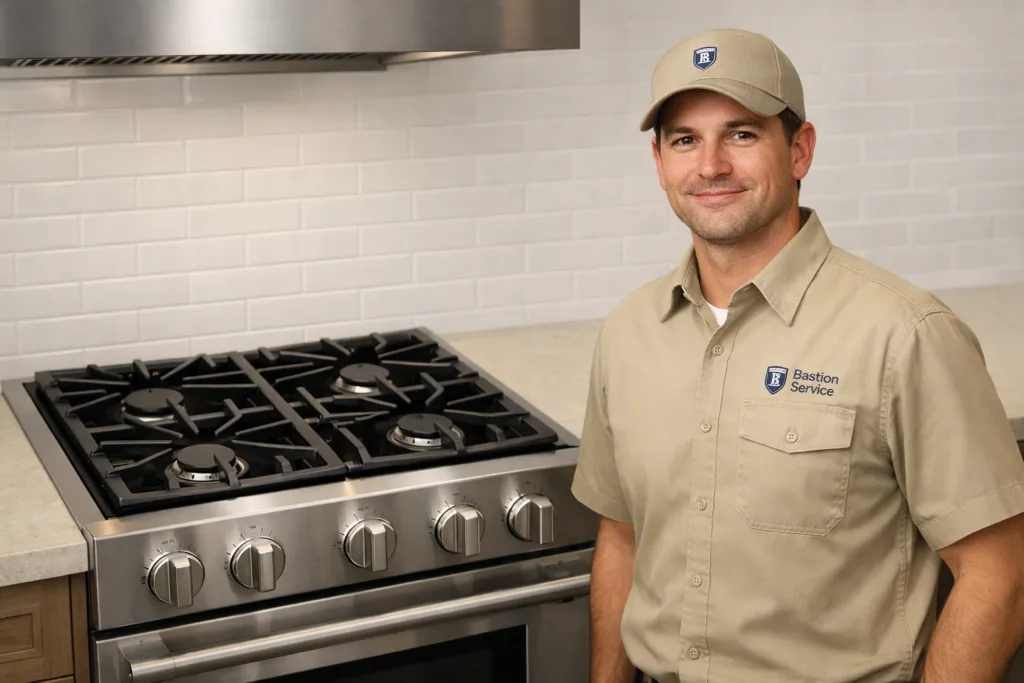
Cooking problems at the surface usually show up fast in daily use. One burner may lag behind, another may keep clicking after it lights, or the whole unit may seem unpredictable from one meal to the next. With a Wolf cooktop, those symptoms often look similar at first, but the cause can range from a simple burner assembly issue to a failed ignition or control component.
How Wolf cooktop problems usually show up at home
Most homeowners notice trouble in patterns rather than one-time glitches. A burner that struggles in the morning but works later, a knob setting that no longer matches the heat level, or an igniter that keeps sparking after cleaning can all point to different repair paths. Paying attention to what happens before, during, and after ignition helps narrow the issue much faster.
Useful clues include whether the problem affects one burner or all burners, whether the symptom started suddenly or gradually, and whether it appears only after cleaning, boiling over, or heavy cooking. These details often matter more than the age of the appliance alone.
Common symptoms and what they may mean
Burner clicks but does not light
If you hear clicking but the flame does not appear, the first possibilities include a misaligned burner cap, blocked burner ports, moisture around the igniter, or weak sparking at the electrode. If gas is present but ignition is delayed, the burner may ignite with a small burst instead of a normal light-off, which should not be ignored.
When only one burner is affected, the issue is often limited to that burner’s parts or local wiring. If several burners have the same symptom, the diagnosis may shift toward the spark module, switch system, or incoming power to the ignition circuit.
No spark at all
A burner that does not click or spark can point to a failed ignition switch, wiring fault, spark module problem, or electrical supply issue. On a gas cooktop, people sometimes assume the problem is always gas-related, but the ignition system depends on electrical components working correctly.
If none of the burners spark, that usually suggests a broader failure than if just one burner has stopped responding.
Clicking continues after the burner is lit
Constant clicking is a common complaint and often follows spills, steam exposure, or residue buildup around the igniter area. Moisture can interfere with normal sensing, but repeated clicking can also indicate a worn ignition component or switch problem that keeps the spark cycle going when it should stop.
If drying and basic cleaning do not change the symptom, continued use may put extra wear on ignition parts and make the problem more frequent.
Uneven flame or poor heat control
A flame that looks patchy, weak, or inconsistent may be caused by blocked ports, burner head damage, improper cap placement, or an issue affecting gas flow. The result is often cookware that heats unevenly, longer cooking times, or poor simmer performance.
On models with electronic controls or more advanced heat management, unstable temperature response may also involve switches, sensors, or control components rather than the burner hardware alone.
Burner gets too hot or does not respond to setting changes
When the cooktop does not track properly with the selected heat setting, the issue can move beyond ignition and into regulation. A burner that stays too high, drops too low without warning, or responds late to adjustments can make normal cooking difficult and may signal trouble in the control path.
This is the kind of symptom that deserves prompt attention because it affects both performance and safety.
Cooktop seems completely dead
If the unit will not power on or shows no response at all, diagnosis may start with electrical supply, breaker status, terminal connections, and internal control failures. Sometimes this happens right after a trip at the panel, but in other cases the cooktop may have shown earlier warning signs such as intermittent controls or burners failing one at a time.
Problems that often follow spills and cleaning
Cooktops live in one of the busiest parts of the home, so spills are a major source of symptom changes. Boil-overs can leave residue in burner ports, under caps, and around ignition parts. Heavy cleaning can also shift burner caps slightly out of place or leave moisture where sparking should occur cleanly.
That does not mean every post-cleaning problem is minor. If a burner still misfires after the area is dry and properly reassembled, there may be a component issue that was exposed rather than caused by the cleaning itself.
When to stop using the cooktop
Some symptoms are more than an inconvenience. It is smart to stop using the cooktop if you notice delayed ignition, flames that do not look normal, controls that do not regulate heat correctly, repeated electrical tripping, or sparking that continues abnormally. Those conditions can worsen with continued use and may affect additional parts.
If there is a strong or persistent gas smell, do not continue troubleshooting at the appliance. Leave the area if needed and contact the gas utility or emergency services first. After the immediate safety issue is handled, the cooktop can be evaluated to identify the failed component.
What a repair visit should help determine
For homeowners in West Hollywood, the real question is usually not just whether a Wolf cooktop can be repaired, but whether the repair is targeted, worthwhile, and likely to restore consistent daily use. A service visit should identify the failed part or system, explain whether the problem is isolated or broader, and clarify if continued use before repair is safe.
That matters whether one burner is acting up or the entire appliance has become unreliable. Good troubleshooting should separate burner assembly issues from ignition faults, control failures, wiring problems, and supply-related concerns instead of treating every no-light symptom the same way.
Repair or replace?
Repair often makes sense when the cooktop is otherwise in solid condition, the problem is limited to a specific component, and the appliance still fits the kitchen and cooking needs of the household. Built-in cooking products are not always simple to swap out, especially when appearance, cutout size, and kitchen layout matter.
Replacement becomes a more serious consideration when there are multiple major failures, recurring issues across different systems, or repair cost approaches the value of keeping the current unit in service. The decision usually comes down to condition, parts involved, and whether the fix is likely to return the cooktop to stable performance rather than temporary improvement.
Why symptom details matter before parts are chosen
Many cooktop issues sound alike from room to room. “Not heating right” can mean weak ignition, uneven flame distribution, faulty regulation, or a control problem. “Won’t turn on” can point to supply issues, failed controls, or internal electrical faults. Replacing parts too early can miss the actual cause and add cost without solving the problem.
The most helpful repair path starts with the exact symptom pattern: which burner, what sound, what response, and under what conditions it fails. That approach gives West Hollywood homeowners a clearer picture of what is wrong and whether the appliance is a good candidate for repair.