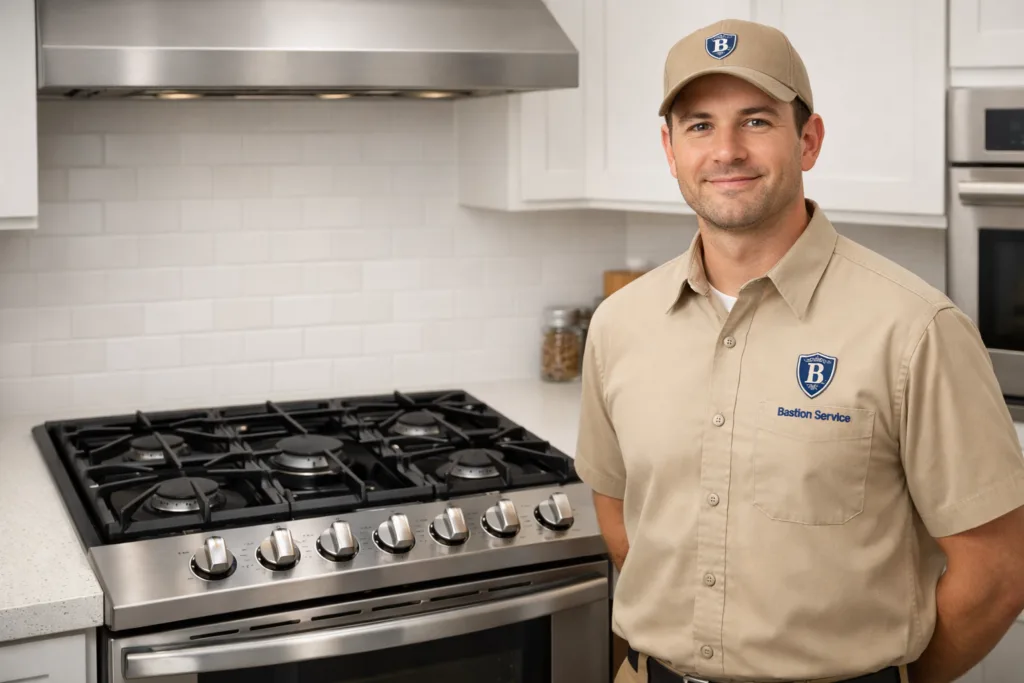
Cooktop problems are often more specific than they first appear. A burner that does not heat at all is a different issue from one that heats weakly, clicks continuously, or only fails at certain settings. With LG cooktops, the symptom pattern usually points toward a smaller group of likely causes, which makes the next step much easier for a homeowner trying to decide whether repair makes sense.
How LG cooktop issues usually show up
Some failures are obvious, such as a cracked glass surface or a burner that never turns on. Others are intermittent and harder to pin down, like a burner that works after several tries, a control that responds inconsistently, or a flame that looks uneven only at lower settings. Paying attention to exactly what changed can help separate a simple serviceable problem from a broader electrical, ignition, or control issue.
It also helps to note whether the problem affects one burner or several. A single weak burner may suggest a localized part failure, while multiple zones acting strangely at once can indicate a larger issue involving power, wiring, or the control system.
Common symptoms and what they can mean
Burner will not heat or ignite
On electric LG cooktops, a cold burner can be caused by a failed radiant element, a damaged connection, a worn switch, or internal wiring trouble under the surface. On gas models, a burner that will not light may involve the igniter, burner cap placement, blocked burner ports, or a fault in the spark system.
If only one burner is affected and the rest of the cooktop works normally, the issue is often isolated. If several burners stop working together, the diagnosis usually needs to look beyond the burner itself.
Burner heats unevenly or too slowly
Slow preheating, fluctuating heat, or poor temperature control can make routine cooking frustrating. Electric models may have a weakening element or a switch that is not delivering proper output. Gas models can develop uneven flame when residue blocks the ports or when burner parts are not seated correctly after cleaning.
This kind of symptom is easy to ignore at first, but inconsistent heat tends to affect everyday use more than many homeowners expect. It can also be an early sign that a component is wearing out rather than failing all at once.
Clicking that does not stop
Repeated clicking is one of the most common complaints on gas cooktops. In some cases, moisture or food residue near the igniter is enough to interfere with normal sparking. In others, the problem comes from a worn ignition component, switch issue, or burner cap alignment problem.
If the clicking continues after the area is dry and properly reassembled, it is best not to treat it as a minor nuisance. Persistent ignition problems can lead to unreliable burner operation and unnecessary wear on related parts.
Controls are unresponsive or inconsistent
When touch controls do not register correctly, settings change unexpectedly, or a knob no longer matches the actual heat level, cooking results become hard to predict. Depending on the model, the cause may involve a surface control switch, user interface fault, or an internal control problem.
These issues often feel random at first, which is why they are commonly misread as user error or a temporary glitch. If the problem repeats, it usually means the cooktop needs closer inspection.
Glass is cracked or the surface is damaged
A damaged cooktop surface is not only a cosmetic problem. Cracks can affect safe operation and create a path for spills to reach internal components. If the surface is broken, that burner area should not continue to be used until the condition is assessed.
Whether repair is worthwhile depends on the extent of the damage, the cooktop’s overall condition, and whether other issues are present at the same time.
Signs the problem should not be ignored
Some cooktop issues start small and become much more expensive later. Service should move up in priority when the unit is tripping power, sparking abnormally, failing to regulate heat, or working only intermittently. A burner that comes and goes can stress switches, controls, and other components if it keeps being used in that condition.
For gas cooktops, safety comes first. If there is a strong or persistent gas smell, stop using the appliance and address that situation immediately before thinking about appliance repair. If there is no gas odor but ignition is unreliable, repeated clicking or delayed lighting still deserves prompt attention.
Repair versus replacement
Many LG cooktop repairs are worthwhile when the failure is limited to a burner component, igniter, switch, or another isolated part and the rest of the appliance is in good shape. Replacement becomes more likely when the surface is badly damaged, several systems are failing together, or the repair path approaches the value of the unit.
Age matters, but condition matters more. A cooktop with one clear problem and otherwise normal performance is a very different situation from one with multiple burners acting up, visible wear, and ongoing control issues. Homeowners in West Hollywood usually benefit most from a diagnosis that shows whether the problem is contained or part of a larger pattern.
What to check before service
Before scheduling repair, it helps to make a few simple observations:
- Which burner or burners are affected
- Whether the issue happens every time or only occasionally
- If the problem began after cleaning, a spill, or recent heavy use
- Whether the symptom involves heating, ignition, clicking, or controls
- Any visible cracking, scorching, loose parts, or misalignment
These details often make the service process faster because they narrow the likely cause before any parts are considered.
What a useful cooktop repair visit should accomplish
A focused service visit should do more than identify a bad symptom. It should determine which component actually failed, whether that failure affected nearby parts, and whether continued use creates a safety or reliability concern. On an LG cooktop, that can include checking burner operation, ignition performance, heat regulation, control response, and surface condition.
Once the cause is narrowed down, the decision becomes clearer. In many West Hollywood homes, the best outcome is a straightforward repair that restores normal daily cooking. In other cases, the smarter choice is to pause use and weigh replacement if the appliance no longer makes sense to restore.