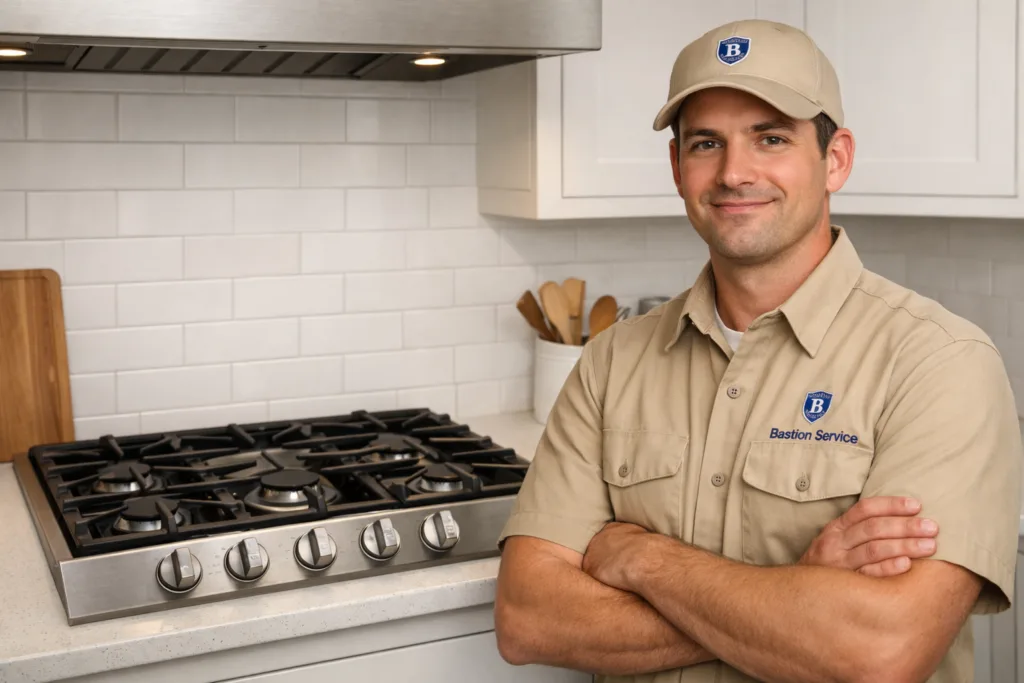
Cooktop problems rarely stay minor for long. A burner that hesitates to ignite, cycles unpredictably, or runs hotter than expected can disrupt everyday cooking and raise safety concerns in the kitchen. With GE models, the best repair path usually starts by matching the exact symptom to the system involved rather than assuming every burner issue has the same cause.
How GE cooktop problems are typically diagnosed
GE cooktops can fail in different ways depending on whether the unit is gas or electric. Gas models often develop issues related to ignition, burner heads, switches, or gas flow. Electric models are more likely to have problems with elements, switches, wiring, or control components. Some symptoms point clearly to one failed part, while others require testing because several parts can produce similar behavior.
Useful clues include whether the problem affects one burner or several, whether it happens every time or only occasionally, and whether it started after a spill, cleaning, or sudden power interruption. Those details often help narrow down whether the problem is isolated to a burner assembly or tied to a broader control or electrical issue.
Common GE cooktop symptoms and what they may mean
Burner clicks but does not light
On a gas GE cooktop, repeated clicking without ignition often points to moisture, debris around the igniter, blocked burner ports, burner cap misalignment, or a problem in the spark ignition system. If the burner worked normally before cleaning and suddenly begins clicking without lighting, residue or moisture may be part of the issue. If the symptom continues, the ignition components should be inspected.
If there is a strong or persistent gas smell, stop using the cooktop until the problem is evaluated. That is no longer just a performance issue.
Burner lights slowly or flame looks uneven
A weak, delayed, or patchy flame can happen when burner openings are partially blocked or when the burner cap is not seated correctly. In some cases, the problem is deeper and involves gas delivery or ignition performance. Even when the burner still lights, uneven flame patterns can make pans heat inconsistently and can worsen over time.
Electric burner does not heat correctly
When an electric GE cooktop burner stays cool, heats only partway, runs too hot, or cycles in an erratic way, the issue may involve the surface element, switch, receptacle, or wiring. If one burner behaves differently from all the others, that comparison is often helpful during diagnosis. A burner that overheats should not be ignored, especially if it no longer responds properly to lower settings.
Cooktop keeps clicking after the burner is lit
Continuous clicking on a gas cooktop can indicate a stuck ignition switch, moisture in the system, food buildup, or a fault in the spark components. Some homeowners notice the clicking starts after a boil-over or after routine cleaning. If the noise does not stop once the area is fully dry and clean, service is usually needed to prevent ignition problems from spreading or returning.
Burner control does not match the setting
If the burner remains too low, too high, or changes heat unpredictably when the knob is turned, the problem may be in the switch, valve, or control interface. This kind of issue is frustrating because the burner may still operate, but not in a reliable way. That can make everyday cooking difficult and can lead to overcooking or scorching.
Glass top is cracked or surface is visibly damaged
A cracked glass cooktop should be taken seriously. Surface damage can affect safe operation and may expose underlying components to spills or heat stress. If the cooktop surface is chipped, cracked, or separating, it is usually best to stop using it until the unit can be assessed.
Signs the problem may involve more than one part
Some GE cooktop issues begin at one burner but reflect a larger failure. Examples include:
- Multiple burners failing at the same time
- Erratic controls across the whole cooktop
- Intermittent power loss
- Clicking on more than one burner
- Tripped breakers during normal use
- Visible scorching, arcing, or melted wiring areas
When several symptoms appear together, the repair may involve shared wiring, switch harnesses, control components, or other common systems rather than a single burner part.
When to stop using the cooktop and schedule service
It is a good idea to stop routine use and have the cooktop checked when:
- A gas burner will not ignite consistently
- A burner overheats or cannot be turned down properly
- The unit continues clicking long after ignition
- There is visible damage to the cooking surface
- The cooktop trips electrical power
- There are signs of sparking, burning smells, or heat damage
Intermittent problems also deserve attention. A burner that fails only sometimes may seem manageable, but those faults often become complete failures and are easier to trace when the symptom pattern is still fresh.
Why continued use can make repair more expensive
Trying to work around a faulty cooktop can put added strain on related parts. Repeated ignition attempts may wear down spark components. A burner running too hot can damage nearby wiring or controls. Spills entering a cracked or damaged surface can create additional electrical issues. What begins as a single-part repair can become a broader repair if the appliance continues operating in an unstable condition.
Repair or replacement: what usually makes sense
Many GE cooktop problems are repairable, especially when the issue is limited to an igniter, burner assembly, switch, element, or another identifiable component. Repair is often worthwhile when the cooktop is otherwise in solid condition and the surface itself has not been compromised.
Replacement may be the better path when there is major surface damage, several components have failed at once, or the cost of parts and labor approaches the value of the cooktop. Age alone does not decide the issue, but overall condition and parts availability often do.
What to note before a service appointment
A few simple observations can make diagnosis faster and more accurate:
- Which burner is affected
- Whether the problem happens every time or only sometimes
- Whether it started after a spill or cleaning
- Whether the symptom involves clicking, weak heat, overheating, or no response
- Whether more than one burner shows the same problem
For homeowners in West Hollywood, those details can help determine whether the issue is tied to ignition, heat regulation, wiring, or controls before repair decisions are made.
GE cooktop repair guidance for West Hollywood homes
In a busy household, even one unreliable burner can throw off meals and daily routines. A symptom-based evaluation is the most effective way to avoid unnecessary parts replacement and determine whether repair is the sensible next step. For West Hollywood homeowners dealing with GE cooktop issues, early attention usually leads to a simpler repair path and a better chance of restoring consistent cooking performance.