
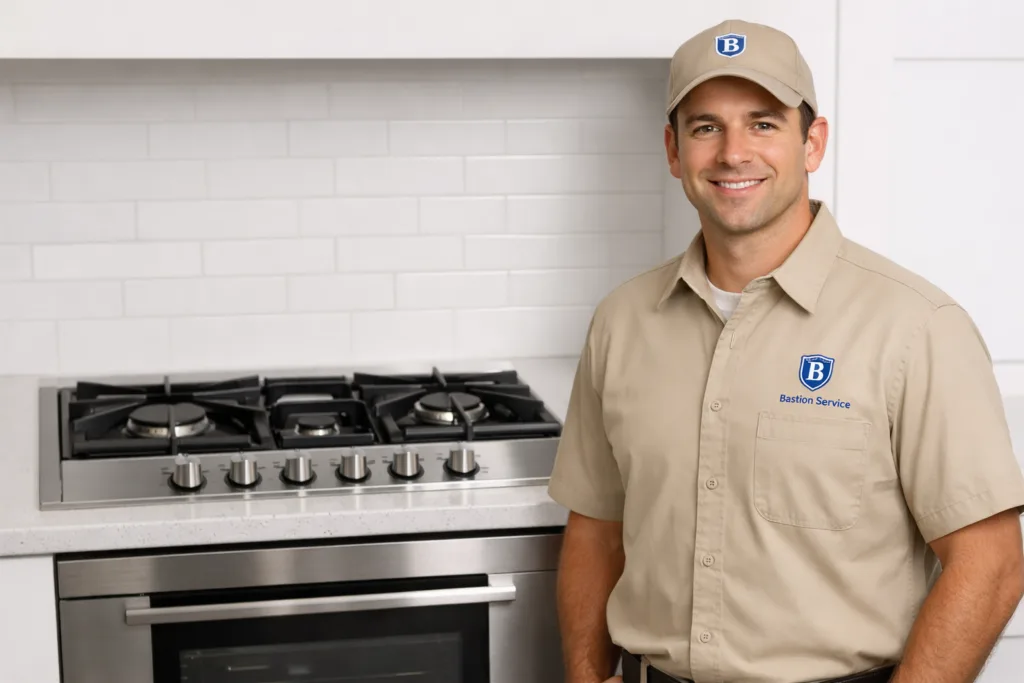





Cooktop problems rarely start as a total failure. More often, a burner becomes inconsistent, the igniter starts clicking longer than usual, or the controls stop responding the way they should. With Fisher & Paykel units, those symptoms can point to very different faults, so the most efficient repair starts with identifying which system is actually causing the problem.
Common Fisher & Paykel Cooktop Problems in West Hollywood Homes
In many West Hollywood households, the first sign of trouble is a change in daily performance rather than a complete shutdown. A single cooking zone may stop heating, a gas burner may light only after several tries, or the cooktop may seem to run hotter or cooler than the selected setting. These issues often have specific causes that can be isolated with symptom-based testing.
Burners not heating or heating unevenly
On electric and induction cooktops, poor heating can come from a failed element, damaged wiring, a sensor problem, or a control fault. If just one burner is affected, the issue may be limited to that zone. If several burners are acting up at once, the problem may involve incoming power or the main control system.
Uneven heat is also worth checking early. A burner that cycles incorrectly or struggles to maintain temperature can make everyday cooking frustrating and may lead to overheating of surrounding components if left unresolved.
Gas burners clicking but not igniting
Repeated clicking with no flame often points to an ignition issue, but the underlying cause is not always the same. Moisture after cleaning, a dirty or misaligned burner cap, a worn spark module, or an igniter problem can all create similar symptoms. If the burner sometimes lights and sometimes does not, that inconsistency is usually a sign that the issue is becoming more than routine maintenance.
Touch controls or knobs not responding properly
When settings change unpredictably, touch controls stop registering, or a burner does not respond to input, the fault may be in the interface, switch, control board, or wiring harness. Intermittent control problems are especially important to investigate because they can affect temperature regulation and make the cooktop less predictable to use.
Cracked glass or visible surface damage
A damaged glass surface is not just cosmetic. Cracks can spread with heat, allow spills to reach internal components, and affect safe operation. If the cooking surface is chipped, fractured, or showing impact damage, it should be evaluated before continued use.
What Different Symptoms Often Mean
One reason cooktop repair can be confusing is that similar symptoms do not always have the same source. A burner that will not turn on could be caused by a failed element, a bad switch, a loose connection, or a control issue. Clicking on a gas model may be as simple as burner misalignment in one case and an ignition-system failure in another.
That is why accurate diagnosis matters. Replacing parts based on guesswork can add cost without fixing the actual problem. Fisher & Paykel cooktops often require model-specific troubleshooting to determine whether the issue is isolated or part of a larger electrical or control-related failure.
Signs It Is Time to Schedule Service
It makes sense to have the cooktop checked when the same problem keeps returning, when more than one burner begins acting differently, or when normal cooking starts to feel unreliable. Homeowners in West Hollywood often call for service after noticing problems such as:
- a burner that no longer reaches full heat
- ignition that clicks repeatedly before lighting
- controls that need multiple attempts to respond
- intermittent power loss during cooking
- heat levels that do not match the selected setting
- visible cracking or damage on the cooktop surface
Even when the appliance still works part of the time, these warning signs usually indicate a fault that will not resolve on its own.
When Continued Use Can Make the Problem Worse
Some cooktop issues should not be put off. A burner that overheats, fails to regulate temperature, or cycles erratically can create unnecessary wear and may damage cookware. A cracked glass top can worsen with repeated heating and cooling. Ignition problems can become more frequent as components wear down further.
If the cooktop trips a breaker, sparks, shuts off unexpectedly, or behaves unpredictably, it is best to stop regular use until the problem is assessed. For gas models, a persistent gas odor should always be treated as a safety issue first.
Repair or Replace: How the Decision Usually Gets Made
Many Fisher & Paykel cooktop problems are repairable when the issue is limited to a burner component, igniter, switch, sensor, or control-related part and the rest of the appliance is in good condition. Repair tends to be less attractive when there is major surface damage, multiple high-cost failures, or signs that the cooktop is declining in several areas at once.
The decision usually comes down to the age and overall condition of the unit, the severity of the failure, and whether the problem is isolated or widespread. If the cooktop fits the kitchen well and the issue is straightforward, repair is often the sensible path. If damage is extensive, replacement may be the better long-term choice.
What to Check Before a Repair Visit
Before service is scheduled, it helps to note exactly how the problem appears. Useful details include whether one burner or multiple burners are affected, whether the issue is constant or intermittent, and whether it started after cleaning, a power interruption, or a spill. For gas models, noticing whether the burner clicks, smells of gas, or lights unevenly can also help narrow down the cause.
Simple observations like these often make diagnosis faster and help determine whether the problem points to a surface component, an ignition fault, or a deeper electrical issue.
Fisher & Paykel Cooktop Repair in West Hollywood
For homeowners in West Hollywood, the most helpful next step is usually an inspection based on the exact symptom pattern rather than a generic parts-first approach. Whether the issue involves weak heating, ignition trouble, control failure, or surface damage, the goal is to determine what failed, whether repair is practical, and whether the cooktop is safe to keep using in the meantime.


