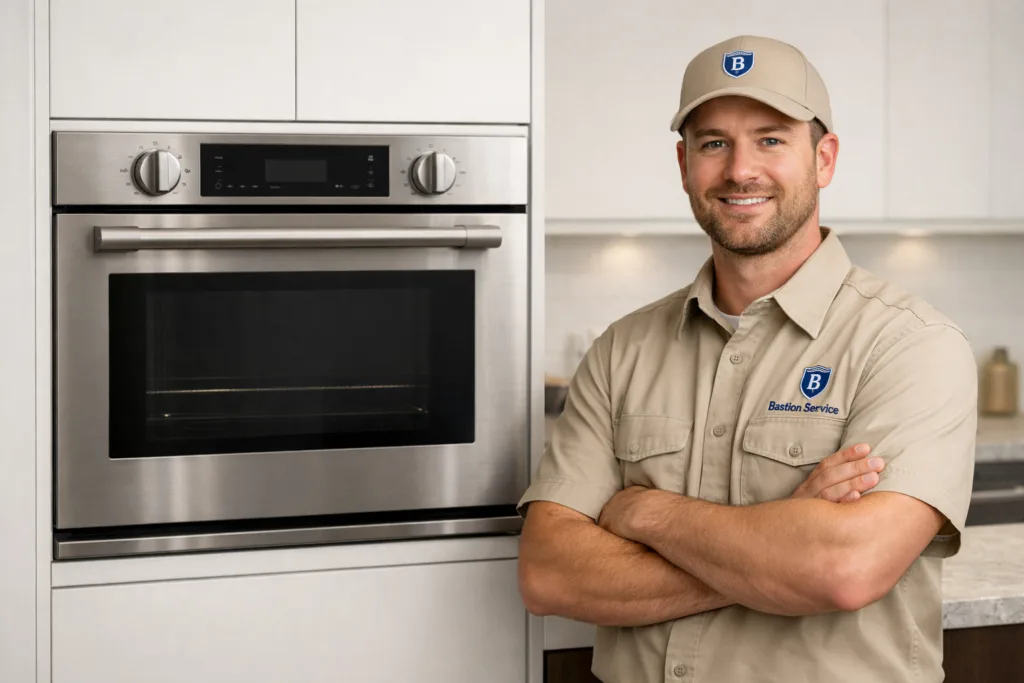
Cooking issues with a built-in oven often start subtly. A Wolf wall oven may still power on and appear normal while taking too long to preheat, browning unevenly, or drifting away from the set temperature during a bake cycle. Those patterns usually point to a specific fault in the heating, sensing, control, or door-sealing system rather than a general “bad oven” diagnosis.
In West Hollywood homes, that distinction matters because a built-in appliance is part of the kitchen layout, daily routine, and entertaining schedule. The best repair decisions come from matching the symptom pattern to the likely failure path before choosing parts or deciding whether continued use makes sense.
Common Wolf wall oven symptoms and what they can mean
Not heating at all
If the display lights up but the oven cavity never gets hot, the problem may involve a failed bake circuit, broil circuit, temperature sensor, relay, wiring issue, or incoming power problem. With electric wall ovens, partial power conditions can also create confusing symptoms where lights and controls work, but heating does not.
This is why “turns on but does not heat” should be tested rather than guessed at. Two ovens can show the same symptom and fail for completely different reasons.
Slow preheat
A Wolf wall oven that eventually reaches temperature but takes much longer than usual often signals weak heating performance, sensor misreading, or a control problem affecting how the elements cycle. Slow preheat is easy to ignore at first, but it usually gets more noticeable over time.
- Cookies or pastries need extra minutes beyond normal
- The preheat signal sounds, but food still cooks sluggishly
- The oven struggles more with higher temperatures
- One cooking mode seems weaker than another
Uneven baking
When the top rack browns too fast while the lower rack lags behind, or one side of a dish finishes before the other, the issue may involve airflow, calibration, convection performance, or inconsistent element cycling. Uneven baking is not always caused by cookware or rack position. If the problem is new and repeatable, the oven itself may no longer be regulating heat correctly.
Temperature swings
Some heat variation is normal during cycling, but large swings are not. If food alternates between underdone and overdone with the same settings, the oven may be overshooting, undershooting, or reading temperature inaccurately. Homeowners often notice this first with baking because recipes that once worked suddenly become unreliable.
Error codes or unresponsive controls
Fault codes, random beeping, canceled cycles, or controls that stop responding can point to electronic failures, communication issues, touch interface problems, or heat stress around the control area. Intermittent control issues are especially frustrating because they may disappear during a quick check and return during normal cooking.
Door not sealing properly
A misaligned door, tired hinges, worn gasket, or latch problem can let heat escape and create the impression of weak heating. If the oven seems to run constantly, the kitchen gets hotter than usual, or the door does not close with a firm seal, the door assembly should be part of the diagnosis.
Why symptom-based testing matters
Premium wall ovens use multiple systems that interact with one another. A heating complaint can actually start with a bad temperature reading. A control complaint can be triggered by a failing component elsewhere in the circuit. A poor door seal can create baking complaints that seem electrical at first.
That is why effective Wolf wall oven repair in West Hollywood starts with symptom-based testing. It helps determine whether the problem is isolated, whether multiple issues are present, and whether the repair is likely to restore normal cooking performance without chasing the wrong part.
Signs the problem is getting worse
Homeowners sometimes keep using the oven as long as it still produces some heat, but partial operation can hide a developing failure. Watch for these signs that the condition is progressing:
- Preheat times keep getting longer from week to week
- Recipes that used to be reliable now finish inconsistently
- The oven shuts off during baking or roasting
- Fault codes appear more often or become harder to clear
- The door feels loose, does not close evenly, or leaks heat
- The unit works in one mode but not another
When those symptoms are present, continued use can increase wear on heating and control components and make the final repair more involved.
When to stop using the oven until it is checked
Some issues are more than a convenience problem. It is smart to stop using the oven and arrange service if you notice any of the following:
- Breaker trips during operation
- Burning smells that are not explained by spilled food
- The oven overheats or scorches food unusually fast
- The display resets or the appliance shuts down mid-cycle
- The door lock malfunctions during or after self-clean
- The door will not close securely
Self-clean related problems deserve extra caution. High-heat cycles can expose weak sensors, latches, boards, and wiring, so a new issue that appears during self-clean should not be brushed off as temporary.
Repair or replacement for a built-in Wolf wall oven?
For many West Hollywood homeowners, repair remains the better option when the oven is otherwise in solid condition and the problem can be traced to a specific failed part or subsystem. Because wall ovens are built into cabinetry, replacement is often more involved than swapping a freestanding appliance. Fit, finish, installation considerations, and kitchen disruption all affect the decision.
Replacement may make more sense when there are multiple significant failures, ongoing control problems combined with age-related wear, or a repair cost that approaches the value of restoring long-term reliability. The important step is understanding whether the current issue is targeted and repairable or part of a broader decline in performance.
What a useful service visit should evaluate
A productive appointment should do more than confirm that the oven is “acting up.” It should focus on how the problem appears during actual operation and whether the fault is mechanical, electrical, or electronic.
- Heating response in bake and broil modes
- Preheat behavior and temperature performance
- Sensor readings and calibration-related symptoms
- Control response, error history, and shutdown patterns
- Door alignment, gasket condition, and latch operation
- Whether the symptom suggests a single failure or multiple issues
That gives the homeowner a more realistic basis for choosing repair, postponing non-urgent work, or considering replacement if the appliance has larger underlying problems.
How these issues affect everyday cooking at home
Wall oven problems are rarely just technical. They show up as uneven sheet pans, roasts that take too long, baked goods that collapse or dry out, and dinners that become harder to time. In a busy household, an unreliable oven can disrupt both simple weeknight meals and planned gatherings.
When a Wolf wall oven no longer cooks the way it should, the most helpful next step is a clear diagnosis and a repair path based on the exact symptoms the appliance is showing. That approach reduces guesswork and makes it easier to decide what is worth fixing and what is not.