
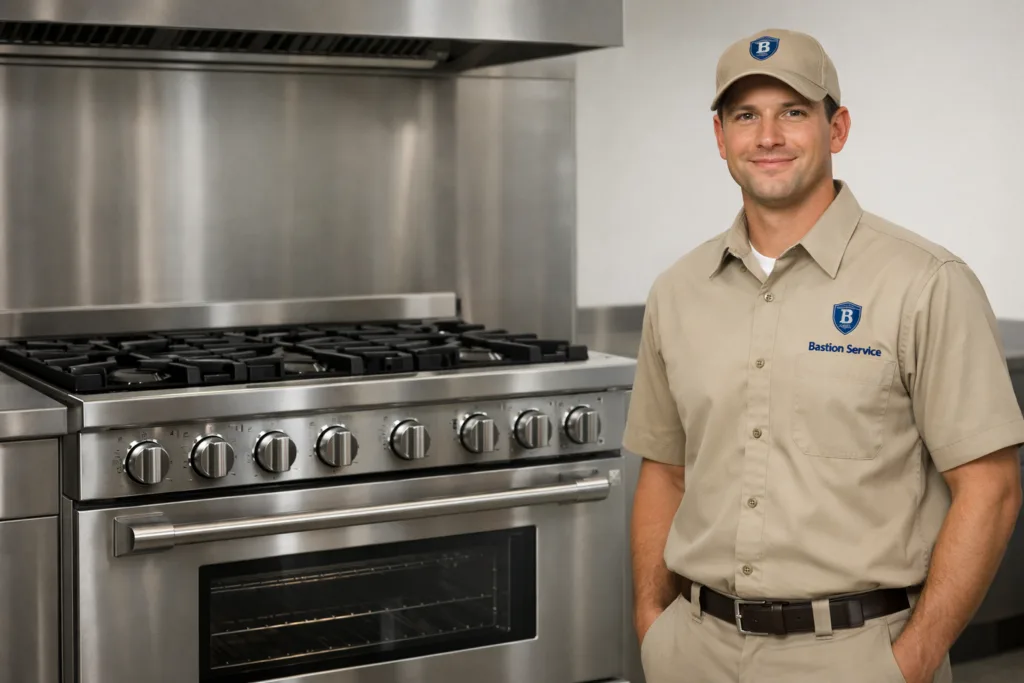




Range problems can disrupt production long before the unit stops working completely. A burner that lights late, an oven section that recovers too slowly, or controls that respond inconsistently can reduce output, affect food quality, and force staff to work around equipment instead of relying on it. For businesses in Playa Vista, service is most effective when the problem is tied to the exact symptom pattern, operating conditions, and how the range is being used during the day.
Related commercial service paths in Playa Vista include Wolf Commercial Repair in Playa Vista, Wolf Oven Repair in Playa Vista, and Wolf Fryer Repair in Playa Vista.
What service should focus on first
Wolf ranges are built for demanding kitchen use, but recurring heat, grease exposure, heavy cycling, and constant operation can lead to failures in ignition systems, burner assemblies, sensors, switches, wiring, and controls. The best repair path starts by confirming whether the issue is isolated to one burner, one oven function, one control circuit, or a broader performance problem affecting the unit as a whole.
That matters because similar complaints can come from very different causes. Poor heat output may relate to flame quality, a control issue, restricted burner ports, sensor drift, or a gas-flow problem. Replacing parts too early can add cost and delay while leaving the root cause unresolved. Bastion Service works on Wolf range issues in Playa Vista with testing aimed at restoring stable operation and helping businesses schedule the right repair at the right time.
Common Wolf range symptoms and what they may indicate
Burners that do not light reliably
If a burner clicks repeatedly, lights slowly, fails to light, or lights and then drops out, the problem may involve the igniter, ignition switch, burner head condition, blocked ports, moisture, wiring, or gas delivery. Intermittent ignition is especially disruptive because staff may not know whether a station will be usable from one cycle to the next.
In many cases, the pattern helps narrow the issue. One burner acting up points toward a localized component or burner assembly problem, while multiple burners with similar behavior can suggest a shared ignition, wiring, or supply-related fault.
Oven heat that is inconsistent or off target
When the oven section overheats, runs cool, cycles unevenly, or struggles to recover after the door is opened, likely causes include sensor faults, thermostat or control problems, calibration drift, failing elements of the heating system, or airflow and heat-distribution issues. These symptoms often show up first as inconsistent results during service rather than a complete shutdown.
If staff are rotating pans differently than usual, extending cook times, or avoiding certain settings because results are unpredictable, the range is already affecting workflow and should be evaluated.
Weak, uneven, or unstable flame
Flame problems are not always dramatic. A burner may still operate, but with reduced strength, uneven flame spread, delayed response, or visible instability. That can indicate contamination in the burner assembly, airflow issues, pressure concerns, or wear in gas-control components. Even when the range remains usable, weak flame can slow line speed and create uneven pan performance.
Clicking, sparking, or ignition activity that does not stop
Continuous clicking can point to ignition components that are not reading conditions correctly, moisture around ignition parts, switch issues, or wiring faults. If the clicking repeats without normal ignition, the range should be checked before staff continue relying on it during active service.
Control and electrical faults
Unresponsive controls, displays that fail intermittently, random shutdowns, or functions that work only part of the time may involve switches, harnesses, terminals, relays, boards, or heat-stressed electrical connections. These problems can look random from the operator side, but they usually leave a traceable pattern once the unit is tested under the same conditions that trigger the complaint.
When to schedule repair instead of waiting
It is smart to schedule service when a Wolf range is still operating but no longer performing consistently. Early diagnosis is often more efficient than waiting for a total outage, especially when the unit is showing repeat symptoms such as:
- burners that need multiple attempts to ignite
- temperature swings that affect cooking results
- slow recovery after normal use
- controls that stop responding during operation
- burners or oven functions that staff have started avoiding
- clicking, sparking, or shutdown behavior that keeps returning
Intermittent problems are worth addressing because they often become harder on operations before they become easier to ignore. A range does not need to be completely down to justify service.
Signs continued use may increase risk or cost
Some range problems become more expensive when the appliance stays in full rotation. Repeated failed ignition can wear related components. Ongoing temperature problems can lead staff to compensate manually, which increases inconsistency and can mask the original fault. Electrical issues that cause occasional shutdowns may progress into broader control failures if heat and vibration continue affecting weakened connections.
If the range is struggling to hold flame, failing to ignite consistently, or showing repeated electrical irregularities, it is worth evaluating whether continued use is reasonable until repair is completed.
If there is a persistent gas odor, stop using the range and follow gas-safety procedures immediately before arranging appliance service.
Preparing for a Wolf range service visit
A few details from the operating staff can make diagnosis faster and more accurate. Helpful information includes:
- whether the issue affects one burner, multiple burners, the oven, or the entire unit
- when the problem started and whether it is getting worse
- whether the issue appears only during heavy use or also at startup
- what staff hear, see, or smell when the problem occurs
- whether any recent cleaning, shutdown, or power interruption happened before the issue appeared
These observations help distinguish between ignition faults, heat-control problems, burner contamination, and electrical issues that may only show up under load.
Repair or replacement: how businesses usually decide
Many Wolf range problems are repairable when the fault is limited to parts such as igniters, sensors, switches, controls, burner components, or related assemblies. Repair is often the practical choice when the unit otherwise matches the kitchen’s needs and the issue can be traced to a defined failure.
Replacement becomes a more serious consideration when the range has multiple unrelated failures, condition has declined across several systems, downtime is becoming frequent, or restoring reliable performance no longer makes financial sense. That decision is best made from actual condition and repair findings rather than age alone.
What businesses in Playa Vista should expect from the repair process
A useful repair visit should do more than confirm that the range has a problem. It should identify the failing system, explain how that failure affects real kitchen performance, and clarify whether the unit can remain in limited use or should be taken out of service until repair is completed. That gives managers a better basis for scheduling, staffing, and next-step decisions.
For Playa Vista businesses dealing with burner faults, ignition trouble, heating inconsistencies, clicking, or control failures, the goal is to move quickly from symptom to repair plan so the range can return to stable day-to-day operation with less disruption to workflow.


