
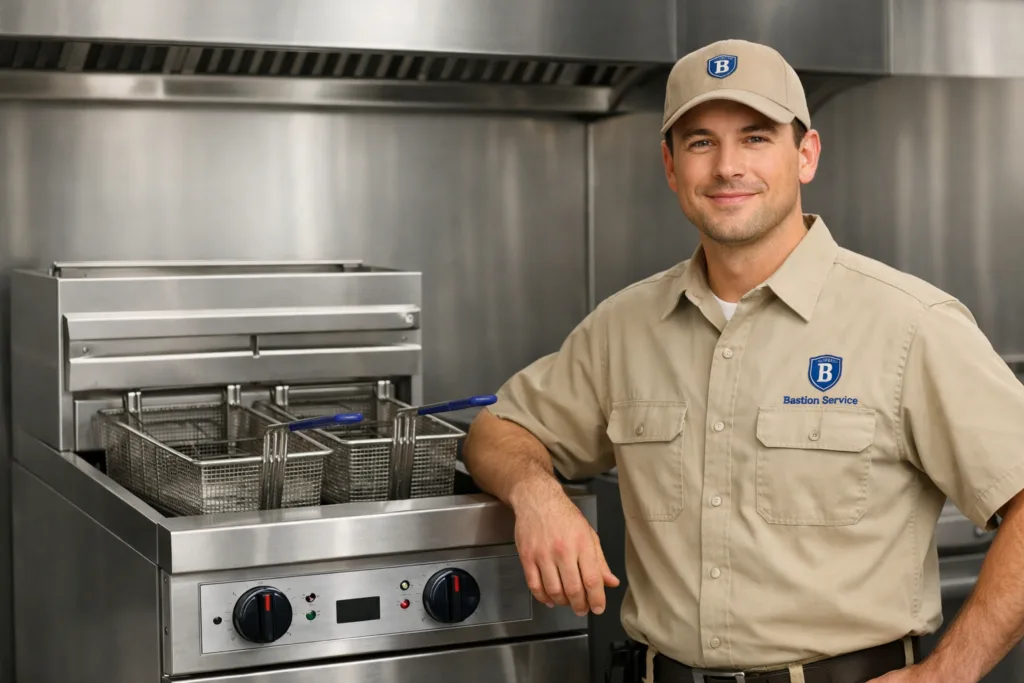




Fryer problems can disrupt production faster than many other cooking issues because they affect speed, consistency, and oil management at the same time. When a Wolf fryer starts lagging on heat-up, holding uneven temperature, or dropping out during a busy service window in Playa Vista, the most useful next step is a service visit focused on the exact failure pattern. Bastion Service helps businesses identify whether the problem is tied to ignition, controls, sensors, heating output, safety shutoffs, or another fault that is limiting normal operation.
Related commercial service paths in Playa Vista include Wolf Commercial Repair in Playa Vista, Commercial Fryer Repair in Playa Vista, and Wolf Oven Repair in Playa Vista.
For businesses in Playa Vista, the goal is not just getting the unit to turn back on. It is restoring stable fryer performance under real working conditions so staff can maintain cook times, batch consistency, and line flow without relying on workarounds that increase stress on the equipment.
Common Wolf fryer symptoms and what they can indicate
Not heating at all
If the fryer will not heat, the cause may be a failed heating component, ignition failure, open safety circuit, control problem, sensor fault, or an electrical supply issue. A proper diagnosis checks whether the unit is receiving the correct power or gas input, whether the control is calling for heat, and whether any high-limit or protective device has interrupted operation.
Slow heat-up or poor recovery
When a fryer eventually reaches temperature but falls behind during production, that usually points to reduced heating performance rather than a total failure. Depending on the model, the issue may involve weak burner performance, element problems, sensor drift, relay or contactor wear, or control behavior that is not maintaining enough heat after baskets are dropped. In day-to-day use, this often shows up as extended cook times, lighter product color, or slower ticket completion during rush periods.
Oil temperature swings
If oil temperature rises too high, drops too low, or cycles unevenly, the fryer may have a thermostat accuracy issue, sensor problem, control fault, or component wear affecting how heat is applied. Temperature instability should be addressed early because it affects food consistency, increases oil breakdown, and can make the fryer seem unreliable even when it still appears to run.
Shutdowns, lockouts, or tripped protection
A fryer that stops during operation, locks out, or trips a breaker may be dealing with overheating, intermittent wiring faults, failing electrical components, ignition interruption, or a high-limit issue. These calls are especially important when the failure happens only after the fryer has been running for a period of time, since that pattern often points to a component that is failing under load or heat.
Error codes and control problems
Fault codes can help narrow down the affected system, but the displayed message is only part of the picture. A code may relate to the temperature circuit, ignition sequence, heating circuit, or communication between controls and components. The real value comes from matching the code to live operating behavior so the repair targets the cause rather than just the warning on the display.
Why a Wolf fryer may stop heating or recover poorly
Heating and recovery issues usually come from one of a few core problem areas: the unit is not producing enough heat, it is not measuring temperature correctly, or it is not controlling the heat cycle the way it should. That can mean a failing sensor, a control board issue, weak burner operation, element trouble, worn switching components, or a safety circuit interrupting the normal heating sequence.
In a working kitchen, poor recovery is often first noticed as an output problem rather than a mechanical one. Staff may see longer cook times, inconsistent browning, or a fryer that seems to need more time between loads. Those are important clues because they help connect the symptom in service to the underlying repair decision.
When to schedule service
Service should be scheduled promptly when the fryer will not reach set temperature, heats too slowly, shows repeated fault codes, cycles unpredictably, shuts down during use, or trips electrical protection. These are not issues that usually correct themselves, and continued operation can increase component damage, oil waste, and workflow disruption.
It is also worth scheduling service when the fryer still operates but food quality is becoming inconsistent. Many kitchens compensate by reducing batch size, adding cook time, or shifting production to another unit. Those adjustments may keep things moving for the moment, but they often hide a developing fault that becomes more expensive once the fryer fails completely.
When continued use can make the problem worse
Running a fryer with unstable temperature control can shorten oil life, stress heating and control components, and create uneven product quality from one batch to the next. Repeated resets, recurring lockouts, or operation with weak recovery can turn a more contained repair into a larger service issue if the underlying cause is left unresolved.
If there is a persistent gas odor around a gas fryer, stop using the unit and follow appropriate safety procedures before arranging repair. Gas-related concerns should be treated as a priority before the fryer is returned to operation.
Repair versus replacement considerations
Most businesses in Playa Vista make the repair-versus-replacement decision based on the failed parts involved, the overall condition of the fryer, prior repair history, downtime costs, and whether the unit still fits daily production needs. A focused repair often makes sense when the failure is isolated and the rest of the fryer is in solid working condition.
Replacement becomes a more serious consideration when there are multiple failing systems, repeat control or heating problems, significant wear, or repair costs that no longer match the value of keeping the unit in service. The best decision usually comes after diagnosis, when the actual source of the failure is known and the likely path back to stable operation is clearer.
What to have ready before a service visit
It helps to note whether the fryer fails at startup, after it has been running for a while, or only during heavier production. If staff have seen error codes, unusual noises, ignition hesitation, temperature overshoot, slow recovery, or shutdowns after basket drops, that information can shorten the troubleshooting process and help isolate intermittent faults.
Useful details include how long the problem has been happening, whether performance changes during the day, and whether the fryer is failing continuously or only on certain cycles. The more specific the symptom pattern, the easier it is to identify whether the problem is in the heat source, control system, sensor circuit, or safety chain.
What a service-oriented diagnosis should clarify
A good fryer repair visit should establish what is failing, how that failure affects operation, whether the unit can be returned to stable performance with a targeted repair, and how urgent the next step is for the business. That means testing heating behavior, temperature response, safety circuits, control function, and any signs of wear that could affect reliability after the immediate issue is corrected.
For a Wolf fryer in Playa Vista, the practical next step is to schedule service when heating, recovery, or control problems begin affecting output or forcing staff to compensate. Early diagnosis helps reduce unnecessary downtime, supports better repair decisions, and gives businesses a clearer path to getting the fryer back into regular operation.


