
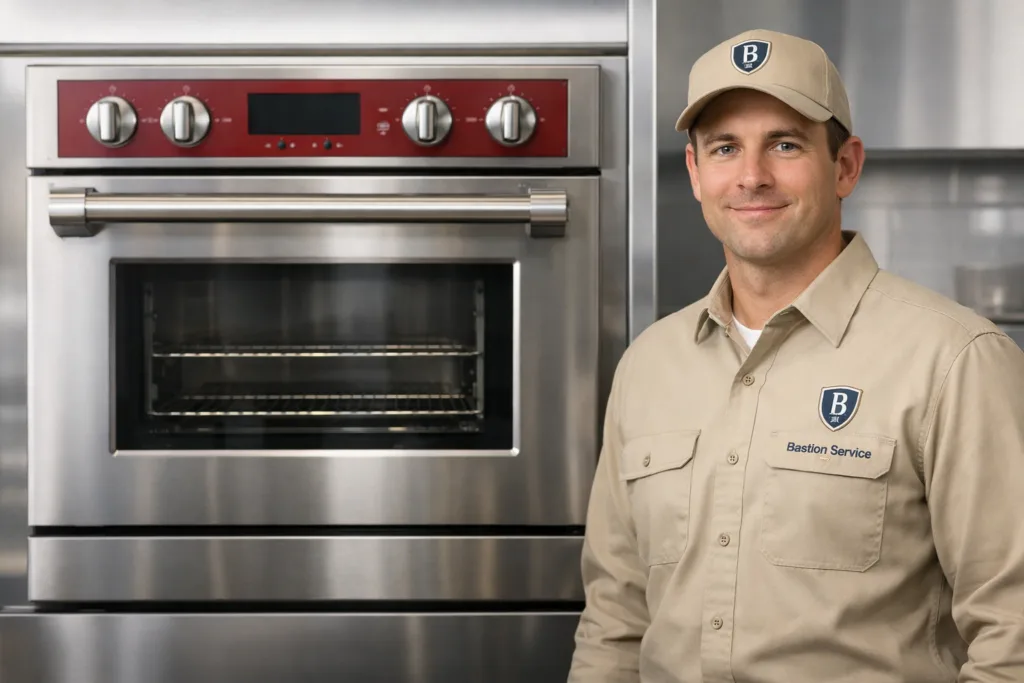




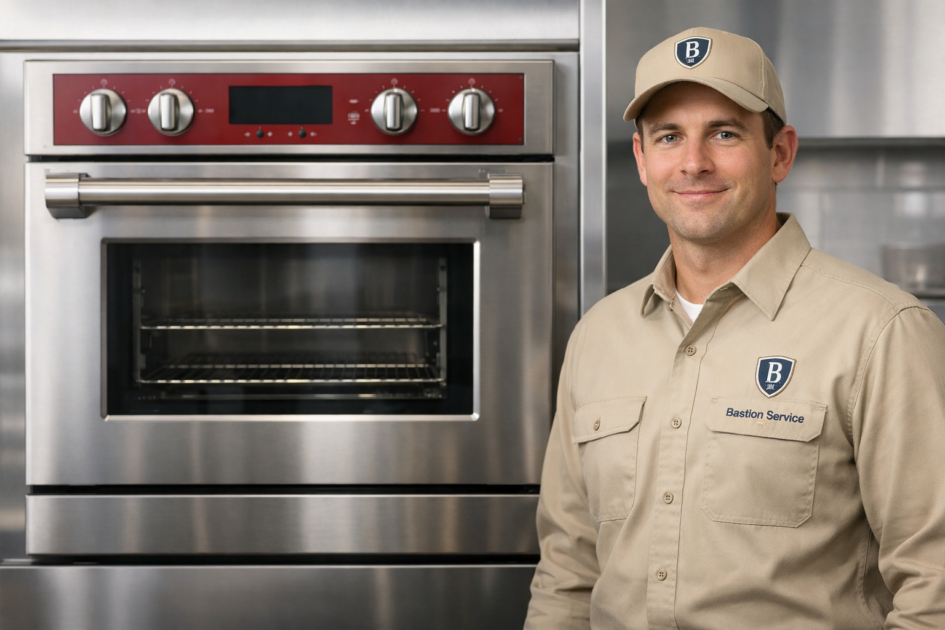
When a Wolf oven starts missing temperature targets, slowing down production, or shutting off during active use, the priority is to identify the exact fault before downtime spreads into service delays and food-quality issues. For businesses in Playa Vista, oven repair is usually most effective when scheduling, diagnosis, and the repair plan are all tied to how the equipment is actually being used day to day. Bastion Service helps businesses in Playa Vista evaluate Wolf oven problems by symptom pattern so the next step is based on test results rather than part-swapping.
Related commercial service paths in Playa Vista include Wolf Commercial Repair in Playa Vista, Commercial Oven Repair in Playa Vista, and Wolf Range Repair in Playa Vista.
Common Wolf Oven Problems That Disrupt Daily Operations
Oven not heating to the set temperature
If the oven powers on but never reaches the programmed temperature, the issue may involve the igniter, heating element, temperature sensor, control board, relays, or power supply components. In a working kitchen, this usually shows up as longer ticket times, incomplete preheat, and staff adjusting cook times just to keep output moving.
Uneven baking or hot and cold spots
Uneven results often point to airflow problems, a weak convection fan, temperature sensor inaccuracies, damaged door seals, or heating components that are no longer cycling correctly. One pan may brown too quickly while another falls behind, which makes consistency difficult across multiple batches.
Slow preheat and poor temperature recovery
When preheat takes longer than normal or the oven struggles to recover after the door opens, it can indicate a weakening heat source, calibration drift, door gasket wear, or control issues that affect cycling. This symptom matters because it reduces throughput and makes timing less predictable during busy periods.
Ignition faults or intermittent startup
Gas models with delayed ignition, repeated clicking, failed starts, or inconsistent burner operation may have igniter wear, gas valve issues, flame-sensing problems, or control faults. These are not symptoms to ignore, especially when the unit starts one cycle and fails on the next.
Control failures, error codes, or random shutdowns
If the display is unresponsive, settings do not hold, error codes appear, or the oven stops mid-cycle, the cause may involve the control interface, internal wiring, safety switches, overheating protection, or board-level communication faults. Intermittent shutdowns can be especially frustrating because the oven may appear normal until it is under real production demand.
Why a Wolf Oven May Not Heat Evenly or Reach Set Temperature
One of the most common service calls involves ovens that seem to heat, but not correctly. The temperature shown on the control may not match the actual cavity temperature, or the oven may overshoot, fall short, or drift during the cycle. That problem is not always caused by the same part. A bad sensor can send inaccurate readings, a failing relay can interrupt normal heating, and a worn igniter or element can reduce heat output enough to create inconsistent results.
Convection models can also develop airflow-related problems that mimic temperature failure. If the fan is not moving heat evenly, staff may assume the oven is running cold when the real issue is circulation. In other cases, a damaged door gasket allows heat to escape, which affects both preheat time and recovery after loading.
Because several faults can create the same symptom, testing matters more than guessing. Accurate diagnosis helps determine whether the issue is calibration-related, component-related, or part of a wider control problem.
Symptoms That Mean Service Should Be Scheduled Soon
Businesses in Playa Vista usually benefit from scheduling service when the oven is still operating but no longer operating reliably. Waiting for a complete failure often turns a manageable repair into a larger interruption.
- Preheat takes noticeably longer than before
- Food finishes unevenly from rack to rack
- The oven needs repeated temperature adjustments to stay usable
- Controls reset, freeze, or ignore programmed settings
- The unit shuts down during operation or between cycles
- Ignition is delayed or startup is inconsistent
- Staff are compensating with tray rotation, extended cook times, or repeated restarts
Those workarounds usually mean the oven is no longer performing within normal operating range, even if it still turns on.
Why Guesswork Repairs Often Lead to More Downtime
Wolf ovens can present similar symptoms across different failures. A unit that seems to have a bad heating component may actually have a sensor problem. A shutdown issue may trace back to wiring or overheating protection rather than the control panel itself. Replacing parts based only on appearance or assumption can waste time, increase service cost, and leave the original fault unresolved.
A more useful repair approach starts with the operating complaint, confirms the conditions under which the problem appears, and tests the components that influence that symptom. That process helps determine whether the failure is isolated or whether multiple wear points are contributing to the same issue.
When Continued Use Can Make the Problem Worse
Some Wolf oven problems allow partial operation, but continued use can still increase risk. An oven running with unstable temperature control may force longer cycles and heavier component strain. Repeated failed ignition attempts can add wear to the ignition system. Electrical faults can worsen if overheating, loose connections, or intermittent power issues are left in service.
If the oven is producing inconsistent results, shutting down unexpectedly, or requiring repeated resets, it is usually better to have the problem evaluated before it affects additional components or causes a more disruptive outage during production.
What a Service Visit Should Clarify
For kitchens and facility teams, the most important outcome is not just that someone looks at the oven, but that the visit provides useful decision-making information. Service should clarify:
- What symptom has been confirmed
- Which component or system is causing the problem
- Whether the oven can remain in limited use safely
- Whether one repair is likely to restore stable operation or if additional issues are present
- How the fault affects heating, ignition, controls, or recovery under load
That information helps managers decide whether to repair immediately, adjust workflow temporarily, or plan around parts and scheduling with less disruption.
Repair Versus Replacement Considerations
In many cases, repair makes sense when the oven is structurally sound and the problem is isolated to serviceable components such as sensors, igniters, fan motors, relays, elements, or controls. A properly diagnosed repair can return the oven to stable performance without changing the workflow built around that unit.
Replacement becomes more likely when there are repeated failures across several systems, severe wear, ongoing control instability, or enough downtime that confidence in the equipment has dropped. The right direction depends on the age and condition of the oven, the scope of the current fault, and whether repair is likely to restore dependable performance rather than short-term operation.
Preparing for Wolf Oven Repair in Playa Vista
Before service is scheduled, it helps to note exactly how the problem appears in real use. Useful details include whether the issue happens during preheat or mid-cycle, whether it affects every cook or only some loads, whether error messages appear, and whether staff have noticed delayed ignition, unusual temperature swings, or inconsistent browning. That symptom history can shorten the diagnostic process and help focus the repair visit on the most likely failure points.
For businesses in Playa Vista, the best next step is to schedule service when the oven starts showing repeatable performance changes instead of waiting for a complete shutdown. Timely diagnosis can help protect uptime, reduce avoidable food-quality issues, and keep repair decisions tied to actual operating conditions rather than temporary workarounds.


