
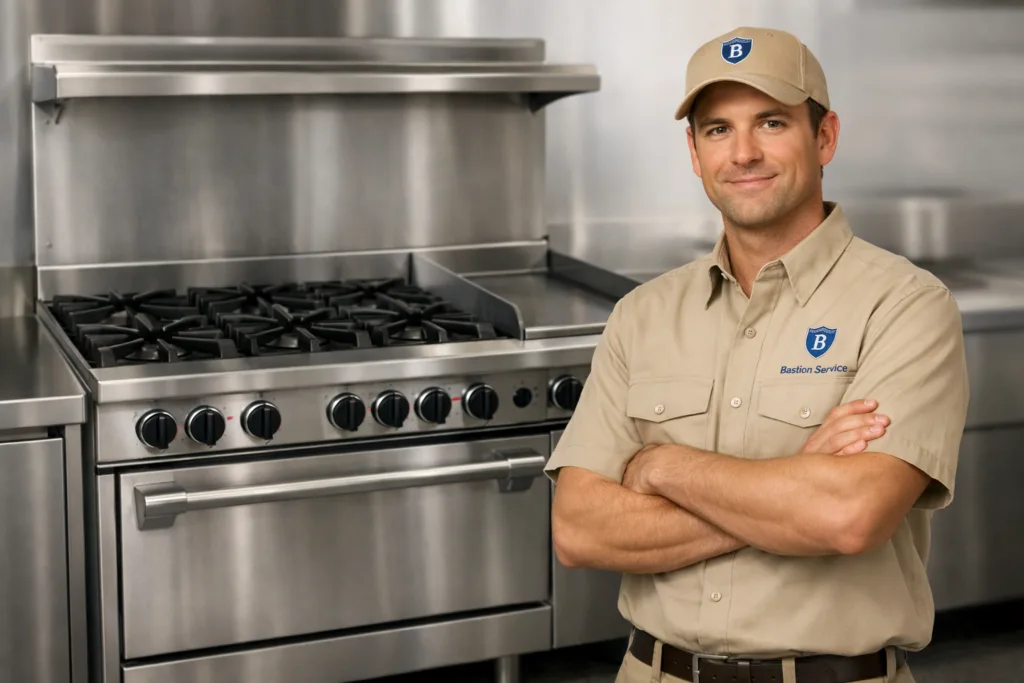





Range problems can interrupt prep, slow ticket times, and force staff to work around equipment that no longer responds the way it should. For businesses in Playa Vista, the most useful service call is one that identifies the actual fault behind the symptom, explains whether continued use is reasonable, and helps move quickly toward repair scheduling with less unnecessary downtime.
Related commercial service paths in Playa Vista include Southbend Commercial Repair in Playa Vista, Southbend Oven Repair in Playa Vista, and Vulcan Range Repair in Playa Vista.
How Southbend range problems usually show up in daily operation
A Southbend range rarely fails in exactly the same way twice. One kitchen may notice a burner that clicks but will not light. Another may see weak flame, slow heat recovery, or oven temperatures that drift during busy periods. In many cases, the symptom staff notices first is only part of the issue, which is why repair decisions should be based on system diagnosis rather than a guess about one visible component.
Inspection often needs to account for ignition response, burner condition, flame pattern, temperature behavior, controls, gas flow, electrical supply, and wear from regular use. That process helps determine whether the problem is isolated, whether multiple components are involved, and whether the unit can stay in service while repairs are arranged.
Common Southbend range symptoms and what they may mean
Burners not lighting or repeated clicking
If a burner clicks repeatedly, lights only part of the time, or does not light at all, the cause may involve the igniter, switch, burner assembly, gas flow, or a control issue affecting ignition. Intermittent lighting tends to get worse during heavy use, especially when staff must retry ignition several times just to keep production moving.
This is also the kind of problem that leads to inconsistent line performance. A burner that works on one shift and fails on the next can create confusion, wasted time, and avoidable disruption during service.
Weak flame or uneven burner performance
A flame that looks low, uneven, or unstable can point to clogged burner ports, gas pressure concerns, wear in burner components, or faults that affect proper combustion. Even when the burner technically lights, poor flame quality can reduce cooking speed and make pan performance less predictable.
When only one section seems weak, it is still worth checking the full operating pattern of the unit. In some cases, a single underperforming burner is part of a broader problem rather than a standalone failure.
Temperature swings or poor heat retention
If the range or oven section runs hotter than expected, falls short of set temperature, or drifts during use, likely causes can include thermostat issues, sensing problems, calibration drift, control faults, or supply-related performance problems. Staff often notice this first through uneven food results, longer cook times, or repeated adjustments made during the day.
When teams are constantly compensating for temperature inconsistency, the equipment is already affecting output. That usually means service should be scheduled before the problem expands into a larger interruption.
Controls that do not respond normally
Knobs or controls that feel inconsistent, limit flame response, or fail to hold a stable setting can indicate valve wear or internal control failure. This symptom often develops gradually, which makes it easy to overlook until the range becomes difficult to operate with confidence.
For kitchens that depend on steady heat and repeatable results, control issues are not minor annoyances. They directly affect consistency, pace, and the ability to trust the equipment during peak demand.
Delayed ignition, unusual odors, or other warning signs
Delayed ignition should be evaluated promptly, especially if the burner does not light cleanly after normal startup. Repeated clicking, hesitation before ignition, or abnormal odor can point to an ignition or gas-delivery issue that should not be ignored.
If there is a persistent or strong gas smell, stop using the range and follow site safety procedures before arranging appliance repair. That is not a condition to monitor casually or push through during service.
Why the right diagnosis matters before parts are replaced
Southbend range problems are often symptom-driven but not symptom-defined. A burner that appears to be the problem may actually be reacting to a shared ignition fault, gas supply issue, or failing control component elsewhere in the unit. Replacing parts too early can increase cost, delay resolution, and leave the original problem in place.
Bastion Service helps Playa Vista businesses narrow down what is actually failing so repair planning is based on equipment behavior, not assumption. That matters when downtime, staffing, and kitchen workflow depend on getting the repair path right the first time.
When to schedule service instead of waiting
It makes sense to schedule repair when the range shows any recurring issue that affects output, timing, or safe operation. That includes ignition trouble, inconsistent heating, unstable flame, delayed startup, unreliable controls, or a temperature problem that staff have started working around.
- Burners need multiple attempts to light
- Flame output has changed noticeably
- Heat is inconsistent across burners or sections
- Temperature recovery is slower than normal
- Knobs or controls do not respond predictably
- Operators are adjusting workflow to compensate for the range
Waiting usually increases disruption rather than reducing it. A smaller burner or ignition problem can become a broader outage when nearby components are stressed by repeated restarts, extended run time, or continued use under unstable conditions.
How continued use can make the repair more involved
When a range is not lighting correctly, heating evenly, or responding to controls as expected, staff often compensate by restarting burners, shifting loads, or running the unit longer to get the same result. Those workarounds may keep service moving temporarily, but they can also increase wear and make the final repair more complex.
The goal is not just to restore operation for the moment. It is to address the fault before it affects more of the unit, creates avoidable downtime, or turns one service issue into multiple repair needs.
Repair or replacement: what businesses should weigh
Repair is often the sensible option when the problem is contained and the range is otherwise in solid operating condition. Replacement becomes a more serious consideration when a unit has repeated major failures, visible overall wear, or downtime exposure that no longer fits the demands of the kitchen.
A useful service assessment looks at more than the current symptom. It should also consider how the equipment is used, how often the issue has recurred, whether multiple systems are showing wear, and what level of reliability the operation needs going forward.
What to have ready before a service visit
A little preparation can make the appointment more efficient and help narrow down the fault faster. If possible, businesses should be ready to describe when the problem started, whether it affects one burner or multiple sections, what staff have observed during ignition or heating, and whether the issue is constant or intermittent.
- Model information if available
- A short description of the main symptom
- Whether the issue happens at startup, during use, or all day
- Any recent changes in flame, heating time, or control response
- Whether the unit is still being used or has been taken offline
That information helps connect the reported symptom to likely causes and supports better scheduling, parts planning, and next-step decisions for the business.
Southbend range service focused on keeping Playa Vista kitchens moving
When a range begins affecting consistency, speed, or safe operation, the next step should be timely diagnosis and a repair plan built around the actual failure. For businesses in Playa Vista, that means treating burner issues, ignition trouble, temperature swings, and control faults as service decisions that affect daily workflow, not just minor equipment annoyances. The sooner the problem is evaluated, the easier it usually is to protect uptime and schedule the right repair with less disruption.


