
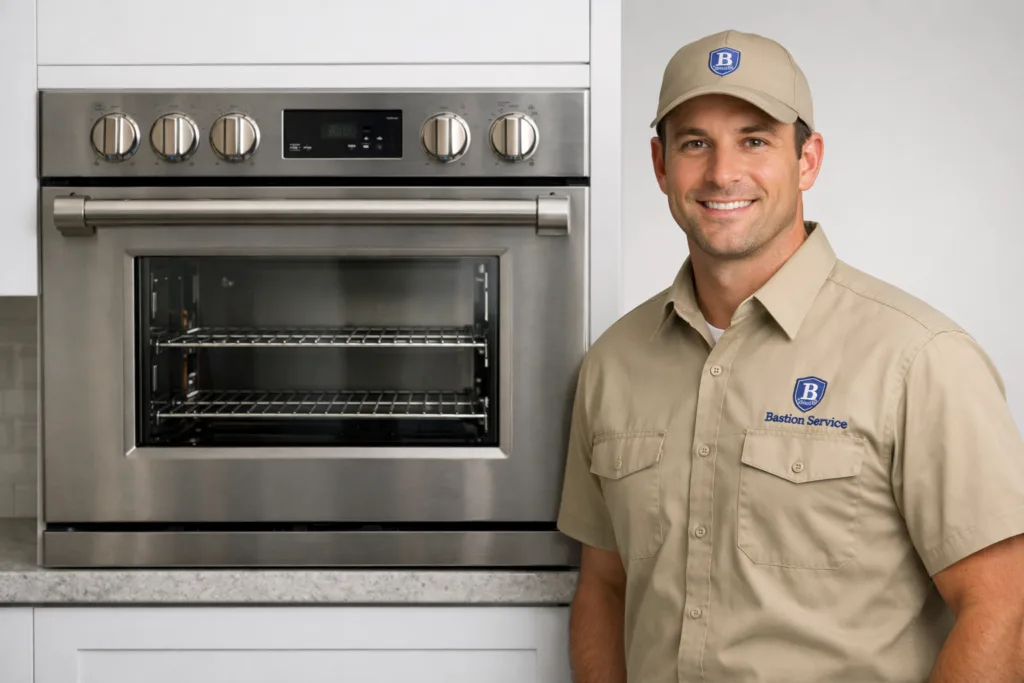




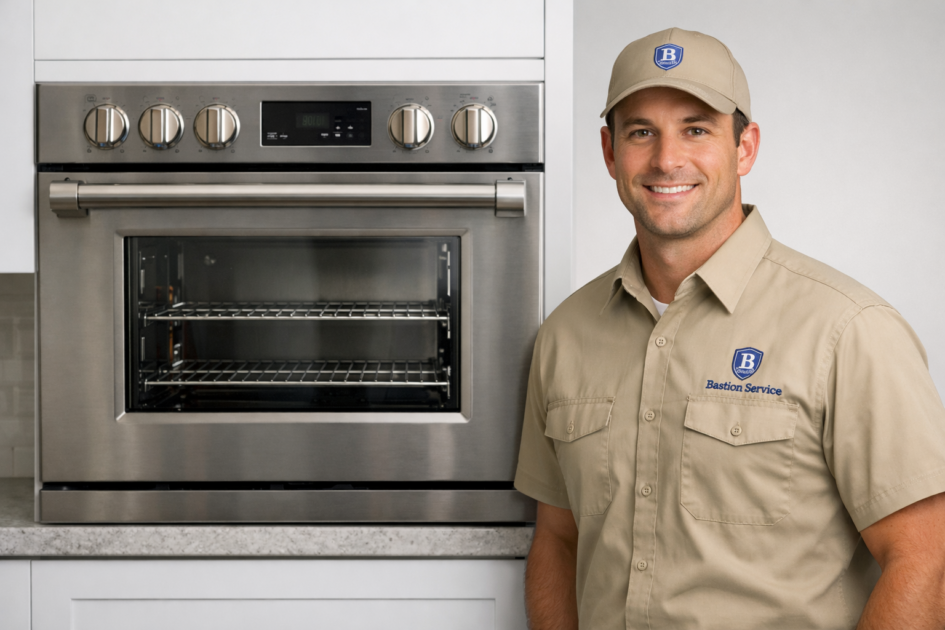
When a Wolf oven starts running hot, lagging on preheat, or shutting down mid-cycle, kitchen timing and product consistency can slip quickly. For businesses in Cheviot Hills, the most effective next step is to schedule service based on the actual symptom pattern rather than assume a single failed part, because heating, ignition, control, airflow, and power issues can produce similar complaints.
Related commercial service paths in Cheviot Hills include Wolf Commercial Repair in Cheviot Hills, Commercial Oven Repair in Cheviot Hills, and Wolf Range Repair in Cheviot Hills.
Bastion Service works with Cheviot Hills businesses that rely on Wolf ovens for daily production. The goal is to identify what is failing, determine whether the problem is isolated or part of wider wear, and help managers decide on the most sensible repair path for uptime, safety, and workflow.
Why a Wolf oven may not heat evenly or reach set temperature
Uneven baking, slow temperature climb, hot spots, or food finishing inconsistently often point to a problem with temperature sensing, heat delivery, or heat retention. In a busy kitchen, these issues may show up before anyone notices an obvious fault code. Staff may start rotating pans more often, extending cook times, or adjusting recipes to compensate.
Common causes include:
- Temperature sensor drift that causes the control to read cavity temperature incorrectly
- Ignition or burner problems that reduce heat output or interrupt normal cycling
- Heating element weakness or failure on electric configurations
- Control board or relay faults that affect how heat is regulated
- Door gasket wear that allows heat loss and slows recovery
- Airflow issues inside the oven cavity that create uneven results
These symptoms matter because they affect more than food quality. They can slow ticket times, create waste, and force staff to build workarounds into normal production.
Common Wolf oven symptoms and what they often indicate
Oven powers on but does not heat
If the display is active but the oven never reaches cooking temperature, the issue may involve the igniter, gas valve function, heating element, relay, wiring, or an internal safety circuit. A no-heat condition should be scheduled promptly because the failure is usually already beyond minor adjustment.
Slow preheat
Long preheat times often suggest declining heating performance rather than a simple calibration issue. Weak ignition, aging elements, sensor inaccuracies, or sealing problems can all reduce efficiency. In daily operation, this usually creates scheduling pressure long before the oven stops working completely.
Temperature swings during operation
If the oven overshoots, drops below target, or cycles unpredictably, the problem may be tied to the sensor, thermostat logic, electronic controls, or burner regulation. Temperature instability is especially disruptive when the oven is used for repeatable menu items that depend on consistency from batch to batch.
Intermittent shutdowns or random resets
An oven that cuts out during service, restarts unpredictably, or locks up between cycles may be dealing with board communication issues, overheating components, loose connections, or incoming power irregularities. Intermittent faults are important to diagnose carefully because replacing parts based on guesswork often leads to repeat downtime.
Error codes or unresponsive controls
Display errors, keypad failures, or settings that do not respond correctly can point to control board problems, sensor feedback issues, harness faults, or moisture and heat damage within the control area. When controls are unreliable, the oven may still operate inconsistently even if it appears to heat.
Why diagnosis matters before parts are ordered
Wolf ovens are built for demanding use, but similar symptoms can come from very different failures. An oven that bakes unevenly may have a sensor issue, a burner performance problem, a failing element, or heat loss at the door. An oven that will not heat may involve ignition, controls, electrical supply, or protective shutdown conditions.
That is why proper testing matters. A service visit should confirm the complaint, identify the failed component or system, and check for related wear that could affect the repair outcome. This helps reduce unnecessary part replacement and gives the business a clearer picture of expected reliability after service.
When to schedule Wolf oven repair
It makes sense to arrange repair when the oven begins showing any of the following signs:
- Food cooks unevenly from one rack position to another
- Preheat takes noticeably longer than normal
- The unit struggles to recover temperature between cycles
- Ignition is inconsistent or delayed
- The oven shuts off before the cycle is complete
- The display shows fault codes or the controls act unpredictably
- Staff need repeated resets or manual adjustments to keep production moving
These are not minor inconveniences when the oven is part of daily output. Small heat or control problems often develop into broader failures if the unit remains in full rotation.
When continued use can increase risk or downtime
Operating an oven with unstable temperature control, weak ignition, electrical stress, or repeated shutdowns can place extra strain on surrounding components. What begins as a single faulty part can lead to additional wear in relays, boards, burners, sensors, or wiring if the unit keeps cycling under demand.
If there is a persistent gas smell, stop using the oven and address the gas safety concern before arranging appliance repair. If there is repeated clicking without normal ignition, that still warrants prompt service because ignition faults can interfere with reliable operation and create unnecessary downtime.
Repair or replacement: how businesses usually decide
The right choice depends on the age of the oven, the service history, the condition of key components, and how much downtime the operation can absorb. If the fault is isolated and the rest of the unit is in sound condition, repair is often the practical option. If there are repeated control failures, multiple systems wearing out at once, or ongoing reliability problems after prior service, replacement planning may make more sense.
For businesses in Cheviot Hills, the useful question is not only whether the oven can be repaired, but whether the repair is likely to restore stable performance in a way that supports normal production.
What to expect from a focused service visit
A productive appointment should do more than confirm that the oven is malfunctioning. It should narrow the fault to a specific system, test the components most likely involved, and explain whether the problem centers on heating, sensing, ignition, control response, airflow, or power delivery. That gives managers a better basis for approving repair, planning around downtime, and avoiding repeated calls for the same unresolved issue.
If your Wolf oven is affecting output, timing, or food consistency in Cheviot Hills, scheduling service around the actual symptoms is the best way to move from disruption to a workable repair plan.


