
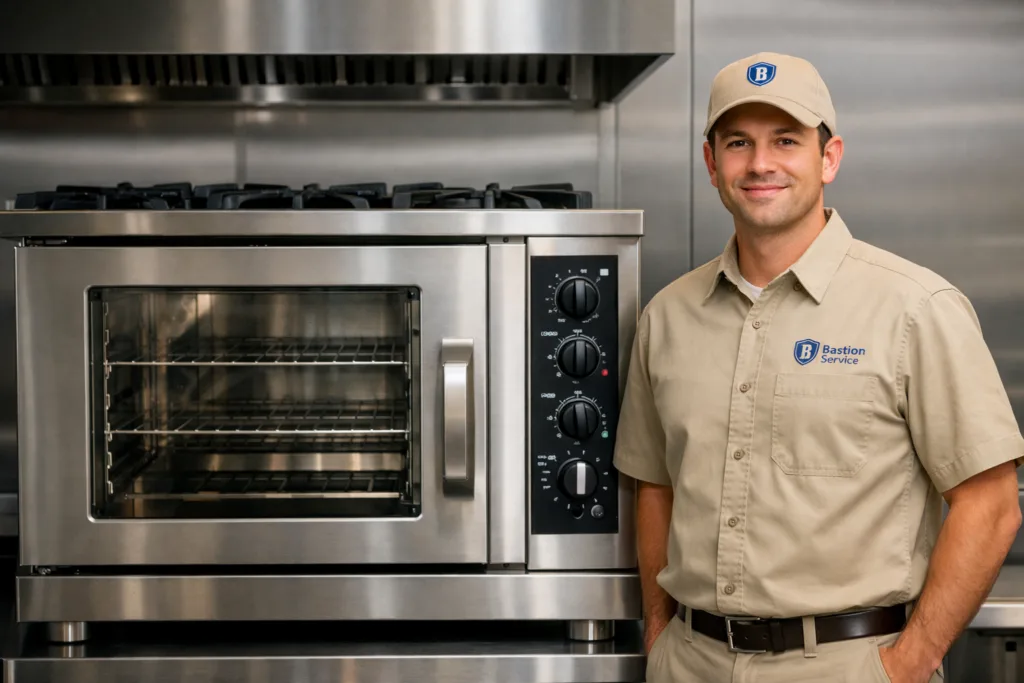




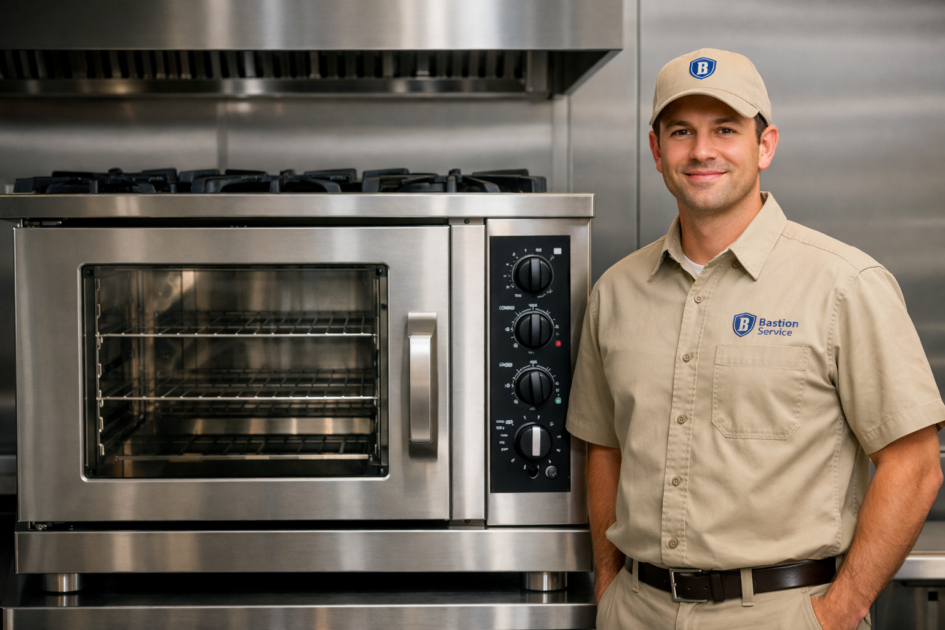
When a Vulcan oven starts missing temperature, heating unevenly, or dropping out during service, the fastest way to protect output is to move from symptoms to diagnosis without guessing at parts. For businesses in Cheviot Hills, oven repair is usually less about a single complaint and more about how that complaint is affecting timing, consistency, and daily kitchen workflow. Bastion Service handles Vulcan oven repair with a service-first approach that focuses on testing the actual failure, identifying related wear, and scheduling the next step around operational needs.
Related commercial service paths in Cheviot Hills include Vulcan Commercial Repair in Cheviot Hills, Commercial Oven Repair in Cheviot Hills, and Vulcan Range Repair in Cheviot Hills.
What a proper Vulcan oven diagnosis should confirm
Two ovens can show the same symptom and fail for completely different reasons. An oven that will not reach set temperature may have an ignition issue, a weak heating circuit, a sensor problem, airflow trouble, a control fault, or heat loss at the door. That is why a worthwhile service visit should confirm the source of the problem instead of treating every heating complaint as a parts swap.
On Vulcan ovens, diagnosis often includes checking heat production, burner or element performance, ignition sequence, thermostat or sensor accuracy, control response, convection airflow where applicable, door seal condition, and recovery after the door has been opened. That process helps clarify whether the repair is straightforward, whether continued use is likely to create additional failures, and whether the unit still makes sense to keep in service.
Common Vulcan oven symptoms and what they may indicate
Not heating or taking too long to preheat
If the oven is cold, slow to preheat, or stalls below the selected temperature, the cause may involve igniters, gas delivery issues, heating elements, relays, control boards, limit devices, wiring, or incoming power problems. In many cases, operators notice longer preheat times first, then a gradual decline in cooking performance before the oven stops heating properly.
For kitchens that rely on repeatable batch timing, this type of problem should be addressed early. A unit that still heats “a little” can still cause lost time, undercooked product, and rushed workarounds that make service harder on staff.
Uneven baking, hot spots, or poor temperature stability
When one pan cooks correctly and another lags behind, the issue may be tied to weak airflow, a failing convection fan, calibration drift, sensor inaccuracies, burner inconsistency, or heat escaping around the door. Temperature swings can also come from controls that are no longer managing heat correctly under load.
This is one of the most important complaints to evaluate in a working kitchen because the oven may appear functional while still producing inconsistent results. If staff are rotating trays, extending cook times, or avoiding certain rack positions, the equipment is already affecting product quality and throughput.
Ignition problems or delayed burner operation
Intermittent ignition often shows up as delayed startup, repeated clicking, inconsistent burner lighting, short cycling, or occasional failure after the oven has already been running. Possible causes include igniters, flame sensing issues, gas valve problems, control faults, or unstable electrical connections.
These problems rarely improve on their own. If the oven works during one shift and refuses to cooperate on the next, it usually needs testing under actual operating conditions rather than casual observation between services.
Control, display, and thermostat complaints
If the display is erratic, the controls do not respond properly, or the oven temperature does not match the setting, the root issue may be in the control system, sensor circuit, harness connections, or power delivery to the unit. Some ovens also appear to have a heating fault when the real problem is inaccurate temperature feedback telling the oven to cycle incorrectly.
That distinction matters because replacing heating components will not solve a bad input or control problem. Accurate diagnosis keeps repair decisions efficient and reduces repeat downtime.
Door seal and heat retention problems
A worn gasket, poor hinge alignment, or weak latch can let heat escape throughout the cooking cycle. The result may be slow recovery, temperature inconsistency, longer cook times, and extra strain on the oven as it works harder to maintain heat. These issues are easy to overlook because the unit still turns on and gets warm, but they can have a measurable effect on output during a full day of use.
Why a Vulcan oven may not heat evenly or reach set temperature
Uneven heat and temperature shortfall usually point to one of a few system groups: heat generation, temperature sensing, airflow, or heat retention. If the burner or element is weak, the oven may never build enough heat. If the sensor is reading incorrectly, the control may shut heat off too early or keep it on too long. If airflow is compromised in a convection model, heat may not circulate evenly through the cavity. If the door is leaking heat, the oven may struggle to recover every time it cycles.
In real-world operation, more than one factor may be present at the same time. A slightly weak igniter combined with a worn door gasket and a drifting sensor can create a complaint that sounds simple but performs like a major fault. That is why temperature issues should be diagnosed as a system problem, not just a single bad part.
Signs the oven problem is already affecting operations
- Preheat times are getting longer than normal
- Cook times have been adjusted to compensate for weak heat
- Staff are rotating pans or avoiding certain rack positions
- The oven must be restarted to finish a shift
- Temperature readings do not match the selected setting
- The unit shuts down unexpectedly during use
- Product quality changes from one batch to the next
Once these patterns show up, the oven issue has moved beyond minor inconvenience. It is affecting labor, consistency, and planning, which makes scheduled repair more practical than waiting for a complete failure.
When continued use may make the repair worse
Some faults become more expensive when the oven is forced through repeated service cycles. An ignition problem can stress controls and safety components. Poor airflow can overwork heating parts. Chronic overheating can damage wiring, sensors, and adjacent components. Repeated shutdowns can also interrupt production at the worst possible time, especially when the oven is being pushed to compensate for declining performance.
If the unit shows burning electrical odor, repeated tripping, erratic high heat, or unstable ignition, it is best to stop normal use until the cause is checked. If there is a strong or persistent gas smell, stop using the appliance and address the safety issue immediately before arranging repair.
Repair or replace: how businesses usually make the decision
Many Vulcan oven problems are repairable when the cabinet and core structure are sound and the issue is limited to serviceable components such as controls, sensors, ignition parts, fans, relays, gaskets, or wiring repairs. In those cases, repair often makes sense because it restores stable cooking performance without changing workflow or kitchen layout.
Replacement becomes a stronger option when the oven has repeated major failures, severe wear across multiple systems, chronic control problems, or repair costs that no longer align with the unit’s remaining service value. The most useful recommendation comes after inspection of the actual condition, not just the symptom reported over the phone.
How to prepare for a service visit
Before scheduling repair, it helps to note exactly what the oven is doing and when the problem appears. Useful details include whether the issue happens during preheat or after the oven is hot, whether the fault is constant or intermittent, whether the display shows an error, and whether the complaint affects all cooking cycles or only certain temperature ranges.
It is also helpful to mention if staff have noticed delayed ignition, unusual noises, poor recovery after door openings, or changes in finished product. The more specific the symptom pattern, the easier it is to narrow the likely cause and plan the repair path efficiently.
Service-focused oven repair for businesses in Cheviot Hills
Businesses in Cheviot Hills need oven service that is tied to actual operating impact, not generic troubleshooting. The goal is to identify why the Vulcan oven is failing, explain what that failure means for ongoing use, and move quickly toward the most sensible repair decision. If the unit is affecting production, temperature consistency, or safe operation, scheduling service early usually prevents a narrower issue from turning into a larger interruption.
Whether the complaint is slow preheat, uneven baking, ignition trouble, control behavior, or unexplained shutdowns, the best next step is a symptom-based inspection that connects the fault to a real repair plan and a realistic timeline for getting the oven back into dependable use.


