
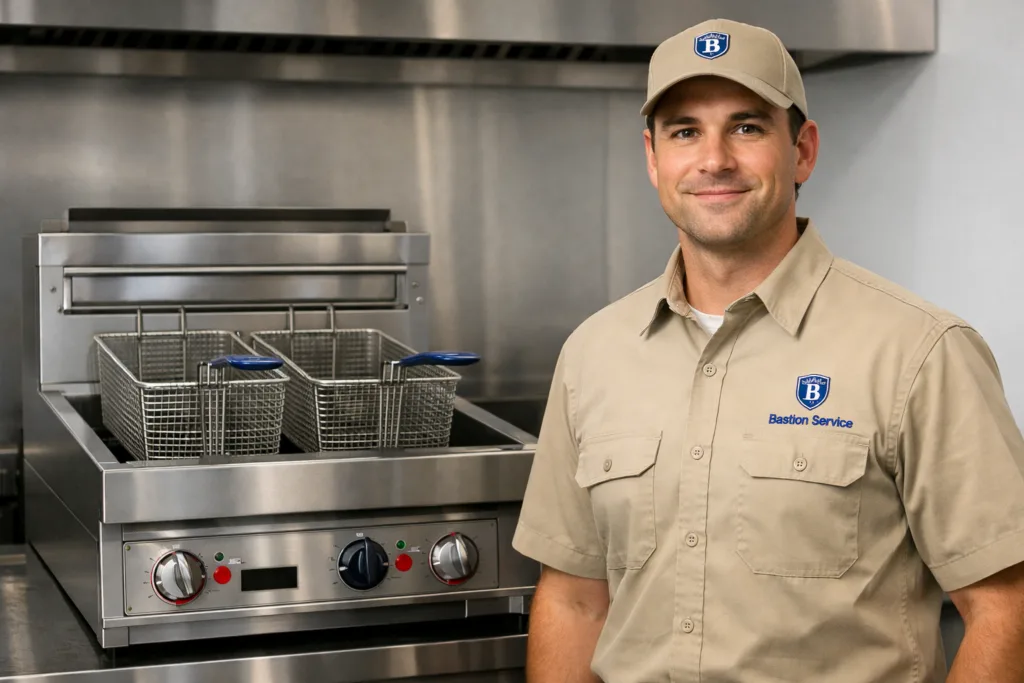




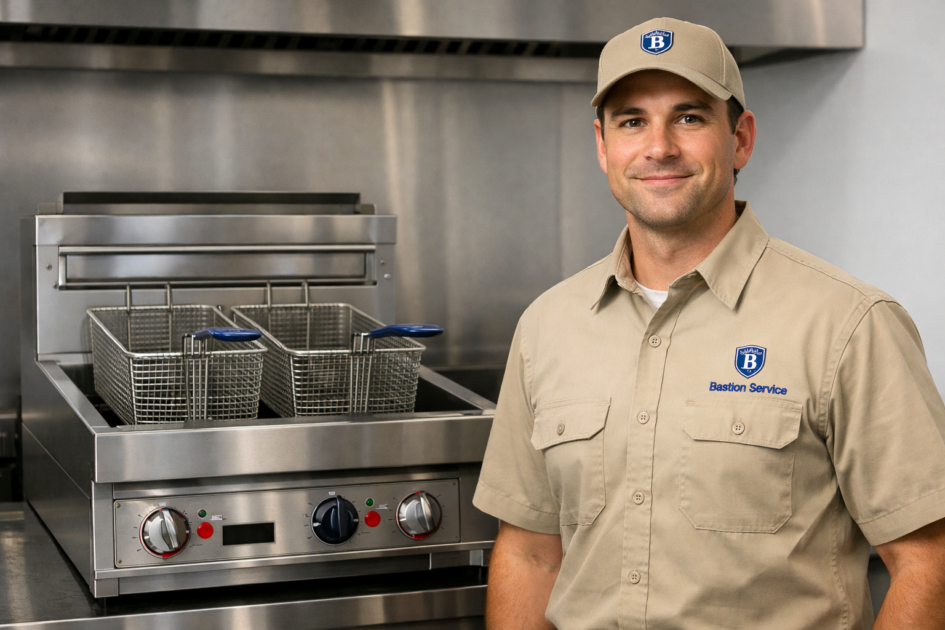
Fryer problems rarely stay small for long. When a Wolf unit starts lagging on recovery, drifting off temperature, or shutting down mid-shift in Cheviot Hills, the smartest next step is service based on the actual failure pattern, not a guess. Bastion Service works with businesses in Cheviot Hills to identify what is affecting heat output, control response, and safe operation so repair scheduling can match the urgency of the problem and the demands of the kitchen.
Related commercial service paths in Cheviot Hills include Wolf Commercial Repair in Cheviot Hills, Commercial Fryer Repair in Cheviot Hills, and Wolf Oven Repair in Cheviot Hills.
How Wolf fryer issues usually show up in daily operation
Many fryer faults first appear as production issues rather than obvious equipment failure. Staff may notice longer cook times, darker or lighter batches, repeated resets, or one fryer performing differently from the rest of the line. Those symptoms matter because they often point to developing problems in the heating system, temperature sensing, limits, controls, or power supply.
Early service is often less disruptive than waiting for a full outage. A fryer that still turns on but no longer heats correctly can create inconsistent food quality, wasted oil, and bottlenecks during peak demand.
Why a Wolf fryer may stop heating or recover too slowly
If the fryer does not reach set temperature, heats very slowly, or struggles to recover after product is dropped, several different faults may be possible. The visible symptom is similar, but the repair path can be very different depending on what testing shows.
Heating circuit problems
A failed or weakening heating component can reduce output enough to create slow warm-up times and poor recovery. In some cases, the fryer may appear to run normally at startup but fall behind once the workload increases.
Sensor or temperature-control faults
When the control system is receiving inaccurate temperature information, the fryer may stop heating too early or cycle unevenly. This often shows up as product inconsistency, especially when staff are forced to adjust cook times to compensate.
High-limit or safety interruptions
A fryer that is repeatedly hitting a protective limit may cut heat before it should. Even if the unit restarts, recurring limit activity is a warning sign that should be inspected before continued use.
Electrical supply or connection issues
Loose connections, intermittent supply problems, or failing electrical components can cause weak or inconsistent heating. These faults may be mistaken for a bad control until the unit is tested under operating conditions.
Symptoms that point to temperature instability
Not every fryer problem is a complete loss of heat. Some units still operate, but oil temperature swings enough to affect output and consistency. That can be just as disruptive as a full shutdown because it changes cook results from batch to batch.
- Oil overheats above the selected setting
- Displayed temperature does not match actual cooking performance
- Temperature drops too far during normal production
- The fryer cycles erratically or seems slow to respond
- Staff keep changing settings to maintain acceptable results
These signs can indicate a sensor issue, calibration drift, control failure, or a problem in how the fryer regulates heat. Continued operation under unstable temperature conditions can shorten oil life and increase stress on internal parts.
What unexpected shutdowns usually mean
A Wolf fryer that powers off during use, locks out, or needs repeated resets is usually dealing with more than a minor nuisance. Shutdowns often involve safety circuits doing what they are designed to do in response to an underlying fault. The cause may be excessive temperature, a control issue, unstable power, or another condition that the unit interprets as unsafe.
If the fryer only fails occasionally, the problem can still be serious. Intermittent faults are often harder on workflow because they create uncertainty. A station that cannot be trusted during a rush reduces usable capacity even before the fryer fails completely.
Oil leaks, draining problems, and cleanup-related warning signs
Some service calls begin with a housekeeping complaint and turn out to be a repair issue. Oil around the base, slow draining, a valve that does not seal correctly, or buildup where oil should move freely can all interfere with normal operation.
These issues affect more than cleanup time. Poor oil handling can slow changeouts, create safety concerns around the line, and add strain to staff trying to keep production moving. If the fryer is leaking or draining poorly, it is worth addressing before the problem spreads to other operational areas.
Why diagnosis should come before parts replacement
Fryer symptoms overlap more than many operators expect. Slow recovery can come from weak heat output, but it can also result from bad temperature feedback or a control problem. Overheating may look like a simple setting error while actually pointing to regulation failure. Replacing parts too early can increase cost without solving the real cause.
A thorough service visit helps answer the questions that matter to a business: whether the fryer is safe to keep online, whether the issue is isolated or part of a larger pattern, and whether repair is likely to restore stable operation without repeated callbacks.
When to take the fryer offline
Some problems justify immediate shutdown until service is completed. That is especially true when the fryer shows clear overheating, repeated safety trips, electrical burning smells, visible oil leakage near active components, or erratic behavior that staff cannot predict. In those situations, keeping the unit in service can increase both repair cost and operating risk.
It is also wise to stop using the fryer when the team has started building workarounds around it. Frequent resets, manual timing adjustments, or avoiding one fryer station altogether usually means the equipment is no longer reliable enough for normal production.
Repair or replace?
Many Wolf fryer problems are repairable when the unit is otherwise in solid condition and the fault is limited to serviceable components such as controls, sensors, switches, heating-related parts, or drain assemblies. In those cases, targeted repair can make sense and restore predictable performance.
Replacement becomes a stronger consideration when there are multiple failures at once, long-running reliability problems, severe wear, or repair costs that are out of proportion to the unit’s overall condition. The value of diagnosis is that it separates a fixable equipment issue from a larger lifecycle decision.
Preparing for a service visit
Good symptom details can help speed up the repair process. Before service is scheduled, it helps to note whether the fryer fails during startup or after it has been running, whether the issue affects one unit or multiple units, whether temperatures are too low or too high, and whether staff have seen shutdowns, error displays, leaks, or slow draining.
Even simple observations can help narrow the cause faster. The more specific the symptom pattern, the easier it is to plan the right repair approach and reduce avoidable downtime.
Service decisions that support kitchen uptime
For businesses in Cheviot Hills, fryer service is really about restoring output, consistency, and confidence at the station. When a Wolf fryer starts showing heat problems, unstable temperatures, lockouts, or oil-handling issues, prompt evaluation helps determine whether the unit can be repaired efficiently, whether it should stay offline, and what next steps make the most sense for the kitchen.


