





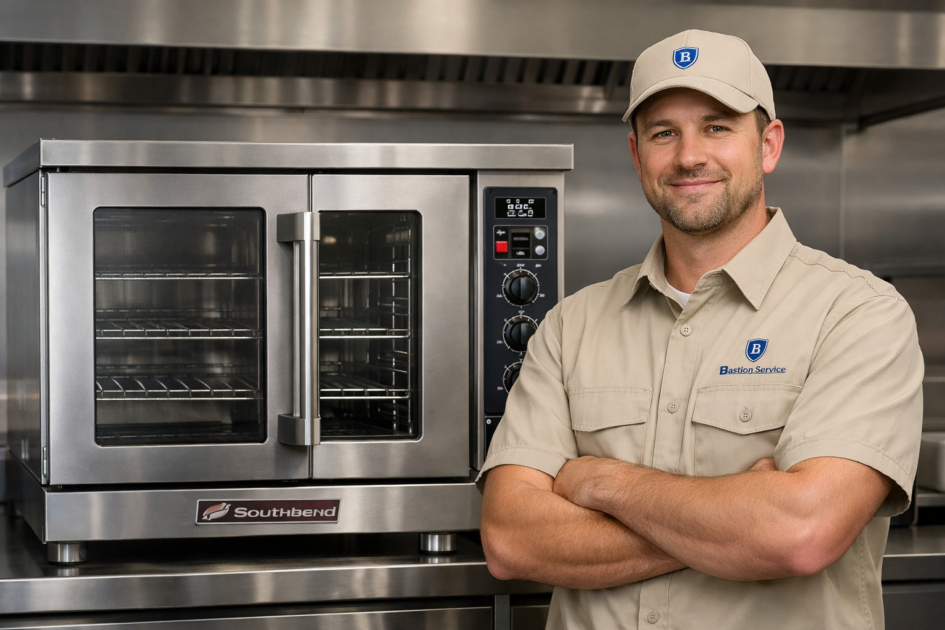
When a Southbend oven starts heating unevenly, runs too hot, loses temperature during a rush, or fails to start a cook cycle, the issue can interrupt production quickly. In Cheviot Hills, oven service should begin with the exact symptom pattern, because similar performance problems can come from very different faults such as ignition trouble, sensor drift, failing controls, gas flow issues, worn door hardware, or electrical supply problems. Bastion Service handles Southbend oven repair for businesses in Cheviot Hills with attention to diagnosis, repair planning, downtime impact, and the next step needed to get equipment back into usable condition.
Related commercial service paths in Cheviot Hills include Southbend Commercial Repair in Cheviot Hills, Commercial Oven Repair in Cheviot Hills, and Southbend Range Repair in Cheviot Hills.
How Southbend oven problems affect daily kitchen operations
An oven problem is rarely limited to the oven itself. When heat output becomes inconsistent, kitchens may see longer ticket times, uneven product quality, repeated batch adjustments, and added strain on staff who start compensating for the machine instead of relying on it. In a busy operation, even a partial failure can create workflow problems before the unit stops completely.
That is why symptom-based service matters. A Southbend oven that preheats slowly, drops temperature after the door opens, or shuts down mid-cycle may still appear to be working, but it is no longer performing in a stable way. Identifying whether the issue is tied to heating, airflow, controls, ignition, safety circuits, or mechanical wear helps determine whether the repair is straightforward or whether the unit is showing broader reliability concerns.
Common Southbend oven symptoms and what they may indicate
Not heating or not reaching the selected temperature
If the oven does not heat at all, the cause may involve ignition failure, a heating component fault, a safety interruption, control failure, or incoming power issues. If it does heat but stalls below the set temperature, the problem may be related to weak burner performance, a bad sensor reading, thermostat or control issues, airflow restrictions, or heat loss through worn seals or misaligned doors.
This symptom is especially disruptive because it can look like a calibration issue from the kitchen floor while the real fault is somewhere else in the heat system. Service should confirm whether the oven is producing heat correctly, sensing temperature accurately, and cycling as designed under load.
Uneven baking or hot and cold spots
When one rack cooks faster than another, or product browns differently from side to side, the oven may have an airflow problem, convection component issue, sensor drift, burner imbalance, or a door that is no longer sealing properly. Uneven heat can also show up gradually, which is why operators often notice process changes first, such as rotating pans more often or avoiding certain rack positions.
A useful repair visit separates true equipment faults from loading or operating variables. That helps prevent unnecessary parts changes and focuses the repair on the condition actually affecting results.
Temperature swings during normal use
If the oven overshoots, undershoots, or cycles unpredictably, likely causes include control-board problems, sensor inaccuracies, relays, intermittent ignition issues, or gas regulation problems. In some cases, the oven may recover eventually but still create inconsistent production because the temperature does not stabilize in a reliable pattern.
This kind of issue should be checked sooner rather than later. Ongoing temperature fluctuation can lead to product waste, inconsistent cook times, and added wear as the unit works harder to compensate.
Delayed ignition, failed startup, or shutdown during operation
When a Southbend oven hesitates before lighting, clicks without establishing heat, or starts and then stops during a cycle, the underlying issue may involve ignition components, flame sensing, gas supply instability, control faults, or safety lockout conditions. Intermittent shutdowns can also point to heat-related failures that only appear once the oven has been running for a while.
These symptoms are important because they often worsen under normal production conditions. A unit that restarts after cooling down may still be on the path toward a more complete outage.
Door problems, seal wear, and visible heat loss
Mechanical wear can create the same complaints as a heating problem. If the door does not close evenly, hinges are loose, or the gasket no longer seals, the oven may lose heat, take longer to recover, and struggle to maintain set temperature. Staff may interpret the issue as weak burners or bad controls when the actual problem starts with heat escaping from the cavity.
Checking door condition is a practical part of oven diagnosis, especially on equipment used heavily throughout the day.
Why accurate diagnosis matters before repair decisions
Southbend ovens can show the same symptom for more than one reason. Slow preheat might come from a burner issue, but it might also come from sensor error, poor airflow, a control fault, or heat loss through worn mechanical parts. Replacing one likely part without confirming the source of failure can add cost and still leave the original problem unresolved.
For businesses in Cheviot Hills, diagnosis should answer a few practical questions:
- Is the fault isolated to one component or affecting multiple systems?
- Is the oven safe to continue using until repair is completed?
- Is the symptom constant, intermittent, or only appearing under heavy demand?
- Is the issue likely to be corrected with repair, or is the unit showing broader wear?
Those answers help owners and managers decide whether to schedule immediate repair, reduce use, or start comparing the value of repair against the condition of the equipment as a whole.
Signs it is time to schedule service
Some oven problems are obvious, such as no heat or repeated shutdowns. Others build gradually and become normal to the staff until output quality drops too far. If a Southbend oven is taking longer to preheat, recovering slowly after the door opens, producing different results from one batch to the next, or showing control irregularities, it is usually time to have it checked.
Service is also worth scheduling when staff begin creating workarounds, including:
- adding unofficial cook time to compensate for weak heat
- avoiding certain racks or positions in the cavity
- restarting the oven during shifts
- rotating pans more often than usual to balance color or doneness
- lowering or raising settings because the displayed temperature does not match results
Those habits often point to a real equipment problem, even if the oven has not failed outright.
When continued use can make the problem worse
Running an oven with unstable heat, ignition trouble, or mechanical wear can increase repair scope over time. A unit that cycles excessively may put more stress on controls and related components. A leaking door can extend run times and reduce temperature recovery. Intermittent ignition or shutdown problems can become full no-heat failures during a busy service window.
If the oven is showing repeated lockouts, delayed ignition, unexplained shutdowns, or strong temperature mismatch between the display and actual performance, continued use should be weighed carefully. Early service often helps limit downtime and reduce the chance of related failures.
Repair versus replacement considerations
Many Southbend oven issues are repairable when the main structure of the unit is still in solid condition and the problem can be traced to a specific ignition, control, sensing, heating, or mechanical component. Repair often makes sense when the oven has otherwise been dependable and the expected result is a stable return to service.
Replacement becomes a more realistic discussion when the oven has multiple active faults, repeated service history for similar complaints, heavy wear across both mechanical and electrical systems, or performance issues that continue even after recent repairs. The real question is not only what the next repair costs, but whether the unit is likely to support consistent production after that repair is completed.
What to expect from Southbend oven service in Cheviot Hills
Businesses usually need more than a broad explanation that the oven is malfunctioning. They need to know what the symptom points to, whether operation should continue, what type of repair is likely needed, and how the equipment condition affects short-term planning. For a kitchen in Cheviot Hills, that kind of service helps protect workflow and reduce unnecessary disruption.
If your Southbend oven is not heating correctly, baking unevenly, showing ignition problems, or dropping out during use, the most useful next step is to schedule service based on the actual behavior of the unit. A symptom-focused repair visit can clarify the fault, narrow the repair path, and help restore more predictable oven performance for day-to-day operations.


