
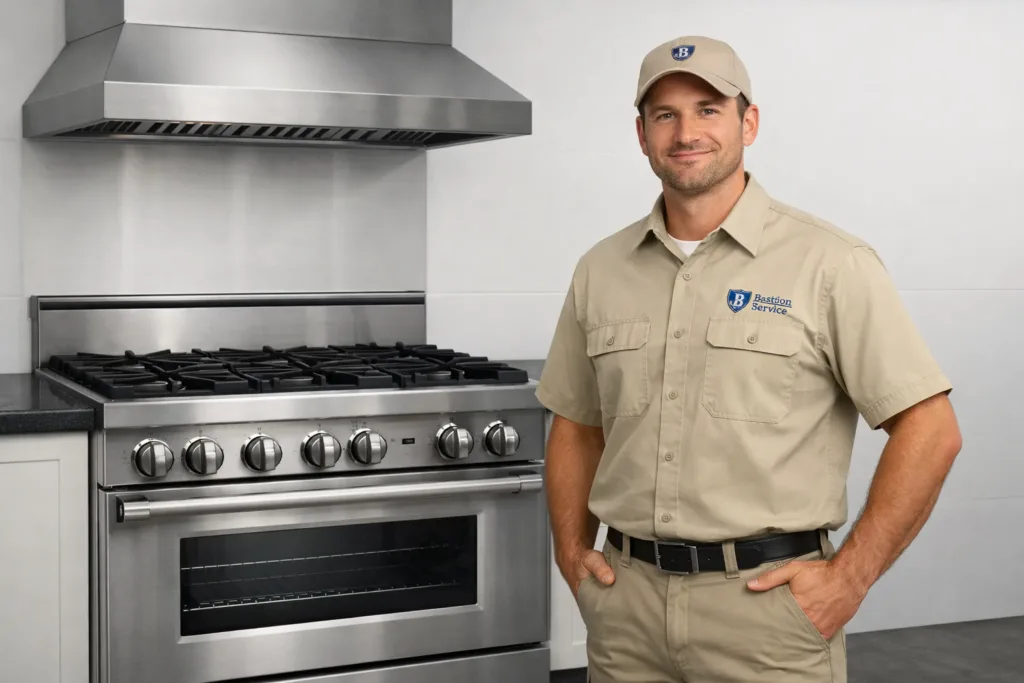




Range problems can disrupt prep schedules, slow service, and create avoidable product loss when heat output is no longer predictable. For businesses in Cheviot Hills, Wolf range repair is most effective when service begins with the exact symptom pattern: what is failing, when it happens, whether the issue is constant or intermittent, and how the unit behaves under normal workload. Bastion Service works from those operating symptoms to help businesses schedule repair, prepare for downtime, and decide whether the problem appears isolated or part of a larger reliability concern.
Related commercial service paths in Cheviot Hills include Wolf Commercial Repair in Cheviot Hills, Wolf Oven Repair in Cheviot Hills, and Wolf Fryer Repair in Cheviot Hills.
How Wolf range problems usually show up in day-to-day operation
Range issues are not always complete breakdowns. In many kitchens, the first signs are slower preheat, burners that need multiple ignition attempts, uneven flame across stations, or oven temperatures that drift during a busy shift. Those symptoms matter because they affect cook times, consistency, and staff workflow long before the unit stops working altogether.
On a Wolf range, similar complaints can come from very different causes. A burner that will not light may involve ignition parts, blocked burner ports, wiring faults, or gas-delivery issues. An oven that runs too hot or too cool may point to sensor trouble, control failure, calibration drift, or a heating problem within the oven system. Proper diagnosis helps separate one failing component from a broader performance issue.
Why a Wolf range may not be lighting, heating, or holding temperature
Ignition problems at the burners
If burners click repeatedly, spark without lighting, light slowly, or ignite only on some attempts, the problem may be tied to worn ignition components, burner contamination, moisture, damaged wiring, or related gas-flow faults. In a business setting, delayed ignition often shows up as uneven startup at the beginning of service or recurring trouble at one station while others seem normal.
Repeated ignition failure should not be treated as a minor inconvenience. It can increase strain on components, create delays during line use, and raise safety concerns if normal flame establishment is no longer reliable.
Weak flame or uneven burner performance
Low flame, unstable flame, or burners that do not respond correctly to control adjustments can indicate clogged burner pathways, valve wear, pressure problems, or internal component failure. Staff may notice pans heating unevenly, slower recovery between orders, or one side of the cooking surface performing differently from the other.
When burner output is inconsistent, kitchens often start compensating manually by rotating pans, changing cook positions, or extending cook times. That workaround may keep service moving temporarily, but it usually means the underlying fault is already affecting production.
Oven section not reaching target temperature
If the oven takes too long to preheat, struggles to recover after the door opens, or never seems to reach the selected setting, likely causes include heating-system failure, sensor problems, control issues, or heat loss related to seals and internal wear. This becomes especially disruptive when batch cooking, roasting, or finishing depends on repeatable heat.
Temperature swings during cooking
An oven that overshoots, drops below set temperature, or cycles irregularly can lead to inconsistent results even if it appears to be operating. In practice, that may look like uneven browning, extended bake times, or items finishing differently from one rack position to another. Temperature instability is often connected to sensor accuracy, control response, or other regulating components that need testing rather than guesswork.
Controls that respond inconsistently
When knobs, switches, displays, or oven controls stop responding correctly, the issue may involve control failure, heat-related electrical stress, loose connections, or internal wiring faults. These problems are often intermittent at first, which makes them easy to postpone even though they tend to become more disruptive over time.
Symptoms that usually mean service should be scheduled soon
It is a good time to schedule repair when the range still runs but no longer runs normally. Waiting for a full shutdown can make the repair window harder to manage and may allow secondary damage to develop.
- Burners require repeated attempts to ignite
- Flame is weak, uneven, or unstable during use
- Oven preheat is much slower than usual
- Temperature no longer matches the setting
- Heat recovery drops during busy production periods
- Controls cut out, lag, or behave unpredictably
- The same fault appears across multiple shifts
These are not just performance annoyances. In many kitchens, they lead directly to delayed tickets, inconsistent food quality, and unnecessary staff workarounds.
When continued use can make the problem worse
Some range problems become more expensive when the unit is used through the fault. Repeated ignition attempts can add wear to ignition-related parts. Operating with unstable heat can stress controls and other components. Running an oven section that is known to overheat or cycle improperly can increase product loss and create additional service issues that were not part of the original complaint.
If a burner is not lighting correctly, if heat regulation is clearly erratic, or if controls are failing during active use, it is usually better to pause normal operation on the affected section until the range can be evaluated. If there is a strong or persistent gas odor, stop using the appliance and follow appropriate gas-safety procedures before arranging repair.
What helps speed up Wolf range diagnosis
Businesses in Cheviot Hills can often shorten the path to repair by gathering a few details before the visit. This does not replace service, but it helps narrow the likely fault and improve scheduling.
- Which burner or oven section is affected
- Whether the issue is constant or intermittent
- When it happens: startup, preheat, peak service, or cooldown
- Any unusual clicking, delayed ignition, or sudden shutdown behavior
- Whether temperature appears too high, too low, or unstable
- Any recent change in performance rather than a single failure event
That kind of information is useful because many Wolf range faults only appear under specific conditions, not every time the unit is turned on.
Repair or replacement: how businesses usually decide
Repair is often the right move when the problem is limited to a specific system, the range otherwise fits the kitchen’s needs, and restoring normal performance is realistic. Replacement becomes a more serious discussion when breakdowns are recurring, several systems are failing together, or the equipment has become a repeated source of downtime.
The key question is usually not whether the range can be made to operate again for the moment, but whether the repair is likely to restore stable day-to-day use. A service evaluation helps clarify whether the issue looks contained or whether the unit is showing a broader pattern of wear that affects future reliability.
What useful range service should provide
Good service should identify the likely failing system, explain why the symptoms are happening, and set realistic next steps for repair planning. For businesses in Cheviot Hills, that matters because the range is part of daily output, not a convenience appliance that can be ignored until later. Knowing whether the issue involves ignition, burner performance, temperature regulation, or controls helps managers plan around downtime and avoid unnecessary disruption.
If your Wolf range is no longer lighting properly, heating evenly, or holding temperature, the next step is to have the unit assessed based on its actual operating behavior. Symptom-based diagnosis, repair scheduling, and a clear scope of work give businesses a more workable path back to consistent kitchen performance.


