
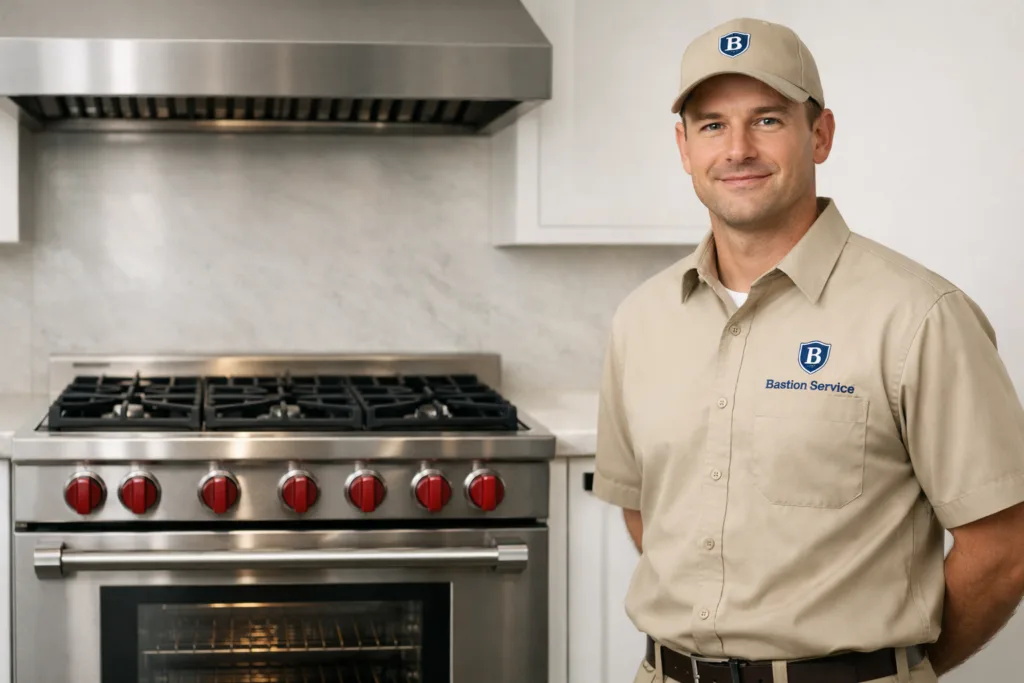




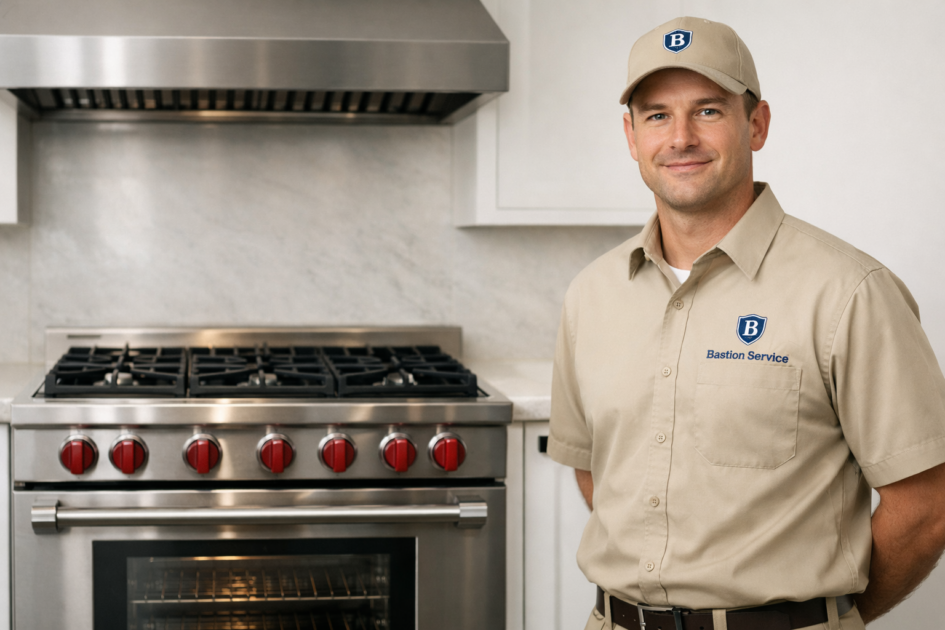
Equipment problems during service hours rarely stay isolated for long. A Wolf oven, range, or fryer that begins heating unevenly, hesitating on ignition, or dropping temperature between cycles can quickly affect ticket times, food consistency, staffing flow, and daily output. For businesses in Cheviot Hills, the most useful next step is to schedule service based on the symptom pattern, confirm the actual fault, and decide whether repair can be completed before the issue creates a wider shutdown.
For specific equipment paths in Cheviot Hills, review Wolf Oven Repair in Cheviot Hills, Wolf Range Repair in Cheviot Hills, and Wolf Fryer Repair in Cheviot Hills.
Bastion Service provides repair support for Wolf cooking equipment used in business kitchens, with diagnosis focused on the conditions that matter most in real operations: lost heat, burner failure, recovery delays, control problems, intermittent operation, and repeated outages. That approach helps owners and managers move from guesswork to a repair plan that fits production needs.
What Wolf cooking equipment problems do you troubleshoot?
Wolf cooking equipment can show trouble in several ways before it fully stops working. In many kitchens, the earliest warning signs include slow heat-up, inconsistent temperatures, burners that do not light cleanly, controls that stop responding, or units that shut down unexpectedly during use.
- Ovens that preheat slowly, run hot, run cool, or cook unevenly
- Ranges with burners that click, fail to ignite, burn weakly, or will not stay lit
- Fryers that recover too slowly, miss temperature targets, or cycle erratically
- Controls that display faults, lose settings, or respond inconsistently
- Equipment that trips off, restarts unpredictably, or stops heating under load
These symptoms may come from ignition components, sensors, controls, gas-flow issues, heating circuits, safety devices, or wear in high-use parts. The visible symptom does not always identify the failed part, which is why service decisions should be tied to testing rather than assumptions.
Oven issues that affect output and consistency
Slow preheat and unstable temperature control
When a Wolf oven takes too long to reach temperature or cannot hold the selected setting, kitchen timing becomes harder to manage. Food may require longer cook times, results may vary from batch to batch, and staff may start adjusting settings manually to compensate. In a business setting, that often leads to wasted product and slower service.
Possible causes can include sensor drift, thermostat-related faults, ignition trouble, heating circuit problems, airflow issues, or control failures. Because several different faults can create similar symptoms, a proper diagnosis is important before replacing parts or continuing heavy use.
Uneven cooking and inconsistent results
If one side of the oven cooks faster than the other, or if product color and doneness vary within the same cycle, the issue may extend beyond simple calibration. Uneven heat can point to internal component wear or a system that is no longer distributing heat as intended. Businesses in Cheviot Hills often notice this first through quality complaints, delayed plating, or staff needing to rotate product more often than normal.
Intermittent shutdowns during operation
An oven that starts normally and then loses heat mid-cycle should be evaluated quickly. Intermittent shutdowns may involve safety cutoffs, relays, ignition faults, control problems, or power-related issues within the unit. These problems tend to worsen over time, and they can become especially disruptive when the equipment appears usable one hour and unreliable the next.
Range burner and ignition problems
Burners not lighting or taking too long to ignite
Delayed ignition is more than an inconvenience in a busy kitchen. It slows prep, complicates line work, and can signal a developing problem with ignition components, burner assemblies, switches, or fuel delivery. If a Wolf range requires repeated attempts to light, clicks continuously, or lights inconsistently, the unit should be inspected before staff are forced to work around it during peak demand.
Weak flame or uneven burner performance
A burner that produces less heat than expected can reduce cooking speed and make temperature control harder on the line. In some cases the problem affects a single burner; in others it points to a broader issue that reduces the range’s overall usefulness. If staff are shifting pans, consolidating stations, or avoiding certain burners entirely, that is a strong sign the equipment is no longer supporting normal workflow.
Burners that will not stay lit
When a burner ignites and then goes out, or repeatedly drops flame during use, continued operation should be evaluated carefully. Unstable burner behavior can interrupt service without warning and may indicate a fault that should not be ignored between shifts. Scheduling repair early can help avoid a full loss of cooking capacity at the worst time.
Fryer performance and recovery concerns
Slow heat recovery between batches
Fryers depend on steady recovery to maintain output. If a Wolf fryer lags between loads, takes too long to return to set temperature, or forces the kitchen to slow production, the issue can quickly affect throughput. What starts as a mild performance complaint often becomes a scheduling problem once volume increases.
Slow recovery may be tied to sensing faults, heating-system issues, control problems, limit devices, or ignition-related failures. The key question is not just why recovery is poor, but whether the fryer can continue supporting service without creating delays or inconsistent product quality.
Temperature misses and irregular cycling
A fryer that overshoots, runs cool, or cycles unpredictably creates obvious quality risks. Product can come out undercooked, overcooked, or inconsistent from one batch to the next. In many kitchens, that leads to higher waste and more pressure on staff to compensate manually for equipment that should be doing the work reliably.
Unexpected fryer shutdowns
If the fryer shuts down during service, refuses to maintain heat, or needs repeated resets, a service visit helps determine whether the problem is isolated or part of a larger control or safety-system issue. Early evaluation can also help prevent unnecessary part changes and repeat downtime from misdiagnosed symptoms.
When a symptom means you should schedule service sooner
Some equipment problems can wait for planned downtime, while others should be moved up quickly. The following signs usually justify earlier scheduling:
- Heat output is dropping enough to affect food timing or consistency
- Ignition is delayed, unreliable, or requiring repeated attempts
- The unit shuts down during use or loses heat unexpectedly
- Staff are changing normal cooking routines to work around the problem
- One fault appears to be spreading from a single function to overall performance
- Error behavior or control instability is becoming more frequent
Once operators start relying on workarounds, the repair issue has usually moved beyond a minor nuisance. For businesses in Cheviot Hills, earlier service often protects both uptime and product quality.
How diagnosis helps with repair decisions
Cooking equipment symptoms often overlap. Weak heat may be tied to a burner issue, a control issue, or a sensing problem. A shutdown complaint may involve a safety device, relay, ignition fault, or another condition that only appears after the unit has been running under load. That is why effective repair planning depends on identifying the failed system instead of replacing parts based only on the first visible symptom.
Once the fault is narrowed down, it becomes easier to answer practical questions: whether the unit can stay in limited use, whether repair should be scheduled immediately, whether parts timing will affect operations, and whether the cost of repair still makes sense for the condition of the equipment. Those are the decisions that matter most when kitchen equipment is tied directly to service flow.
Repair or replace?
For many businesses, repair is the faster and more cost-effective path when the problem is contained to serviceable components and the equipment still fits the kitchen’s daily needs. Replacement becomes more likely when breakdowns are recurring, multiple major systems are involved, downtime is becoming extended, or the overall condition of the unit no longer supports reliable operation.
A diagnosis provides the information needed to make that call with confidence. Instead of guessing based on one rough shift or a temporary workaround, owners and managers can weigh the actual fault, the repair scope, and the likely impact on future uptime.
Service planning for kitchens in Cheviot Hills
If your Wolf cooking equipment is showing temperature swings, burner failure, ignition hesitation, slow recovery, or unexpected shutdowns, it makes sense to arrange repair before the problem turns into a broader production issue. A scheduled service visit helps confirm the cause, determine whether continued use is appropriate, and set the next step based on the equipment’s condition and the demands of your kitchen in Cheviot Hills.


