
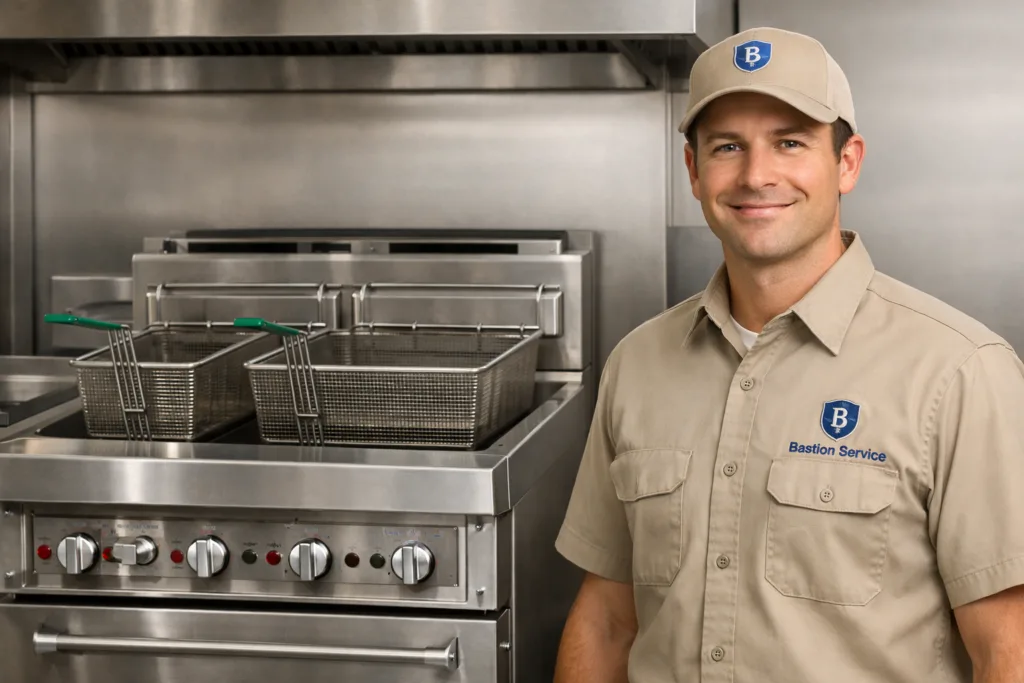




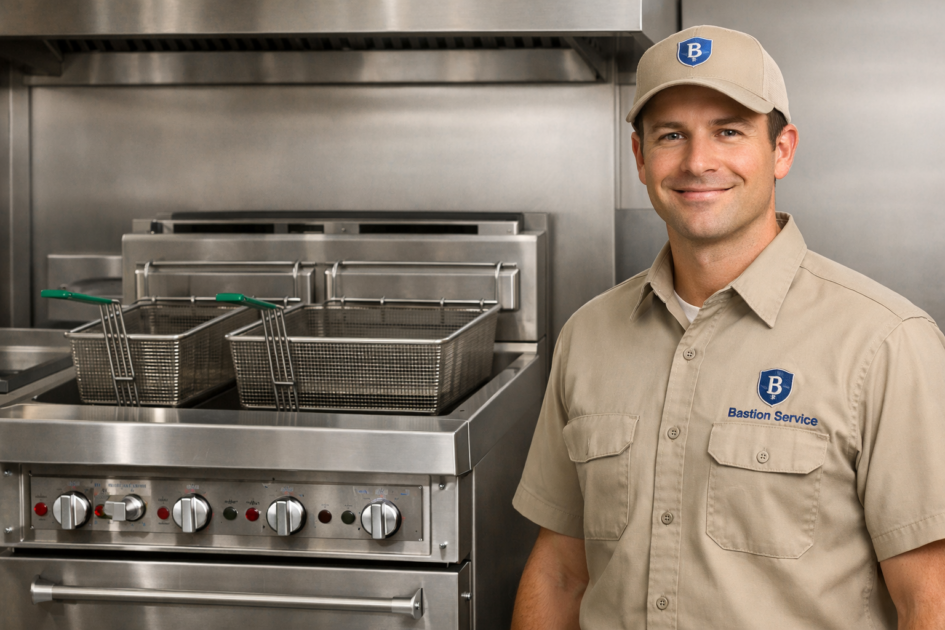
When a Wolf fryer starts missing temperature, recovering too slowly, or shutting down during production, the right next step is service based on testing the actual fault pattern. For businesses in Venice, fryer problems affect output, timing, oil performance, and kitchen coordination, so repair scheduling should focus on what the unit is doing under load, whether the issue is repeatable, and how quickly the problem is likely to interrupt service. Bastion Service works with Venice businesses to diagnose Wolf fryer failures, identify the likely cause, and move toward the most sensible repair path for the equipment in front of them.
Related commercial service paths in Venice include Wolf Commercial Repair in Venice, Commercial Fryer Repair in Venice, and Wolf Oven Repair in Venice.
Common Wolf Fryer Problems in Venice Kitchens
Not heating or only partially heating
If the fryer powers on but does not bring oil to the set temperature, the issue may involve the ignition sequence, gas supply components, heating elements, safety limits, temperature sensing, control response, or incoming power. In daily use, this often shows up as long preheat times, product that cooks unevenly, or a fryer that looks operational but cannot maintain normal output.
This symptom matters because complete no-heat and weak-heat conditions are not always caused by the same failure. A fryer that reaches some heat but stalls before target temperature may have a very different repair need than a fryer that never starts heating at all.
Slow recovery between batches
Recovery problems are common when a fryer can preheat but struggles once production begins. After baskets are dropped, the oil temperature should recover at a predictable rate. If recovery drags, the cause may be reduced burner performance, electrical weakness, sensor inaccuracy, control faults, restricted airflow, or other operating issues that limit heat delivery.
In practice, slow recovery leads to inconsistent color, texture, and timing. Kitchens may compensate by extending cook times, crowding production, or lowering batch confidence, but those workarounds do not solve the equipment problem.
Oil temperature swings
Large temperature swings can make a Wolf fryer hard to trust even when it still runs. If the oil overshoots, drops too far, or cycles unpredictably, technicians usually look at the temperature sensor, thermostat function, control board behavior, calibration drift, and related wiring. A fryer that cannot hold a stable operating range can produce inconsistent food and accelerate oil breakdown.
When operators notice alternating undercooking and overbrowning from one run to the next, unstable temperature regulation is often part of the diagnosis.
Ignition failure or startup problems
If the fryer does not light, lights intermittently, or begins a startup cycle and then stops, the problem may involve the igniter, flame sensing, gas valve response, switches, wiring, or control logic. Some units fail every time, while others start normally in the morning and act up later in the day. That pattern is important because intermittent ignition failures often point to components that are weakening rather than fully failed.
Unexpected shutdowns or safety trips
A fryer that cuts out during use, trips a limit, or requires repeated resets should be evaluated promptly. These shutdowns can be tied to overheating, sensor faults, control issues, electrical instability, or safety components reacting to abnormal conditions. Continued use may turn an intermittent problem into a full outage during a busy shift.
Why a Wolf Fryer Stops Heating or Recovering Temperature Properly
Heating and recovery complaints often overlap, but the repair decision depends on which part of the process is failing. A Wolf fryer may struggle because it is not producing enough heat, because the control is getting the wrong temperature information, or because a safety or ignition fault is interrupting normal operation.
- Weak or interrupted heat production: The fryer may start normally but fail to sustain output during active cooking.
- Sensor or thermostat inaccuracy: The control may respond to the wrong oil temperature reading.
- Ignition sequence issues: The unit may cycle on and off instead of maintaining stable heat.
- Control faults: The fryer may appear to call for heat at the wrong time or shut down unexpectedly.
- High-limit or safety interruptions: Protective components may stop operation when conditions move outside normal range.
That is why parts should not be replaced based only on a broad complaint like “not heating right.” The same kitchen symptom can come from several different failures, and accurate testing helps separate a targeted repair from a more serious reliability problem.
Symptoms That Usually Mean Service Should Be Scheduled Soon
Some fryer issues start small and become disruptive quickly. Scheduling service early can reduce the chance of losing the unit in the middle of production.
- Preheat takes noticeably longer than usual
- Oil temperature drifts away from the setpoint
- Recovery slows during higher-volume periods
- The fryer needs repeated resets to keep running
- Startup is inconsistent from shift to shift
- Burner operation sounds irregular
- Error indicators or shutdown events appear more than once
- Product quality changes even though prep is consistent
Even if the unit is still operating, repeat symptoms usually mean the fault is progressing. Waiting for a full failure often creates a tighter service window and more disruption for the kitchen.
What a Service Visit Should Clarify
For businesses in Venice, fryer service needs to answer more than whether one part failed. The important questions are whether the unit is safe to keep using, whether the problem is isolated or part of broader wear, and whether the repair is likely to restore stable performance under normal kitchen demand.
A useful diagnosis usually looks at:
- The exact complaint: no heat, weak heat, shutdowns, or recovery problems
- Whether the issue appears on cold start, during steady use, or only at peak load
- How the controls, ignition system, and temperature regulation are behaving
- Whether there are signs of repeated stress in surrounding components
- Whether the fryer can reasonably return to dependable service after repair
This helps management decide whether to move forward with repair immediately, pause operation until parts are addressed, or begin planning beyond a recurring equipment problem.
When Continued Use Can Make the Problem Worse
Some Wolf fryer faults are inconvenient but contained. Others can lead to larger repair needs if the unit stays in rotation. If the fryer is overheating, failing to regulate temperature, losing flame, tripping limits, or shutting down without warning, continued use may put additional stress on controls, safety components, and connected systems.
It is also worth pausing normal use when food quality has become unpredictable. A fryer that no longer holds temperature properly can create waste, rework, and inconsistent output before it reaches complete failure.
Repair or Replace?
Repair is often the better choice when the fault is specific, the fryer is otherwise in solid condition, and the unit still supports the kitchen’s production needs. Replacement becomes more relevant when the fryer has developed repeated major faults, recent service has not restored reliability, or multiple systems show wear at the same time.
For businesses in Venice, the decision usually comes down to stability. If a focused repair can restore proper heating, recovery, and control performance, it may protect workflow and avoid a bigger interruption. If the fryer has become unpredictable across several operating cycles, diagnosis helps clarify whether another repair is a sensible investment or only a short-term measure.
Preparing for Wolf Fryer Repair in Venice
Before service is scheduled, it helps to note exactly how the fryer is failing. Useful details include whether the issue happens at startup or mid-shift, whether the unit reaches temperature at all, how long recovery takes, whether any shutdown or ignition pattern repeats, and whether product quality changes at the same time. Those observations can make the diagnosis more efficient and help narrow the likely cause faster.
When a Wolf fryer is affecting output, consistency, or safe daily operation, service should center on testing the symptoms, identifying the failed system, and choosing the next step that best supports the kitchen. For Venice businesses, that means moving from disruption to a repair plan that fits the unit’s condition, the urgency of downtime, and the realities of daily production.


