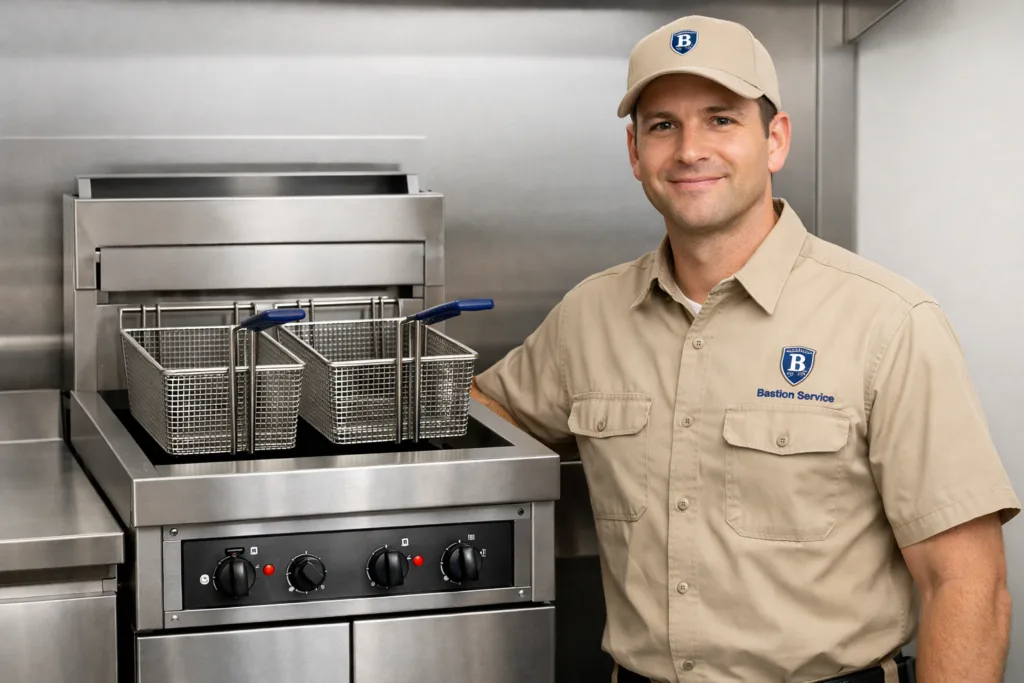




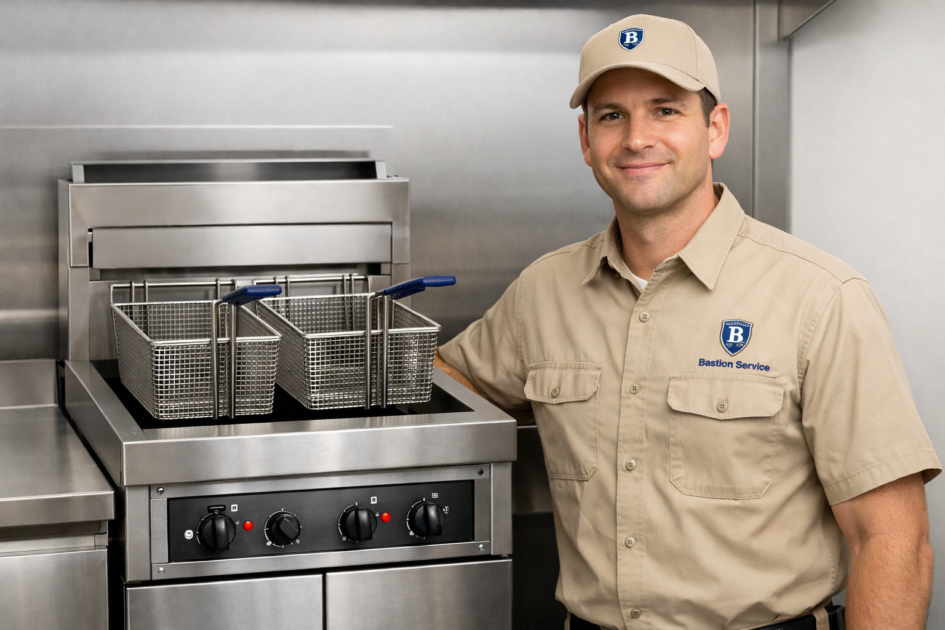
When a Frymaster fryer starts missing temperature, recovering slowly, or shutting down during service, the problem quickly reaches beyond the equipment itself. Output drops, food quality becomes harder to control, and staff end up working around a unit they should be able to trust. For businesses in Venice, the most useful next step is service built around the actual symptom pattern so the repair decision matches the fault instead of guesswork.
Related commercial service paths in Venice include Frymaster Commercial Repair in Venice, Commercial Fryer Repair in Venice, and Pitco Fryer Repair in Venice.
Bastion Service provides Frymaster fryer repair in Venice for kitchens that need fast fault isolation, informed repair recommendations, and scheduling that reflects the impact of downtime on daily operations. Whether the issue shows up as no heat, ignition failure, erratic temperatures, or repeated safety shutdowns, symptom-based diagnosis helps determine what should be repaired, what should stay offline, and what can return to normal use.
What Frymaster fryer symptoms often indicate
Many fryer problems begin as performance changes rather than total failure. A unit may still turn on, but heat slowly, recover poorly, overshoot temperature, or stop mid-cycle. Those differences matter because similar complaints can point to very different causes in the burner system, controls, sensing components, gas delivery, or safety circuits.
No heat or delayed heating
If the fryer will not heat at all, takes too long to reach set temperature, or needs repeated restart attempts, the issue may involve ignition components, burner operation, control response, hi-limit interruption, or fuel-related faults. In a busy kitchen, delayed heating affects prep timing and creates pressure on the line well before the fryer stops completely.
Slow recovery during active cooking
A fryer that heats eventually but cannot recover between loads often creates uneven cook results and longer ticket times. This symptom can be tied to weak burner performance, sensor issues, control problems, restricted heat transfer, or wear that limits normal operating efficiency. If staff are spacing out batches or adjusting routines to compensate, service is already overdue.
Temperature swings or overheating
Oil temperature that drifts too high or too low can affect product consistency, oil life, and safe operation. Common causes include sensor inaccuracies, control board faults, calibration problems, or safety-limit issues. If the fryer is overheating, tripping, or producing noticeably inconsistent batches, it should be evaluated before regular use continues.
Ignition failure and repeated shutdowns
When a fryer tries to light and fails, lights inconsistently, or shuts down during use, the fault may be related to flame sensing, ignition hardware, control communication, gas flow, or a safety circuit opening under load. Repeated reset attempts can waste time and sometimes make the original problem harder to identify, especially during peak service periods.
Error codes, abnormal flame, or signs of wear
Not every service call begins with a complete outage. Error messages, unusual burner sound, soot, visible leaks, unstable flame characteristics, or damaged fittings can all be early warnings of a larger reliability problem. Catching these signs early can prevent a smaller repair from turning into a more disruptive shutdown.
Why is my Frymaster fryer not heating or recovering temperature properly?
This is one of the most common service concerns because several different faults can produce the same complaint. A fryer that will not reach temperature may have an ignition problem, a burner issue, a control fault, a sensing problem, or a safety component interrupting normal operation. A fryer that reaches temperature but recovers slowly may be dealing with weak heat output, poor control response, or other operating conditions that reduce performance under load.
The important distinction is whether the fryer fails from the start, loses performance during use, or cycles unpredictably once hot. That pattern helps guide repair decisions. For example, recovery trouble during rush periods points to a different service path than a unit that never establishes heat in the first place. Accurate diagnosis matters because replacing one visible part without confirming the root cause often leads to repeat breakdowns.
Why accurate diagnosis matters on Frymaster fryer repairs
Frymaster equipment is built for demanding kitchen use, so symptom overlap is common. A unit with slow recovery, intermittent shutdowns, and inconsistent temperature may appear to have a single issue, but the true cause could involve multiple related failures. Looking only at the most obvious symptom can result in unnecessary parts replacement while the underlying fault remains unresolved.
A productive service visit focuses on operating behavior: how the fryer starts, how it heats, how it responds under cooking load, whether safety functions are interrupting operation, and whether visible wear is contributing to the complaint. That process helps businesses in Venice make better decisions about repair urgency, downtime planning, and whether the fryer should stay in service while parts or follow-up work are arranged.
Signs the fryer should be serviced soon
Some issues allow a short window for scheduled repair, while others justify taking the unit out of rotation right away. Warning signs that should not be ignored include:
- Long heat-up times at the start of service
- Slow temperature recovery between batches
- Frequent shutdowns or restart attempts
- Oil temperatures that run too high or too low
- Ignition that is inconsistent or fails repeatedly
- Error indicators, unusual flame behavior, or soot
- Leaks, visible damage, or signs of overheating
When staff begin changing cook timing, reducing fryer use, or relying on workarounds to get through service, the equipment issue is already affecting operations. Delaying repair in that situation can lead to bigger disruptions, more stressed components, and harder-to-manage downtime later.
Repair or replacement: how businesses usually evaluate the choice
Many Frymaster fryer problems are repairable when the issue is identified early and the unit remains structurally sound. If the fault is tied to controls, ignition parts, sensing components, safety devices, or other serviceable wear items, repair often makes sense as long as the fryer can return to stable operation.
Replacement becomes a more serious discussion when the fryer has a long breakdown history, repeated unresolved faults, major deterioration, or reliability problems that continue to disrupt production. The key question is not only whether the fryer can be restarted, but whether it can support consistent day-to-day kitchen use without creating ongoing risk for downtime, output, or food quality.
How to prepare for a Frymaster fryer service visit
A little information from the kitchen can make diagnosis more efficient. Before scheduling service, it helps to note when the problem occurs, whether the fryer ever reaches set temperature, whether shutdowns happen only under load, and whether the issue appeared suddenly or worsened over time. Error indications, unusual sounds, and reports from staff who use the fryer daily can also help narrow the likely cause.
Useful details often include:
- Whether the fryer has no heat, partial heat, or delayed recovery
- If the problem is constant or only appears during busy periods
- Whether the unit shuts down on its own or after cycling
- Any recent changes in performance, smell, sound, or flame behavior
- Whether staff have noticed overheating, undercooking, or repeated resets
This kind of symptom history helps connect the complaint to the most likely systems involved and supports better scheduling decisions if the fryer should remain offline until repair is completed.
Service-focused repair support for kitchens in Venice
For businesses in Venice, fryer repair is ultimately about restoring predictable performance and protecting workflow during service hours. When a Frymaster fryer starts showing heating, recovery, ignition, or control problems, the best next step is to schedule diagnosis before a partial failure turns into a full outage. A repair process centered on the exact symptoms, operating condition, and urgency of the kitchen gives operators a clearer path forward and helps reduce avoidable downtime.